Invest1 publisher3 min readPublished
Brin's $102m Doesn't Fight Prop 40. It Funds Two Measures That Would Void It
California's billionaire tax faces a nine-figure defense built as ballot engineering: two counter-measures that only have to outpoll Prop 40, not beat it head-on.
The Investor · Invest desk
Drafted by a language model from the sources cited here and checked against its claim ledger before publication. How we use AISend a correction
What happened
- Sergey Brin has contributed $102 million this year to Building a Better California, according to data from the California Secretary of State.
- Brin's latest donation to the group totaled $20 million.
- Building a Better California is bankrolling two ballot measures, Propositions 41 and 42.
- According to the Legislative Analyst's Office, both Propositions 41 and 42 conflict with the proposed billionaire tax and could block it from becoming law.
- Proposition 40 imposes a one-time 5% tax on billionaires' assets, applying to people with a net worth of at least $1 billion who resided in California on Jan. 1.
Compiled by The InvestorSomething wrong?How this is made
Why it matters
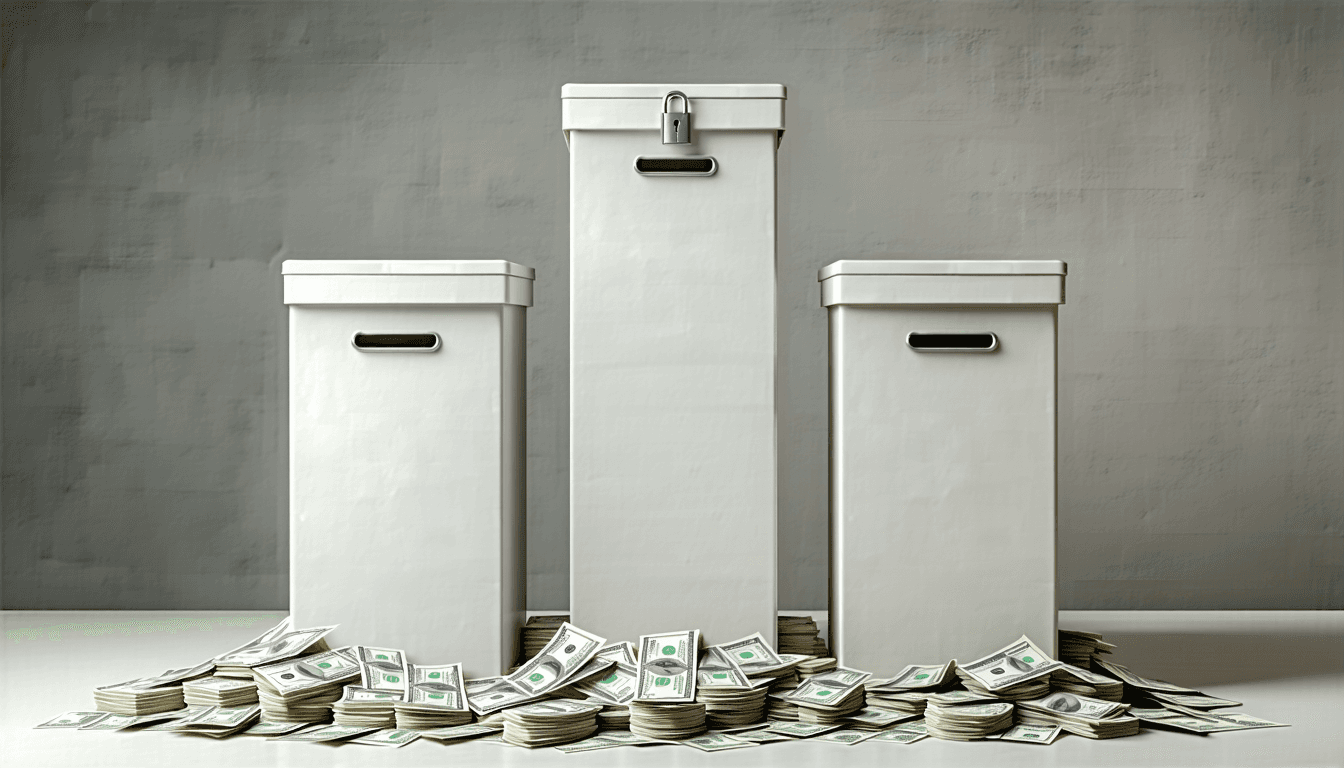
Sergey Brin has put $102 million this year into Building a Better California, including a $20 million donation, according to data from the California Secretary of State [1][2]. None of it is a straight No on Proposition 40 campaign: the group is bankrolling two separate ballot measures, Propositions 41 and 42, which the Legislative Analyst's Office says conflict with the billionaire tax and could block it from becoming law [3][4].
The mechanism is what makes this worth studying rather than just tallying. Proposition 40 would impose a one-time 5% tax on the assets of people with a net worth of at least $1 billion who resided in California on Jan. 1, with 90% of revenue going to healthcare and 10% to education and food assistance [5][6]. Supporters estimate roughly $100 billion; the LAO says the figure is hard to predict but the state would probably collect tens of billions [7][8]. Under the tie-break rule, if either Proposition 41 or 42 draws more approval votes than Proposition 40, the wealth tax is nullified [9]. So Prop 40 does not need to win. It needs to outpoll two other measures at once, which means the opposition gets two independent shots and the tax's backers must win three contests [1].
The counter-measures are drafted to look like housekeeping. Proposition 41 requires audits for new state special taxes and bars new state taxes whose revenue is exempted from the state spending limit [10]. Proposition 42 prohibits new taxes on retirement holdings, individually owned assets and other personal savings, and bars retroactive taxes on past earnings [11]. Supporters frame both as spending transparency and retirement protection [12]. Prop 40's backers, including SEIU United Healthcare Workers West, Sen. Bernie Sanders and the California Democratic Party, say the measures are designed to "trick voters" [13][14]. SEIU-UHW Vice President Debru Carthan called Brin's spending "shameful" and said he would rather fund "a shady opposition campaign than simply pay his fair share" [15]. Building a Better California declined to comment on the contributions [16]; its website describes it as nonpartisan and focused on affordability and quality of life while protecting innovation and economic growth, and it is also backing affordable housing efforts [17].
The budget is rational on its face. Brin's net worth was $284 billion at the start of the week, fourth in the world, per the Bloomberg Billionaires Index [18]. A 5% one-time levy on that sum is about $14.2 billion [2], which makes $102 million roughly 0.7% of the exposure [3] and about 0.036% of his stated net worth [4]. Whether he would owe anything is unclear: the tax turns on California residency on Jan. 1, and Brin has relocated to Nevada and is buying property elsewhere, including Florida [5][19]. He told the New York Times in April that his family fled socialism in the 1970s and he does not want California "to end up in the same place" [20].
He is not alone. Building a Better California's largest contributors include John Doerr, Michael Moritz and Patrick Collison, with money also from executives at DoorDash, the Wonderful Company, Affirm and Ripple, and from Eric Schmidt [21]. Chris Larsen and Ron Conway have funded opposition separately [22]. Gov. Gavin Newsom, the California Chamber of Commerce, the California Teachers Association and Planned Parenthood Affiliates of California also oppose Prop 40 [23].
Watch the disclosure filings for whether $102 million was an opening position or a ceiling, and watch polling on Props 41 and 42 specifically. The tax's fate is likelier to be decided by how many voters read down the ballot than by any argument about billionaires.