Georgia suit leans on Flock's own audit log to allege retaliatory searches of a plaintiff's plate
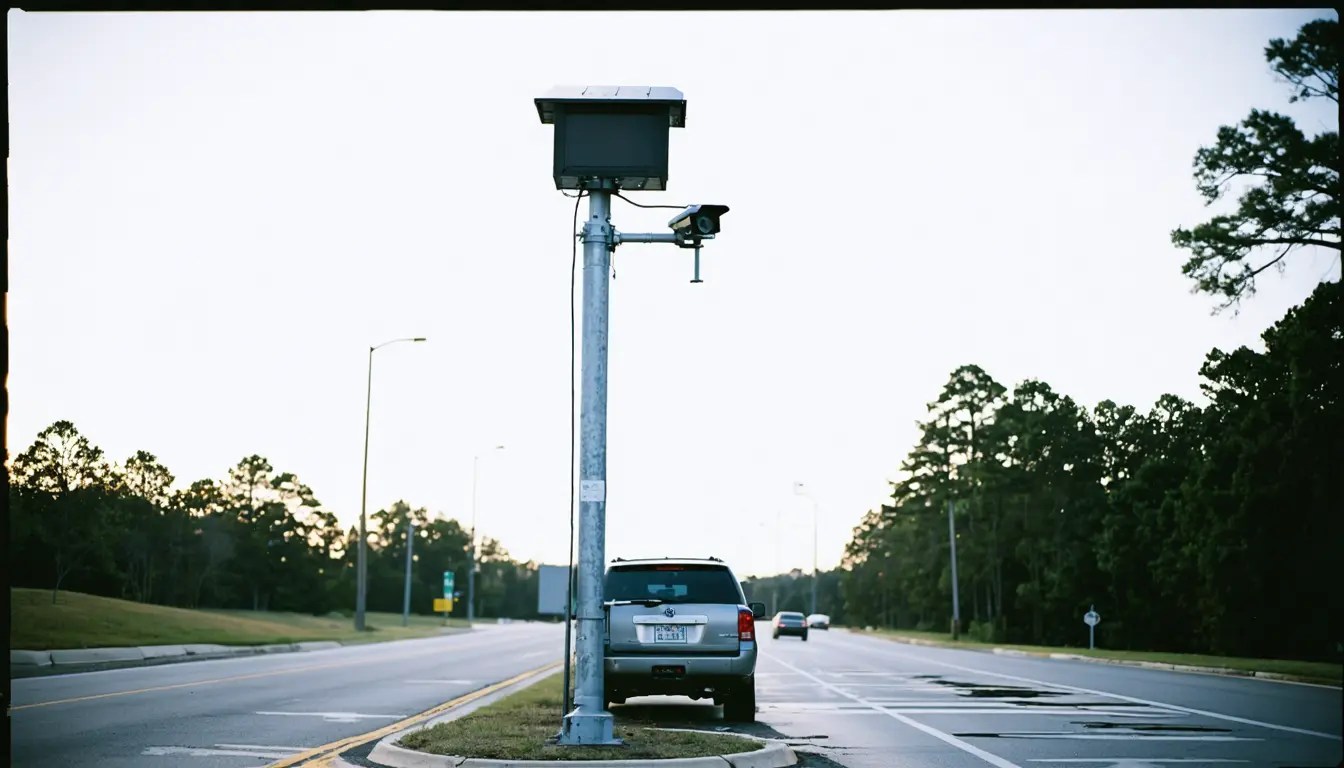
Tyler Murkerson sued Flock and Coweta County, Georgia, over five sheriff's office searches of his plate in 197 days. The two disclosed searches list the reasons "info" and "37," and the class is defined by searches with no recorded reason.
The Product Desk
Key figures from the complaint's audit record: each sheriff's office query reached more than 6,000 agency camera networks nationwide; five searches were attributed to the sheriff's office over a 197-day period; two of the five searches have been disclosed.
| Figure | Value | Note | Claim |
|---|---|---|---|
| Agency camera networks each query reached, more than | 6,000 networks | 4 | |
| Searches over 197 days | 5 searches | 3 | |
| Searches disclosed, of five | 2 searches | 5 |
What happened
- Each of the sheriff's office queries reached more than 6,000 agency camera networks nationwide.
- Only two of the five searches are disclosed, with operators listed as "r.fau" and "w.fau"; the suit ties them to Randall and William Faulkner and sues whoever ran the other three as a John Doe.
- According to the complaint, William Faulkner typed "37" as the reason on the majority of his searches, and a case number appeared on just four of the thousands of queries he ran.
- Georgia law allows plate data to be accessed only for the investigation of an offense or an activity a law enforcement agency initiated, and misuse is a crime.
- Murkerson's earlier suit over a February 2023 arrest was dismissed with prejudice in or around August, and the new filing says that resolution did not cover these claims.
Why it matters
- exposure Agencies with placeholder entries in released logs face the same trail, because a public site already hosts audit logs obtained through records requests.
- decision An agency that accepts free-typed reasons has to decide whether to require a case number before a records request or a plaintiff decides it for them.
- constraint The log can show a search and its typed reason. Retaliation has to be argued from timing during the earlier suit and from Murkerson's account of patrol cars near his home.
The reasons typed in for the two disclosed searches were "info" and "37" [6]. Teams tend to count a reason field as an audit control, and the complaint tests that assumption head on. It argues: "A search recorded that way documents no investigation. It documents only that someone typed something." [8]
Whether that leaves Flock liable is not settled by anything in the reporting. Flock is a defendant alongside Coweta County, Sheriff Lenn Wood, two sheriff's office employees and three unidentified operators [1]. The coverage of the filing does not include a response from Flock or itemize the counts against it. The class definition shows the shape of the theory. Murkerson wants to represent people whose vehicles were searched by Georgia law enforcement without any recorded investigative reason [2], so membership turns on what the log holds. We think that puts the product's record at the center of the case against the vendor, and the officers' use of it at the center of the case against the agency.
Murkerson says he learned of the searches only after his earlier case ended, from HaveIBeenFlocked.com, a site that publishes Flock audit logs obtained through public records requests [10]. Five searches across 197 days is about one every 39 days [13]. The volume is low, and the complaint's weight falls on the content of the entries. Christopher B. Hall, a partner at Hall & Lampros, which represents Murkerson, said, "We believe this case is the first to allege actual retaliatory animus" [15]. Gizmodo noted that the firm's claim to be first has not been independently established [16].
The test we'd run on an agency's own logs is a sample. Pull a quarter of searches and sort each into one of two piles: the reason traces to a case, incident or call for service, or it does not. That is the complaint's standard when it says neither "info" nor "37" corresponds to "any investigation, case, incident, or call for service" [8]. If the second pile is the larger one, the field is a formality. Requiring a case number costs a slower lookup for a deputy who has a plate and no case yet, and we think that is the right price in Georgia.
What to watch
- Flock's answer to the complaint, and which counts against the company it contests.
- Whether the three unidentified operators are named and the reasons for the three undisclosed searches come out.
- Whether the court certifies a class defined by searches with no recorded investigative reason.
Clarity's read
What the record supports and how the coverage leans. The claims behind it follow.
Reality
- Evidence45
- Adoption
- Insufficient
- Hype gap+20
- Incentives55
- Confidence60
Claim ledger
Ranked by verification strength, evidence, and original report placement.
- [1]
Tyler Murkerson filed a proposed class action on Thursday in the U.S. District Court for the Northern District of Georgia, naming Flock, Coweta County, Sheriff Lenn Wood, two sheriff's office employees, and three unidentified operators as defendants.
- [2]
Murkerson is seeking to represent a broader group of people whose vehicles were searched on Flock by Georgia law enforcement without any recorded investigative reason.
- [3]
The audit record described in the complaint shows a 197-day surveillance period with five searches attributed to the Coweta County Sheriff's Office.
- [4]
Each query reached more than 6,000 agency camera networks nationwide.
- [5]
Only two of the five searches have been disclosed, and their operators are listed as "r.fau" and "w.fau," which the suit says correspond to defendants Randall Faulkner and William Faulkner; whoever ran the other three is sued as a John Doe.
- [6]
The reasons typed in for the disclosed searches were "info" and "37."
- [7]
Georgia law only allows plate data to be accessed for the investigation of an offense or activity initiated by a law enforcement agency, and misuse is a crime.
- [8]
"Neither corresponds to any investigation, case, incident, or call for service. A search recorded that way documents no investigation. It documents only that someone typed something," the complaint argues.
- [9]
The complaint alleges William Faulkner entered "37" for most of his searches and that only four of his thousands of queries included a case number.
- [10]
Murkerson says he only found out about the searches after the earlier case ended, through HaveIBeenFlocked.com, a site that publishes Flock audit logs obtained via public records requests.
- [11]
Murkerson's earlier suit over his February 6th, 2023 arrest was resolved and dismissed with prejudice in or around August, according to the new filing, which says the resolution did not cover the current claims.
- [12]
The complaint alleges that deputies were searching Flock for Murkerson's 2024 Toyota Camry while the earlier suit was pending.
- [13]
Five searches across 197 days average about one search every 39 days.
- [14]
During the same stretch, Murkerson alleges he saw far more sheriff's vehicles while driving home, with deputies parked within a quarter mile of his driveway on a dead-end road and in his business's lot.
- [15]
"We believe this case is the first to allege actual retaliatory animus intended to punish someone for advocating for his own constitutional rights by using Flock cameras to illegally surveil him, invade his privacy, and harass him in clear violation of the law," Christopher B. Hall, a co-founder and partner at Hall & Lampros, said in a press release on Friday.
- [16]
The firm's claim that this is the first such lawsuit has not been independently established.
Get this ledger inside ChatGPT. Ask about any of our stories and the answer brings its figure, each claim’s verdict and the sources. Free, no account.
Sources
2 independent publishers whose own reporting we read for this story.
- gizmodo.comGeorgia Man Says Deputies Used Flock Cameras to Track Him After He Sued Sheriff
1 article · October 13, 2026
- techspot.comFlock faces lawsuit after deputies allegedly used its cameras to retaliate against man who sued sheriff
1 article · October 13, 2026
Topics and entities
Follow any of these and your For You feed starts watching them — no settings page required.
Topics
- Surveillance and Privacy LawFollow
- Law Enforcement AccountabilityFollow
- Automated License Plate ReadersFollow
Entities
- Flock SafetyFollow
- Coweta County Sheriff's OfficeFollow
- HaveIBeenFlocked.comFollow
- Hall & LamprosFollow