Science1 publisher2 min readPublished
Florida's Flock ban reaches state highways while the camera network behind it spans more than 1,000 agencies
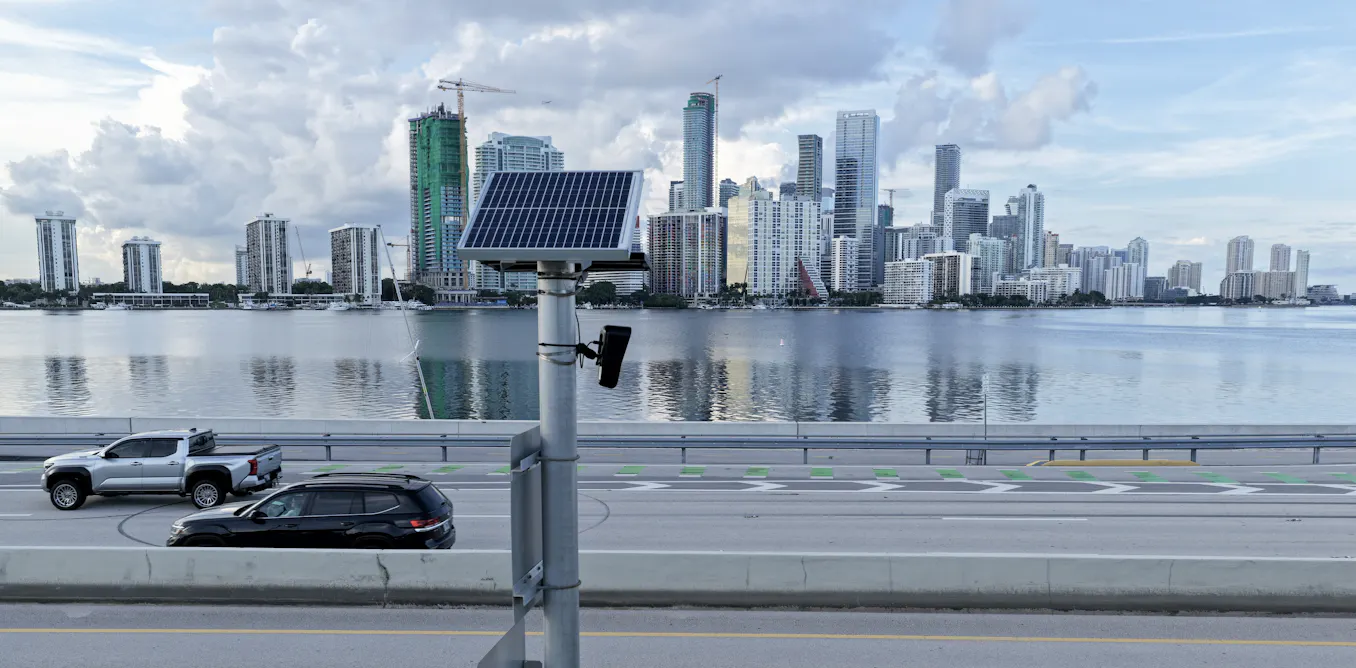
Florida banned Flock license plate cameras from state highways in late August, and crowdsourced maps show nearly 10,000 plate cameras statewide. A Florida economist says the rules on searching their data are guidelines, not laws.
The Scientist · Science desk
Drafted by a language model from the sources cited here and checked against its claim ledger before publication. How we use AISend a correction
What happened
- St. Petersburg police reportedly run about 50 Flock cameras, yet officers can search Flock data from more than 1,000 other agencies, including Florida Fish and Wildlife and the Postal Inspection Service.
- Flock lets users search by make, model, color, dents and stickers, and the results can be matched to an owner through Florida's driver-and-vehicle database.
- Florida statute puts plate-reader records on the state retention schedule, so agencies may keep them while they might be useful, generally for no more than three years.
- Documented misuse includes repeated searches for former romantic partners, false investigative rationales and searches run by officers while off duty.
Compiled by The ScientistSomething wrong?How this is made
Why it matters
- constraint Taking cameras off state highways does not by itself narrow what a department linked to more than 1,000 other agencies can query, so camera counts understate any one agency's reach.
- exposure Drivers with no link to any crime are within reach, because an authorized user can potentially rebuild where and when a car travelled across several jurisdictions.
- contradiction Flock says it does not partner directly with ICE, yet the Community News Collaborative documented Florida officials repeatedly using Flock data for immigration searches, so the limit on use sits with the agencies searching.
- decision Florida lawmakers who want to curb vehicle tracking now have to decide whether to regulate searching and sharing, since the ban addresses only where cameras are mounted.
The nearly 10,000 cameras on Florida's crowdsourced maps are the ones members of the public have spotted, mostly around the major metro areas [3]. The Florida-based economist who reported the figure in The Conversation calls it likely an undercount, because it is not an official tally [3][15]. The maps do not sort cameras by road type. That means the record cannot show what share of them stood on state highways, or how much collection the late-August ban removed [2][3].
Even an exact count would measure only collection. Reach depends on the network. St. Petersburg's officers can query far more cameras than their own department runs [4]. Florida law encourages information sharing between law enforcement and other government agencies [5].
A record in that network holds more than a plate number. Florida Department of Law Enforcement guidelines say a reading can include images of the plate, the date and time, and the location [6]. The uses have widened as well. Plate readers mounted on patrol cars have been capturing plates since the 1990s. Since the early 2000s, Florida agencies have used them to find stolen cars and wanted or missing people, including after Amber and silver alerts [11]. More recently police have used them for immigration-related searches and to track drivers' movements over time, and they often share or access the data across jurisdictions [12].
The economist's account cites one statute, a records-retention schedule [8]. Its general time limit can be overridden when the records fall under another record series [9].
I think the ban is a first step, and a narrow one. It controls where cameras may be mounted on one class of road [2]. Every misuse case the economist lists happened through searches, and searches run on the shared network [16][4]. "I think such conversations are long overdue," the economist wrote [14].
What to watch
- An official count of Florida's plate readers by road type, to show how much collection the state-highway ban removed.
- Any Florida bill that writes limits on cross-agency searches or immigration-related queries of plate-reader data into statute.
- Further Community News Collaborative reporting on how Florida officials have used Flock data since the late-August ban.