Product1 publisherNot yet confirmed elsewhere3 min readPublished
Freesuns weighs US expansion after Tesla stops selling solar roofs
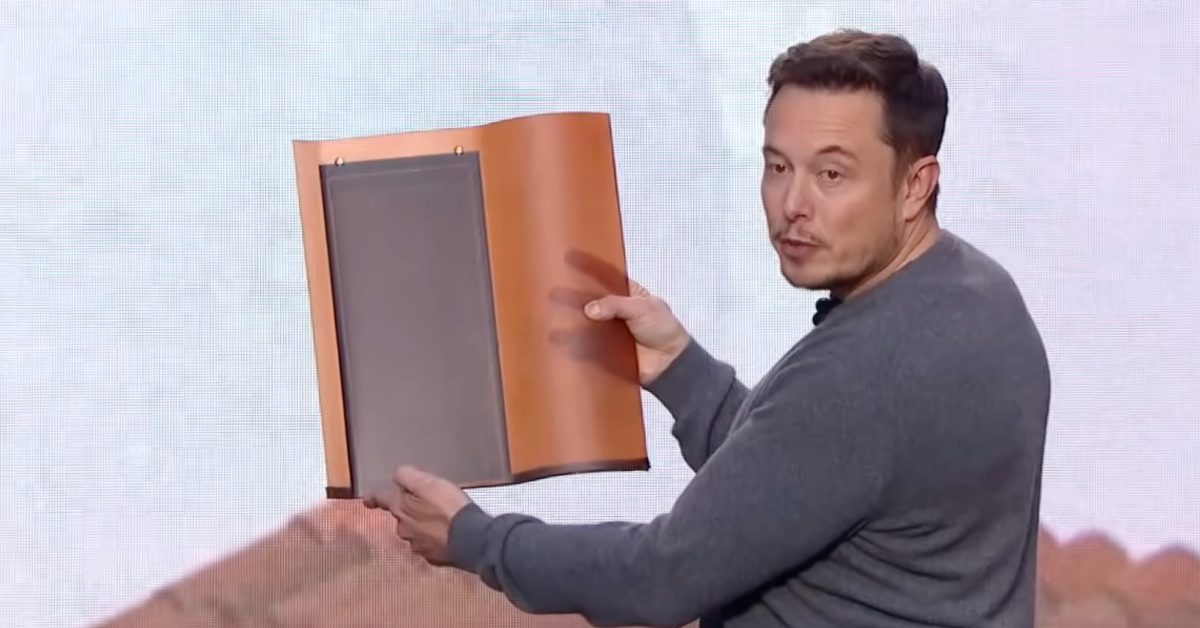
Swiss solar tile maker Freesuns is considering a US expansion after Tesla's website stopped offering solar roofs in August, the BBC reported. Per-roof engineering and awkward repairs come with any tile supplier, so the case for a solar roof still rests on the building.
The Product Desk
What happened
- Tesla's exit followed disappointing solar roof sales and a lawsuit over sudden price hikes.
- Before any repair costs, a solar roof might cost twice as much as a system of panels mounted on a roof.
- Solar Service of Colorado charges more to repair solar shingles than to repair a standard photovoltaic setup.
Compiled by The Product DeskSomething wrong?How this is made
Why it matters
- constraint Switching from Tesla to a specialist leaves in place the per-roof engineering that Freesuns' own chief executive names as a large share of the cost.
- cost Owners pay a premium at purchase and another on every service call, so installers have to price ongoing repairs into the original quote.
- decision Installers choosing which tile enquiries to chase have their strongest case where heritage rules or an owner's dislike of panels fix how the roof must look.
Kate Collardson handles operations at Solar Service of Colorado, a maintenance and inspection firm, and she has watched roofers lose patience with solar shingle jobs. She said of bringing one in: "You try to put a roofer into the equation and they're going, 'This is taking forever. I'm losing money. I could have sold 10 roofing jobs in the time that it takes me to sell this one'." [8] A solar roof usually needs roofers, solar installers and electricians working together. The building regulations also tend to be more complex than for panels [7]. Deborah Learoyd, Freesuns' chief executive, said her unit costs are slowly falling [20]. She puts much of the price somewhere else: "a lot of the cost is actually the fact that every roof is a little bit different. And so it has to be engineered a little bit differently, installed a little bit differently" [5]. Components are still made in small batches, and that limits economies of scale and standardisation [6]. The sales pitch is a roof that looks like an ordinary roof. Some people in the US "still hate the look of solar", Collardson said [19], and historic buildings face heritage rules that limit changes to their appearance [18]. What the owner actually gets is a roof that produces less. Tiles are smaller. They sit close to the roof with less airflow, heat cuts their output, and so far more roof area is needed for the same energy [13]. Coloured tiles do worse still. "The reason why all solar cells are black, and increasingly the whole panel is now black, is because black is the best absorbing colour," said Ben Graves, co-founder of UK solar company Sunsave [14]. The tile pitch assumes buyers are paying to keep panels out of sight. Graves describes buyers differently: appearance mattered more five years ago, and now "the vast majority of consumers are most interested in how much they can save" [16]. Sunsave does not offer solar roofs. "Most people in the UK just don't have enough money to pay for it," Graves said [15]. Martin Heinrich, who leads a research group at Germany's Fraunhofer Institute for Solar Energy Systems, wants a different comparison: "Let's not compare PV roof tiles to a standard PV system, but look at PV roof tiles as generating additional electricity from our roofs instead of just having the roof sit there," he said [17]. Service calls are where the premium comes back. "With solar shingles, we don't really have the benefit of that mapping; there's no room underneath the shingle for the electronics," Collardson said. Thermal cameras can find the faulty tiles [10]. Reaching them is harder. "You can remove the one in the middle of the array, but you have to walk on the others, and you really shouldn't walk on them because you're going to create micro-fractures and that's going to cause issues down the road," she said [11]. Freesuns' momentum rests on its chief executive's own estimate. The BBC report does not give the company's revenue or install count, so the growth figure cannot be sized [4]. Tesla is also not the only company to leave the market [3]. I'd sort a tile enquiry on two questions. Can the building's appearance change? And is the owner buying savings, or buying output from a roof that would otherwise produce none, as Heinrich frames it [17]? Where appearance is fixed and the owner wants generation, tiles are the job, and the supplier should be picked on who will engineer that particular roof and who will service it. A savings buyer with a fixed facade needs the premium and the output gap in writing before anyone books a roofer. If appearance can change and the owner wants savings, put in panels; Graves says most consumers now fall in that box [16].
What to watch
- Whether Freesuns commits to a US launch, and which roofers, solar installers and electricians it lines up to do the work.
- Whether Freesuns publishes revenue or install counts that would let Learoyd's growth estimate be sized.
- Whether matrix shingling or other cell advances narrow the output gap between tiles and mounted panels.
Clarity's read
What the record supports and how the coverage leans. The claims behind it follow.
Reality
- Evidence55
- Adoption
- Insufficient
- Hype gap+10
- Incentives60
- Confidence55
Claim ledger
Ranked by verification strength, evidence, and original report placement.
- [2]
Tesla's withdrawal from solar roofs followed disappointing sales and a lawsuit over sudden price hikes.
- [3]
Other companies besides Tesla have also pulled out of solar roofs.
- [4]
Deborah Learoyd, Freesuns' CEO and managing director, estimates that the company's sales have grown 20-30% since it was established in 2019.
- [5]
"a lot of the cost is actually the fact that every roof is a little bit different. And so it has to be engineered a little bit differently, installed a little bit differently"
- [6]
Solar roof components continue to be manufactured in smaller batches, which limits economies of scale and standardisation.
- [7]
Solar roofs typically require collaboration among roofers, solar installers and electricians, and building regulations tend to be more complex than for solar panels.
- [8]
"You try to put a roofer into the equation and they're going, 'This is taking forever. I'm losing money. I could have sold 10 roofing jobs in the time that it takes me to sell this one'."
- [9]
Kate Collardson of Solar Service of Colorado has to charge more for repair of solar shingles compared with a standard photovoltaic setup.
- [10]
"With solar shingles, we don't really have the benefit of that mapping; there's no room underneath the shingle for the electronics." Thermal cameras can identify the trouble spots.
- [11]
"You can remove the one in the middle of the array, but you have to walk on the others, and you really shouldn't walk on them because you're going to create micro-fractures and that's going to cause issues down the road."
- [12]
Before repair costs are factored in, a solar roof might cost twice as much as a system of solar panels mounted on a roof.
- [13]
Solar roofs are less efficient: the tiles are smaller, and because they sit close to the roof with less airflow, more energy is lost as heat. Much more space is needed for solar roof tiles to produce the same energy.
- [14]
Coloured tiles are even less efficient, according to Ben Graves, co-founder of UK solar company Sunsave: "The reason why all solar cells are black, and increasingly the whole panel is now black, is because black is the best absorbing colour."
- [15]
Sunsave does not offer solar roofs. "Most people in the UK just don't have enough money to pay for it," Graves believes.
- [16]
Appearance was a bigger factor five years ago; now "the vast majority of consumers are most interested in how much they can save".
- [17]
"Let's not compare PV roof tiles to a standard PV system, but look at PV roof tiles as generating additional electricity from our roofs instead of just having the roof sit there,"
ReportedSupportedSource: Martin Heinrich, research group lead, Fraunhofer Institute for Solar Energy SystemsView cited source - [18]
Solar roofs are especially important for historic buildings, where heritage rules limit changes to their appearance.
- [19]
Some people in the US "still hate the look of solar", Kate Collardson acknowledges.
- [20]
Learoyd says the unit costs for Freesuns' products are slowly decreasing.
- [21]
The small Swiss company Freesuns is considering expanding to the US.
Sources
1 independent publisher whose own reporting we read for this story.
- bbc.co.ukWhy are more roofs not made of solar tiles?
1 article · October 8, 2026
Topics and entities
Follow any of these and your For You feed starts watching them — no settings page required.