Product1 publisher2 min readPublished
Lockheed puts $35 million into an AGM-158 airframe with removable nose and tail
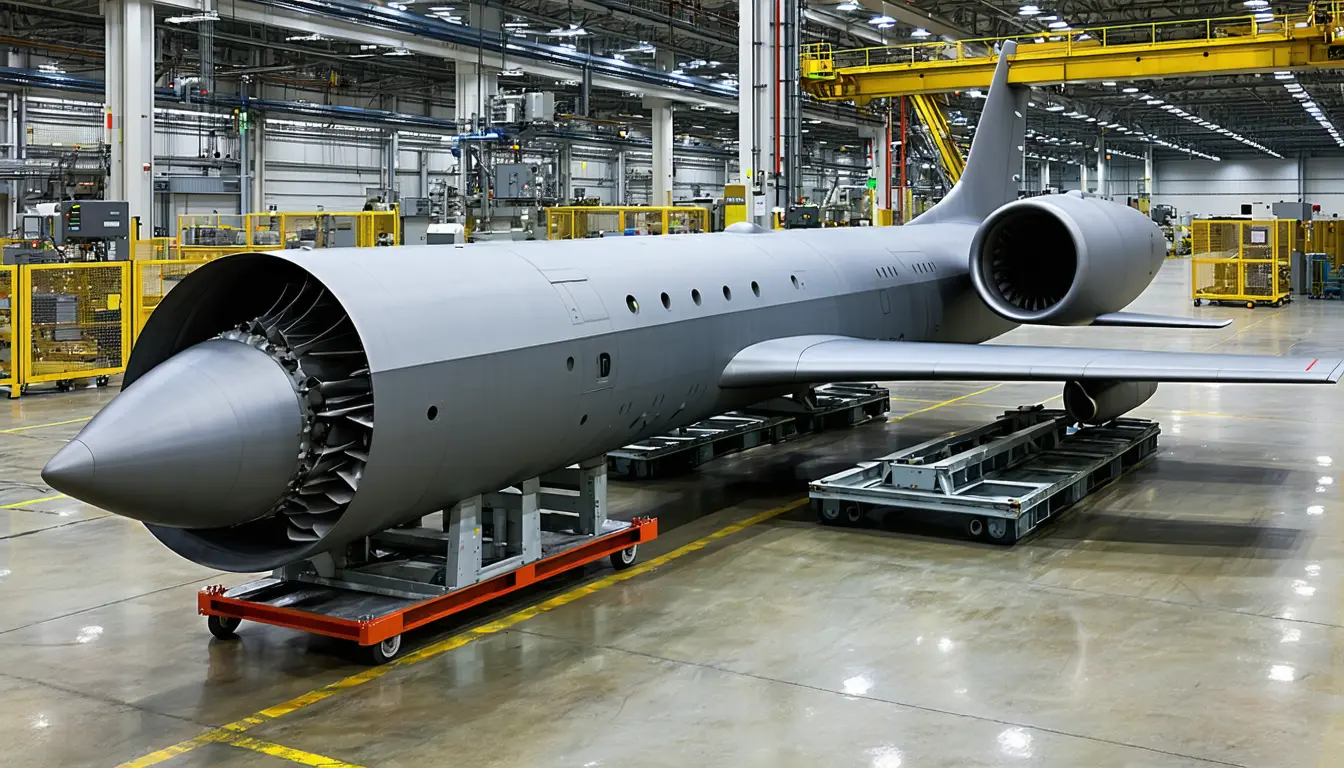
The FLEX concept keeps the JASSM production line and detaches the nose cone and boat tail, in two lengths, with Lockheed saying customers will be able to add capabilities of their own. No buyer has been named.
The Product Desk · Product desk
What happened
- Lockheed Martin has introduced the AGM-158 FLEX, a modular airframe intended to widen the launch and payload options available across its AGM-158 cruise missile family.
- The design uses removable nose cones that house the sensor suites of JASSM and the Long Range Anti-Ship Missile, so the front end of the weapon can be swapped.
- A removable boat tail can be configured for surface, sub-surface and ground launch, on top of the air-launched configuration JASSM and LRASM already have.
- FLEX comes in two disclosed lengths, a 206-inch extreme range option called JASSM-XR and a 168-inch option consistent with JASSM-ER, and the XR is being built first.
Compiled by The Product DeskSomething wrong?How this is made
Why it matters
- decision Lockheed's pitch invites customers to integrate capabilities themselves. A buyer weighing that has to decide whether it wants to own an integration program of its own.
- constraint Because FLEX is built on the existing JASSM and LRASM line, supply chain and mission planning software, anything a customer adds has to fit what that stack already supports.
- capability If the boat tail behaves as described, ships, submarines and ground launchers become plausible buyers for a missile family that until now flew off aircraft.
- precedent By selling the airframe on subcomponent obsolescence and factory scalability, Lockheed makes how long a fixed-configuration missile stays supportable part of the sales argument.
A customer buying into FLEX gets the two ends of the missile. Between the removable nose cone and the removable boat tail sits the JASSM subsystem set Lockheed says it qualified into the new airframe, running on the production line, supply chain and mission planning and software infrastructure that JASSM and LRASM already use [2][9].
The size menu has two entries so far: 206 inches for the extreme-range JASSM-XR, and 168 inches, consistent with JASSM-ER [7]. The longer one is 38 inches longer, about 23 percent [13]. JASSM-XR is the first configuration [8], and Lockheed says it is meant to give the U.S. military and its allies significantly increased standoff attack range [11].
"We have invested more than $35 million in designing and qualifying combat-proven Joint Air-to-Surface Standoff Missile (JASSM) subsystems into a new, modular airframe concept that will allow customers to quickly integrate capabilities that fit their needs the most," Lockheed Martin said in a statement [2]. The company said that investment covered concept development, airframe design, testing, prototype production and standing up key suppliers [3]. The report names no customer, contract or delivery date, and says nothing about which subsystems a customer may change without Lockheed requalifying the airframe [14].
The easiest customer to see is an air force already carrying JASSM. FLEX is designed to keep compatibility with all current and future JASSM and LRASM air-launched platforms [6], so the offer there is length and range on aircraft the buyer already flies. The harder customer is the ministry that wants its own seeker or datalink in the nose. interestingengineering.com, which reported the concept, said Lockheed is seeking an architecture in which different sensors, propulsion-related components, launch configurations and other subsystems can potentially be incorporated as requirements evolve [16].
Of the three benefits Lockheed lists for the airframe, two are the manufacturer's own: getting ahead of subcomponent obsolescence, and scalability at the production factory [10]. Those are also the two claims FLEX can demonstrate on its existing line before any customer signs anything [9].
The question worth asking of anything sold as modular is which parts a customer can change without the vendor requalifying the whole, and who pays for that qualification. Two things decide it: whether the customer supplies the part, and whether the change stays inside the vendor's existing production line and software. On the public record, FLEX sits in one place, which is parts Lockheed supplies, inside the line it already runs [9].
What to watch
- Publication of the nose cone and boat tail interfaces a customer would need to build a seeker or datalink against, and who certifies the result.
- A first FLEX order or flight test, and whether the buyer wants the air-launched, ground, surface or sub-surface configuration.
- Whether a 168-inch FLEX configuration consistent with JASSM-ER follows the JASSM-XR as the second build.