Product1 distinct publisher2 min readPublished
AV's $464.8M award covers 26 thirty-kilowatt LOCUST X3 units over five years, and the requirement underneath it says a minute of full-power lasing buys up to four minutes of waiting before the next one.
The Product Desk · Product desk

Compiled by The Product DeskSomething wrong?How this is made
A crew on perimeter watch gets one minute of full-power beam and then, by requirement, as much as four minutes of nothing before the next one. That recharge ceiling is written into what the Army is buying, according to Laser Wars, the newsletter that reported the E-HEL requirements and from which this reporting is republished [9][18]. It is also the number a battery will plan its night around.
Start with the division. $464.8M across 26 units averages about $17.9M each [13], slightly above the $17.4M apiece the fiscal 2027 request carried for the first two systems [4]. The two-plus-24 plan in the January draft request for proposals adds to exactly the 26 now on contract [16]. What the announcement does not do is break out training, spares or sustainment inside the total, so treat the per-unit figure as arithmetic rather than a price list [1].
Take the requirement at face value and it is a 20 percent duty cycle, one minute of lasing in every five [14]. Inside the firing minute the demands are real: 30 one-second shots is 30 seconds of beam against a dense wave, six nine-second shots is 54 seconds, three 17-second shots against hard targets is 51 [8][15]. What matters most in that minute is not the beam time itself but the recovery window after it, and whatever else is covering the sector while the laser is cooling.
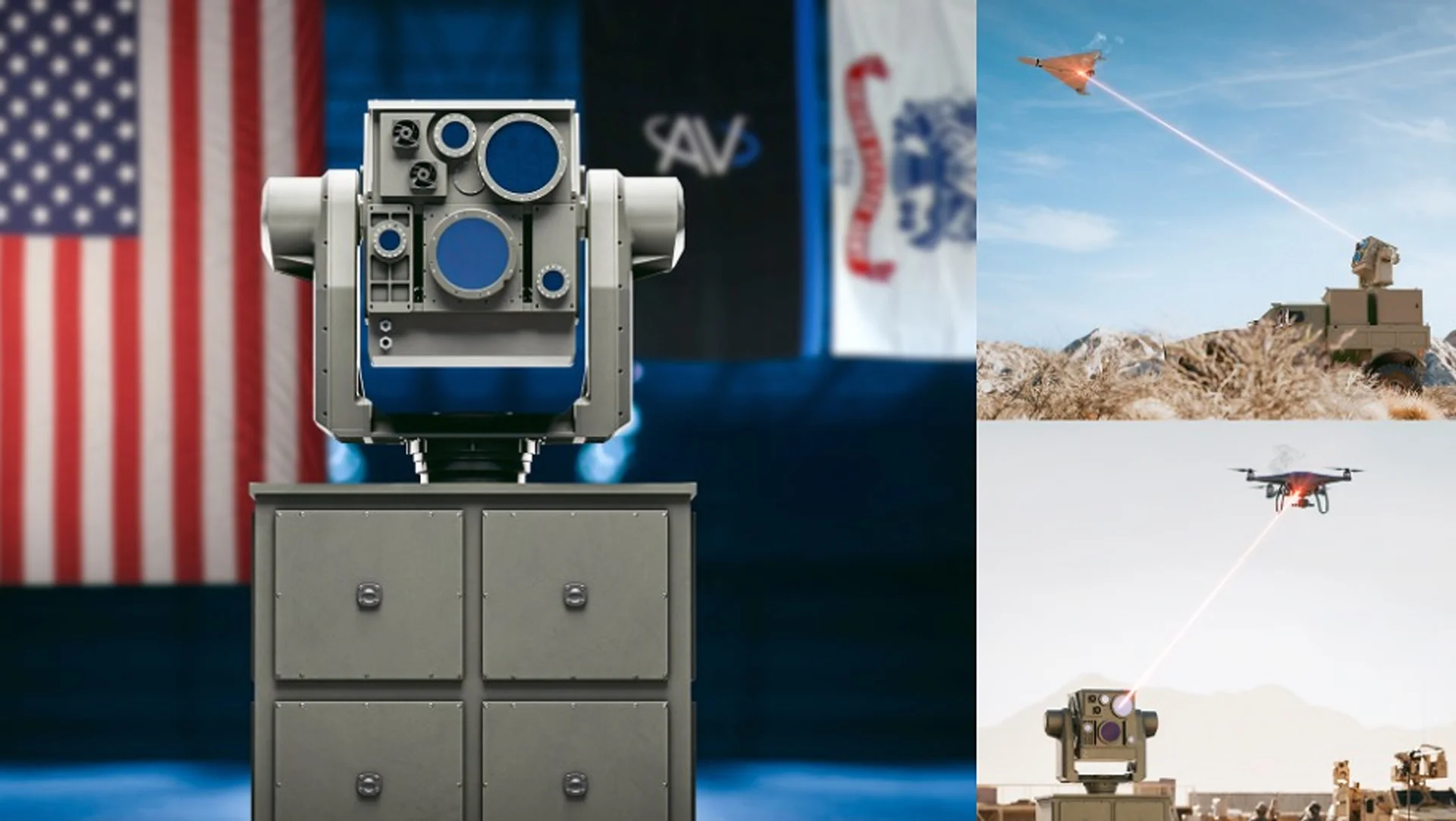
Defense Secretary Pete Hegseth watched AV's LOCUST bring down drones at White Sands Missile Range in June, on a range that also featured nLight's P5 version of DE M-SHORAD and Lockheed Martin's 300 kilowatt Valkyrie prototype [11]. The 300 kilowatt figure is the one that photographs well, but the 30 kilowatt system with a unit count and a five-year schedule is the one someone can be held to [2]. The Army has already bought the higher number once and walked away: four 50 kilowatt Stryker-mounted DE M-SHORAD systems went in-theater in 2024 under a program since aborted [12].
The transferable test is two figures set side by side. One is the peak the vendor leads with. The other is the recovery interval the person on shift lives inside, and whether it appears anywhere a buyer can enforce it. AV's chief executive Wahid Nawabi called this award a transition from experimentation to an enduring, fielded capability [5]. The part that makes that checkable is a unit count with a schedule attached, plus a recharge ceiling a test range can time with a stopwatch [2][9].
Ranked by verification strength, evidence, and original report placement.
The U.S. Army awarded defense contractor AV a $464.8 million contract for production of high-energy laser weapons under the Enduring High Energy Laser (E-HEL) program, the U.S. military's first formal directed energy program of record.
The Other Transaction Agreement will see AV equip the Army with 26 30-kilowatt LOCUST X3 laser weapons over the next five years to counter low-cost weaponized drones, per an AV statement on September 2.
The LOCUST X3 was formally unveiled in March and designed specifically for E-HEL; it is the latest iteration of the LOCUST Laser Weapon System that U.S. service members have used for counter-drone missions in the Middle East and at the U.S. southern border with Mexico.
The Army's fiscal year 2027 budget request called for procurement of two E-HEL systems for $17.4 million apiece, with plans to produce and rapidly field up to 24 additional units in the next five-and-a-half years, according to a draft request for proposals from the service's Portfolio Acquisition Executive for Fires published in January.
AV chairman and CEO Wahid Nawabi said the award marks a defining moment and that the transition of directed energy from experimentation to an enduring, fielded capability reflects years of collaboration and operational success alongside the U.S. Army.
E-HEL was first announced in a July 2024 special notice and envisioned as a modular system leveraging design and sustainment lessons from earlier LOCUST-based efforts, including the 20 kilowatt Palletized-High Energy Laser (P-HEL), which conducted live-fire testing from the flight deck of the aircraft carrier USS George HW Bush in October 2025.
Distinct publishers with included, body-backed reporting in this cluster.
1 article · September 4, 2026
Follow any of these and your For You feed starts watching them — no settings page required.
product
The Army bought a production laser after testing an earlier version of the system on drones in Texas1 distinct publisher
product
Navy asks for fiber that carries 10kW over 10km, and a laser weapon that comes apart1 distinct publisher
product
Army buys prototypes, not a blank sheet: Hanwha's wheeled K9 wins up to $262.9M for M777 successor1 distinct publisher
invest
Khosla and a16z put $7M into counter-drone startup Mara, at 1/50th their Hermeus cheque1 distinct publisher
Evidence-backed comparisons of source perspectives and observed adoption signals. Read the methodology
Which Builder, Operator, and Investor concerns the observed source mix emphasized—not a truth score.
Evidence, demonstrated adoption, hype gap, incentives, and confidence are assessed independently, each on its own current evidence. How these are measured.
Precise numbers, one door in
The $464.8 million, the 26 units, the three engagement profiles and the four-minute ceiling all reach us through a single channel: Fast Company reprinting Laser Wars, which is working from the Army's announcement, AV's September 2 statement and a draft solicitation it read in January. What lifts this above thin sourcing is internal consistency — two systems at $17.4 million plus up to 24 follow-ons is exactly the 26 now under contract, and the per-unit average lands within half a million of the budgeted price. What holds it back is that the requirement figures come from a draft, and no one in our coverage has read the contract file for themselves.
Lasers in the field; not these lasers
Two different things are being counted. Directed energy has genuine deployment history in this reporting — P-HEL overseas since 2022, a carrier-deck live-fire last October, Boeing's CLaWS across Europe as of July, LOCUST on counter-drone duty in the Middle East and at the southern border. E-HEL itself has 26 units on paper and none in a formation, with deliveries stretched across five years. The cautionary datapoint sits in the same paragraph as the encouraging ones: four DE M-SHORAD systems also went in-theater, in 2024, and that program is now cancelled.
Era declared upstairs, reload noted downstairs
A headline announcing the laser weapon era and a chief executive's 'defining moment' sit above the sentence that a system must be allowed four minutes of quiet for every minute of shooting. To its credit, this reporting prints both and explicitly needles the 'infinite magazine' rhetoric — the overstatement is in the framing and the vendor quote, not in a suppressed fact. Still, 26 units across five years, at a price the Army had already budgeted, reads more like a category getting its first production line than a transformation of air defense.
The seller's quote and the beat's own scoops
Three interests point the same direction. AV supplies both the statement announcing the unit count and the only executive voice, and it has a $30 million factory expansion to justify. The Army gains from a directed-energy win landing publicly while the fiscal 2027 request is live. And Laser Wars, whose byline this is, cites Laser Wars for the requirements and the White Sands demonstration — a beat writer's earned advantage, but also a closed loop with no adversarial voice in it. Nobody quoted here benefits from the program looking modest.
Well-briefed, unchecked
We are fairly confident about what was reported and less so about what it means. The hard facts are specific, mutually consistent and hard to fake — a contract value, a unit count, a solicitation's engagement table. But every one of them travels through a single writer, the requirement figures are drawn from a draft rather than final terms, and the story's larger claim, that the Pentagon has crossed from experimentation into fielding, is an interpretation resting on precedents that include one recently cancelled program.