Product1 publisher3 min readPublished
Apple gates Siri AI behind iPhone 15 Pro silicon
The iOS 27 assistant indexes texts, mail and calendars on the handset itself, which is why WIRED says it runs only on the iPhone 15 Pro and later, and why a software update arrives as a hardware question for everyone else.
The Product Desk · Product desk
What happened
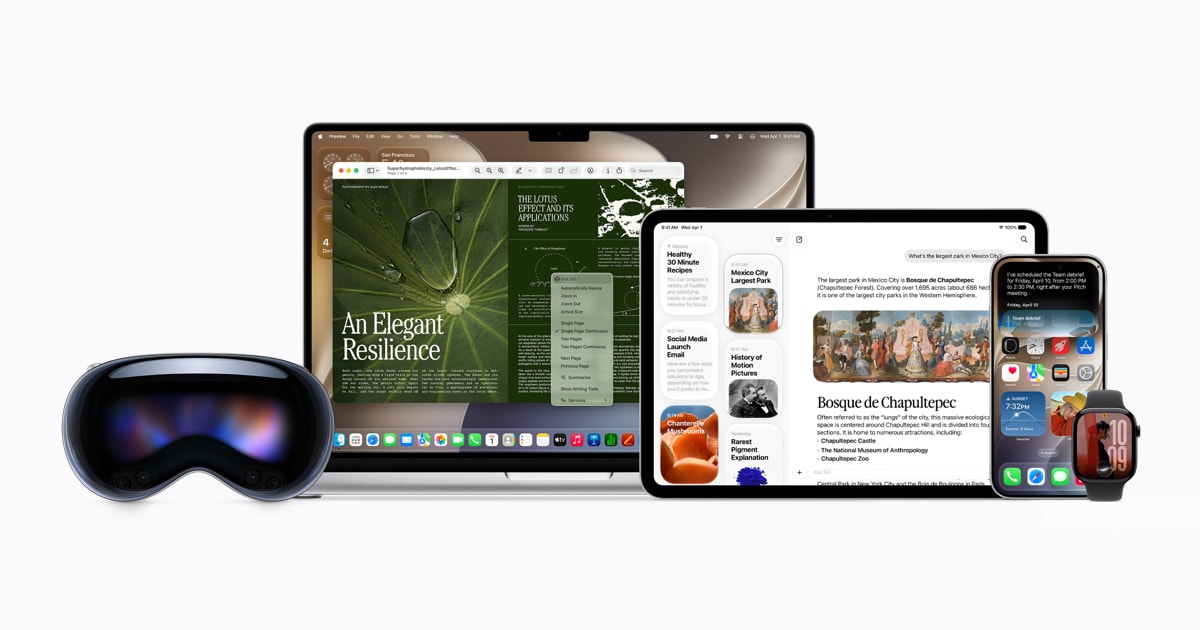
- iOS 27 renames Apple's assistant Siri AI and adds personal-context answers, on-screen questions, text writing and editing, and deeper in-app actions.
- WIRED says the features run only on the iPhone 15 Pro and 15 Pro Max or later, including the iPhone 18 Pro and iPhone Duo, because only those phones carry the required silicon.
- On arrival Siri AI indexes texts, emails, calendars and other stored content, with WIRED stating the index stays on the handset and nothing goes back to Apple.
- The assistant gets its own home-screen app for the first time, holding conversation history and syncing queries across Apple devices.
Compiled by The Product DeskSomething wrong?How this is made
Why it matters
- decision Enablement plans now sort staff by handset tier rather than OS version, because the update reaches every supported phone while the assistant does not.
- cost The standard iPhone 15, sold beside the 15 Pro, falls outside the stated requirement, so its owner buys hardware to get the headline feature of a free update.
- constraint Teams whose work lives in non-Apple apps get suggestions and Apple-app actions now, and wait on hooks WIRED describes only as arriving over time.
- exposure The review question stops being what leaves the device and becomes what a person holding the unlocked phone can ask an index that has read the mail.
The indexing pass is the part a rollout has to survive. WIRED's walkthrough says that when Siri AI arrives it spends time indexing texts, emails, calendars and whatever else is stored on the handset, and that all of it stays on the device rather than going back to Apple [5]. The same piece does not say how long the pass takes, what it costs in storage, or how it behaves on a phone carrying years of mail [17]. That on-device line is the sentence a security reviewer will accept fastest, and it is also the reason the hardware requirement exists: the work has moved onto the phone, so the phone has to be able to do it [4].
What actually changed splits into three groups once you sort the feature list that way. Two of them depend on the index, which is what lets someone ask which day the work appraisal is or pull up every photo of the dog [6][7]. One removes a step users were already performing by hand, since asking about what is on screen used to mean taking a screenshot and handing it over [8]. One removes a dependency rather than adding a capability, because the old assistant generated text through an integrated ChatGPT plug-in and the new one does not [10]. For a person who already talks to Siri daily, the screenshot going away is the change they notice first.
WIRED's own chronology is the strongest support for the lost-ground reading: Siri shipped in 2011, five years ahead of Google Assistant and 11 years before ChatGPT opened to the public, which puts those two at 2016 and 2022 [1][15]. WIRED calls Apple's voice AI comprehensively overtaken, and describes the missing dedicated app as something Siri had been sorely lacking beside Claude, Gemini and ChatGPT [2][14]. Those are the publisher's judgments. No Apple statement conceding the point appears in this material [18].
The part of the pitch that is still a promise is labelled as one: deeper hooks into non-Apple apps should show up over time [13]. What ships now sits inside Apple's own surfaces, creating a calendar event or switching a playlist, with a prompt when somebody texts a date and time [12].
That gap is the forcing function for anyone writing the enablement plan: for each Siri AI capability your team actually wants, ask three things. Does it need the on-device index? Then it needs the silicon. If it needs an app Apple does not own, it needs hooks that have no date. And if it needs a human to approve generated text, which Apple keeps with the user by design, it needs a review step you have to write yourself [11]. Anything answering yes to two of the three is a next-year project wearing this year's release notes. The measure that will settle whether any of it landed is how many people ask a second question after the first answer comes back, and a feature walkthrough cannot supply that number [17].
What to watch
- Whether Apple publishes indexing duration, storage cost or battery behaviour for a phone with years of mail on it.
- Whether the third-party app hooks WIRED describes as arriving over time land with named apps and a developer date.
- Whether Apple's own documentation reads the floor the same way WIRED does, or admits non-Pro iPhone 16 and 17 handsets.