SecurityNot yet confirmed elsewhere1 publisher3 min readPublished
994 dossiers in 499 pages: the NoName057(16) file reads as collection, not defacement
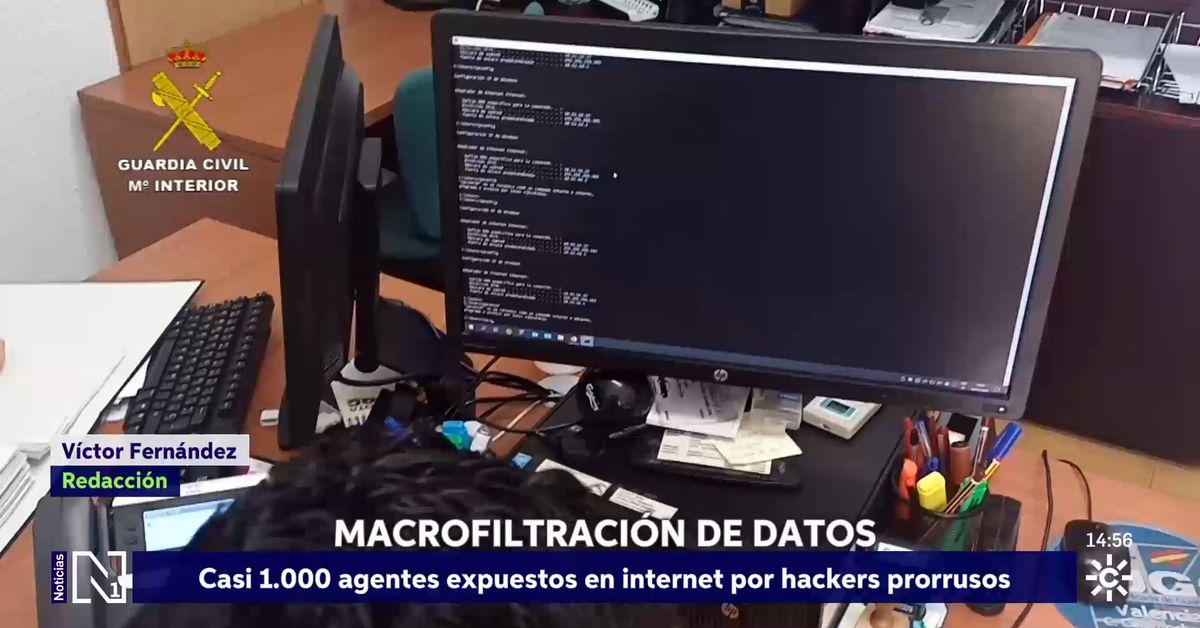
The Spanish police and military profiles carry photographs, phones and address-book contacts. Sources cited by Estrella Digital put a former GRU structure behind the group.
The Watch · Security desk
What happened
- A 499-page document attributed to NoName057(16) sets out 994 profiles the group ties to Spanish military and state security personnel.
- Police unions and Guardia Civil associations have identified some profiles and asked Interior for stricter protocols.
- Sources cited by the outlet say the collective descends from a hacker structure once linked to the GRU that now runs under a formally civilian arrangement.
Why it matters
- exposure The numbers lifted from address books put people with no police or military role inside the file, and they have no obvious route to finding out.
- constraint Protective measures have to treat all 994 profiles as live, because the file cannot be sorted into confirmed and unconfirmed personnel before it circulates.
- contradiction The document asserts in its own title what parts of its content do not state, so any official using the figure is quoting the leaker's description of the leaker's work.
- precedent Threat rankings built on attack counts now have to price in the same brand producing individual dossiers, which is a slower and more durable form of harm.
The spine of this file is a Telegram handle. That matters more than the page count: 1,014 identifier appearances reduce to 994 unique ones [3], a repetition rate of about two percent [13]. Raw exports out of a breached personnel system do not usually arrive that clean. And 994 profiles spread over 499 pages works out at roughly two per page [14], which is the footprint of a per-person template with room for a photograph and a contact block, not a spreadsheet dump with a thousand rows on twenty sheets.
The depth varies from one person to the next [12], but the format holds, and in many entries it extends past the named individual into several additional numbers listed under the heading "contacts in his address book" [8]. That is the part with the longest tail. A phone number harvested from someone else's phone stays valid whether or not its owner ever hears about this document.
What the file does not establish is who is in it. The collective titled it a listing of the Spanish security forces [4], yet some profiles state no profession or corps at all [4], and Estrella Digital is explicit that 994 counts individualised profiles rather than personnel whose membership can be verified from the contents [6]. Others in the file are labelled from the first page as members of the Spanish army, the Guardia Civil or the Cuerpo Nacional de Policia, with photograph, telephone, email, identifier and address-book contacts attached [5]. So the count officials will end up quoting is a count the publisher supplied about its own work product. The checking is being done downstream, by police unions and Guardia Civil associations who have identified some of the profiles and taken the matter to Interior [7].
On the sponsorship question, the sourcing is thinner than the file. Sources accessed by Estrella Digital say the collective inherits part of a hacker structure that previously operated linked to the GRU, Russian military intelligence, and later ran under a formally civilian arrangement [15]; sector sources cited by the same outlet place the GRU behind the group [16]. Both are unnamed and single-outlet, and nothing in a 499-page dossier set corroborates a chain of command. The on-record material is narrower and still useful: the group surfaced publicly in March 2022, weeks into the invasion of Ukraine [9], the CCN, which sits inside the CNI, has carried it in annual national-security cyberthreat reporting almost from the start of its activity [10], and the Ertzaintza's cybersecurity agency has placed it among the actors with the most attacks against Spain and other backers of Kyiv [11].
Those listings were earned by attack volume. A curated set of individual dossiers on serving personnel is a different output with a different consumer, and it does not decay the way a disruption campaign does: the traffic stops, the phone numbers do not. Estrella Digital says it also obtained a roster of people who form or have formed part of NoName057(16) [2], which is the one thread in this story that could turn attribution from sourcing into names.
What to watch
- Whether Interior or the CCN publishes a figure for how many of the 994 profiles correspond to serving personnel.
- Whether the roster of current and former NoName057(16) members obtained by Estrella Digital leads to named attribution or arrests.
- Whether the GRU lineage claim is corroborated by a named authority rather than unnamed sector sources.
Clarity's read
What the record supports and how the coverage leans. The claims behind it follow.
Reality
- Evidence44
- Adoption32
- Hype gap+18
- Incentives63
- Confidence38
Claim ledger
Ranked by verification strength, evidence, and original report placement.
- [1]
A 499-page document attributed to NoName057(16) contains photographs, telephone numbers, emails, Telegram accounts and other data corresponding to 994 different profiles that the collective links to members of the Spanish Armed Forces and the State Security Forces and Corps.
- [2]
Estrella Digital says it analysed the complete file and also obtained a list of hackers who form or have formed part of NoName057(16).
- [3]
The 499 pages contain 1,014 appearances of Telegram identifiers; after discarding repetitions there are 994 unique identifiers.
- [4]
The hackers titled the document a listing of the Spanish security forces, but in some of the profiles the profession or the corps the person belongs to is not expressly stated.
- [5]
From the first page, people identified as members of the Spanish army, the Guardia Civil or the Cuerpo Nacional de Policia appear alongside a photograph, telephone number, email, identifier and contacts from their address book.
- [6]
It is not possible to assure that all 994 are police officers, Guardia Civil or military personnel; 994 is the number of individualised profiles the file contains, not the number of officers and soldiers whose membership can be verified from its contents alone.
- [7]
Police unions and associations of the Guardia Civil have identified some of the profiles and have demanded stricter protocols from Interior to prevent this type of vulnerability.
- [8]
In numerous profiles the file includes several additional telephone numbers under the indication "contacts in his address book".
- [9]
NoName057(16) appeared publicly in March 2022, a few weeks after the start of the Russian invasion of Ukraine.
- [10]
Almost from the start of its activity, the group was included by the Centro Criptologico Nacional, which belongs to the Centro Nacional de Inteligencia, in its annual reports on cyberthreats to national security.
- [11]
The Ertzaintza's Cybersecurity Agency placed the group among the actors with the greatest number of attacks against Spain and other countries that have supported Ukraine since the start of the Russian invasion.
- [12]
The information collected varies considerably from one person to another.
- [13]
The gap between total and unique Telegram identifiers is 20 appearances, a repetition rate of about 2 percent.
- [14]
994 profiles across 499 pages is an average of about two profiles per page.
- [15]
Sources accessed by Estrella Digital maintain that the collective is heir to part of the hacker structure that previously operated linked to the GRU, Russian military intelligence, and that later came to function under a formally civilian structure.
ReportedInsufficientSource: unnamed sources cited by Estrella Digital2 sources— create a free account to open themView cited source - [16]
According to cybersecurity sector sources accessed by Estrella Digital, the GRU is behind the group.
ReportedInsufficientSource: unnamed cybersecurity sector sources cited by Estrella Digital2 sources— create a free account to open themView cited source
Sources
1 independent publisher whose own reporting we read for this story.
- Estrella Digital
estrelladigital.es
1 article · August 25, 2026
Topics and entities
Follow any of these and your For You feed starts watching them — no settings page required.