Invest1 publisher3 min readPublished
ESMA sorts Polymarket and Kalshi's contracts into three separate EU rulebooks
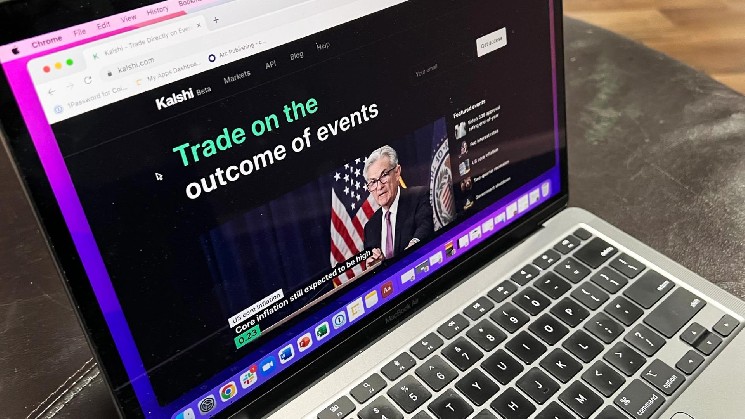
In a Thursday risk report the EU securities regulator said event contracts generally need an authorisation neither platform holds, then split those contracts across binary-options rules, MiCA and national gambling law.
The Investor · Invest desk
What happened
- ESMA said in a Thursday risk report that Polymarket, Kalshi and other prediction markets lack the authorization required to sell event contracts to users across the European Union.
- The report sorts contracts by what they reference: a payout hinging on a financial variable is treated as economically close to a binary option, the product the EU barred from retail investors years ago.
- Spain's Consumer Rights Ministry used ISP-level DNS and network blocks to ban Kalshi and Polymarket temporarily in May over their missing gambling licences.
Compiled by The InvestorSomething wrong?How this is made
Why it matters
- decision The platforms now choose between licensing country by country under gambling law that differs across the EU, arguing their contracts are not financial instruments, or excluding the bloc entirely.
- exposure An EU financial-instrument classification would bring the market abuse regime with it, so the licence that legitimises a contract is also the licence that imports insider dealing liability.
- precedent ISP-level blocking is the tool that has actually been used, and France's July order tells other member states they need no securities finding to act.
ESMA's test runs contract by contract, so one book that lists a central bank decision next to a token price can sit in two regimes at the same time [4][6].
The three buckets are not symmetric. Gambling licences exist to be applied for, and Spain's Consumer Rights Ministry blocked both platforms in May precisely because they were missing [15]. A contract that uses blockchain technology but is not a financial instrument may fall under MiCA [6]. A contract whose payout hinges on a financial variable is, in ESMA's reading, economically close to a binary option [4], and national intervention measures already ban the marketing, distribution and sale of those products to retail clients [5]. Nothing in that third bucket is available to license for retail.
The classification also decides who polices the thing everyone says they are worried about. Europe's insider dealing rules apply only where a contract counts as a financial instrument [11], so a platform that successfully argues its event contracts are not instruments argues its way out of the market abuse regime and into national gambling law, where Gespa director Manuel Richard's reasons for acting against unlicensed platforms already include insider trading, manipulation and money laundering [13]. Nine European gambling regulators moved against unlicensed platforms during the FIFA World Cup, according to Cryptopolitan [12].
That is all existing law. ESMA said in July that existing binary options rules cover event contracts counting as financial instruments [8], and Norton Rose Fulbright traced the definition back to MiFID II [9]. What Thursday's report adds is the sentence that "the marketing and sale of event contracts in the EU generally requires an EU authorisation" [2] plus a harder operational question: ESMA said it is unclear why all EU member states are not blocked, and asked whether the sites can realistically stop users masking their location with a VPN [3].
The money is barely documented here. The only forward number is the $1 trillion of prediction-market volume by 2030 that analysts cited by Norton Rose Fulbright expect [10], and no current volume or EU share sits next to it, so the revenue at stake in a European exit cannot be computed from this material [18]. What can be counted is the blocking: France's July ISP order plus Switzerland, Poland, Belgium, Portugal and Spain makes six European jurisdictions, eight once Singapore and Brazil are added [16].
The platforms buy gambling licences country by country, which is a per-member-state build because national gambling laws differ across the EU [7]. They argue non-instrument status and settle under MiCA [6]. Or they geoblock the bloc and forgo the volume. The VPN question makes that expensive to prove [3].
On the evidence, the theory that moves first is gambling, because it is the one that already took both platforms off Spanish screens in May and Polymarket off French ones in July without waiting for any securities finding [15][14]. The read changes if a national competent authority issues a measure aimed at event contracts as financial instruments, or if either platform obtains an EU authorisation, which would mean its contracts had been classified out of the binary-options bucket.
What to watch
- Whether any national competent authority issues a measure aimed specifically at event contracts as financial instruments rather than as unlicensed gambling.
- Whether either platform files for a gambling licence in an EU member state, or geoblocks all 27 and says so.
- Publication of EU volume or EU revenue share by either platform, which is what would let the cost of a European exit be sized.