Build1 publisher3 min readPublished
Data center developers are buying their own substations and batteries to get past local opposition
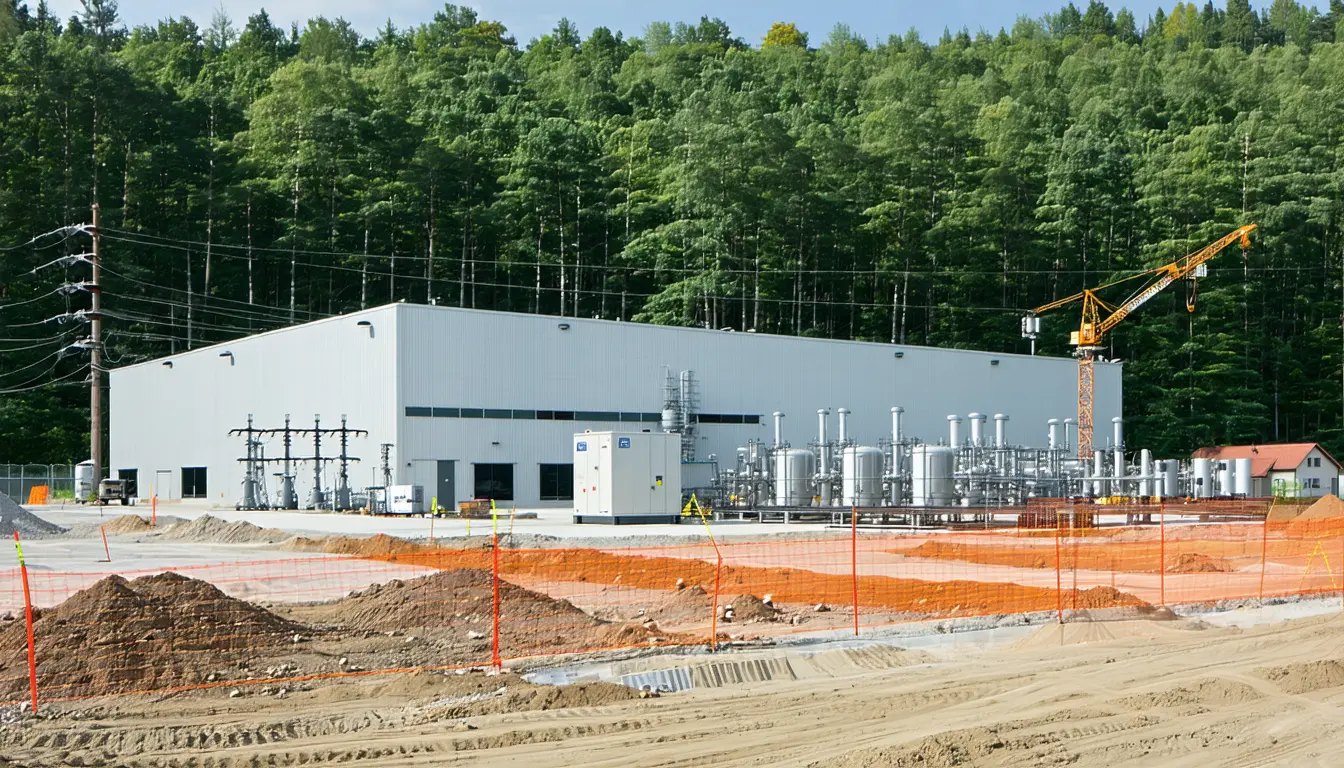
Data center developers are paying for batteries, substations and transmission upgrades to win local approval, according to Data Center Knowledge. That puts the cost of residents' rate-hike fears in the developer's budget before any site is approved.
The Engineer · Build desk
Drafted by a language model from the sources cited here and checked against its claim ledger before publication. How we use AISend a correction
What happened
- Some grid planners and utilities are formalizing developer-funded upgrades so they become standard practice for new data center projects.
- Site selection once turned on metro proximity and fiber, then on power; community support is now treated as an essential criterion as well.
- Hecate Energy's Diane Sullivan tied part of the backlash to past practice: NDAs with city officials and projects set up before being announced.
- Beyond paying taxes, developers can make benefits tangible to residents by supporting local schools or helping stabilize electricity rates.
Compiled by The EngineerSomething wrong?How this is made
Why it matters
- constraint Generation partners, EPC contractors and utility agreements have to be lined up before filing, since permits and system operator sign-off rarely come without a funded power plan.
- precedent Where a utility makes developer funding standard practice, every new project in its territory carries the upgrade cost, including developers who would not have volunteered it.
- decision Resident attitude now has to be tested during site screening, because a commercially sound project can still stall when the community turns out against it.
Residents' worries about power availability and local rate hikes are among the biggest objections opponents raise. In some regions, data centers are already being blamed for rising electricity rates [2]. The grid payments are aimed at that objection. Developers who contribute to transmission upgrades, or buy transformers, substations and other power electronics, do it to keep the extra cost off ratepayers [4].
I think the battery deals are the better-engineered answer. Some developers have paid for entire battery energy storage systems that benefit both the grid and their own data centers [3]. One purchase then counts toward the facility's power plan and gives the utility storage it did not pay for [1].
Permitting and system operator approval are unlikely without a clear plan for adding new power resources, typically funded by the developer, according to the Data Center Knowledge report [10]. That plan can draw on wind, solar, batteries, geothermal, gas or nuclear. It often combines several, assembled with power plant developers, EPC contractors and utilities [11]. "Any project proposal should also include a power generation solution, or you are probably wasting your time," Diane Sullivan, chief development officer of Hecate Energy, said at Data Center World Power in Dallas [12][1]. Hecate develops utility-scale energy parks [6], so her rule for data center developers also describes demand for what her own company builds.
Sullivan's other point was about timing. "In the past, developers would sometimes obtain permits before informing the public about a data center project, which is a terrible idea," she said [7]. "We must become open and be fully transparent about our plans" [8]. The report says quiet development may have worked for smaller projects with little effect on the local grid. AI data centers are now too large for it [9].
Community support adds a way to fail that a sound project plan does not prevent. "You could have a perfectly executable project that's real, it's commercial, and has well-allocated risk, but the community shows up and doesn't want you there," said Dado Slezak, executive vice president of energy capital and strategy at QTS Data Centers [14]. He cited an agreement QTS reached on a project in Iowa as an example of making the benefits concrete for residents [15].
These are practitioners' tips from a conference stage. They transfer to a given site only if the local objection is mostly about power and rates. Opponents also complain about water and noise, and some government bodies have imposed bans or moratoria [17]. A developer-funded battery does not answer a water or noise complaint. The report does not attach a dollar figure to any battery, transformer or substation purchase, so the size of this budget line cannot be read from it.
What to watch
- Utility filings that formalize developer-funded upgrades and state their costs, the first data that would size this budget line.
- Disclosure of the terms of the QTS agreement in Iowa that Slezak cited.
- New bans or moratoria in regions where developers already pay for grid upgrades; those would show power spending does not settle water and noise objections.