Product1 publisher2 min readPublished
Arevon's Daly City battery adds 62 MW inside the same four-hour window
California needs cover for the hours when solar output falls and demand stays high. Arevon's Cormorant project in Daly City answers four of those hours at 250 MW, under contract to MCE, starting in 2027.
The Product Desk · Product desk
What happened
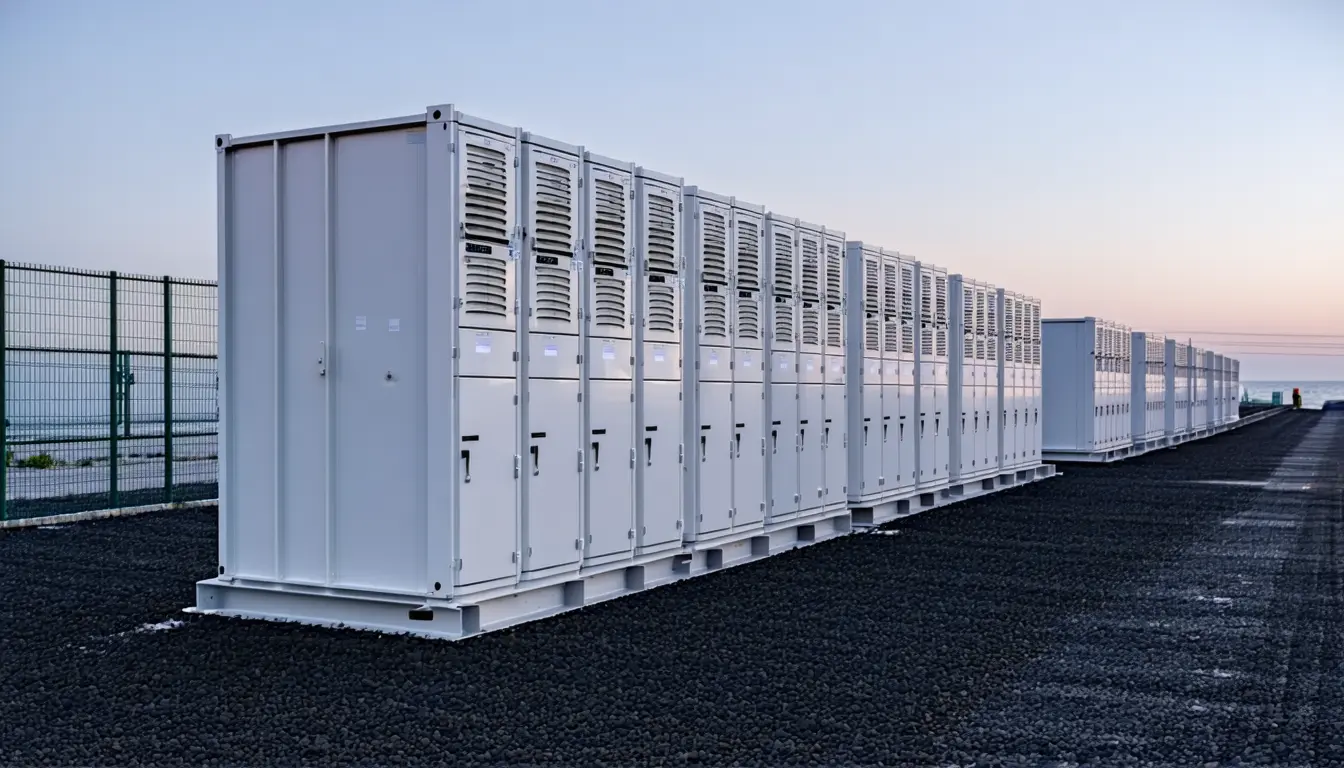
- Arevon started construction in March 2026 on Cormorant, a 250 MW/1,000 MWh lithium iron phosphate battery in Daly City, California, with commercial operation expected in 2027.
- MCE, an electricity provider serving more than 1.8 million residents and businesses across several California counties, holds a long-term offtake and contracted for the capacity added when the project was enlarged.
- Arevon says the finished facility will be capable of powering about 321,000 homes for up to four hours.
- Arevon estimates the project will produce more than $73 million in property tax revenue over its lifetime, with about 175 workers on site at peak construction.
Compiled by The Product DeskSomething wrong?How this is made
Why it matters
- decision A utility team benchmarking storage cannot price this one: with the capital cost and the offtake price unpublished, the only comparable Cormorant offers is capacity and the MWh-to-MW ratio.
- constraint Four hours at 250 MW is the whole envelope MCE bought. An evening gap that runs longer needs a second resource, and this contract will not stretch to cover it.
- precedent Because the same offtaker absorbed the increment, enlarging an in-flight project by a third is now a demonstrated route for developers who do not want to go find a new buyer.
The homes figure is the one that gets repeated. It converts in a single step: 250 MW divided by 321,000 homes is about 0.78 kilowatts each, held for four hours [18][4]. A procurement team is better served by the two numbers in the project's own name, 250 MW and 1,000 MWh [1].
The resize says more about what the buyer wanted. Cormorant was designed as a 188 MW/752 MWh system and is being built at 250 MW/1,000 MWh [7]. That is 62 MW and 248 MWh more, about a third in each case, and the duration did not move: 752 over 188 is four hours, and 1,000 over 250 is also four [19]. MCE contracted for the capacity the expansion created [8]. The increment went into output, not into hours.
Four hours is sized to a particular gap. Arevon is building Cormorant for the periods when California demand is high and generation from sources such as solar is falling [16]. Molly Sterkel, a director in the Energy Division of the California Public Utilities Commission, said "The CPUC expects over 20 gigawatts of new clean resources to come online by 2032 to meet our reliability requirements. Battery storage is a critical part of that effort, providing reliability when solar generation declines and demand remains high" [9][10]. Cormorant's 250 MW is 1.25 percent of that 20 GW [20].
The announcement does not include a capital cost or the price MCE pays under the offtake [22]. The published numbers are local and environmental: Arevon says the facility will save more than 4.2 billion gallons of water and avoid about 174,000 metric tons of carbon dioxide annually [12], and MCE will distribute more than $500,000 for community programs under the agreement [14].
Arevon already operates the 300 MW Nighthawk and 200 MW Peregrine storage projects in California [15]. Cormorant takes those three to 750 MW of power from 500 MW [21]. Johnson, quoted in the project announcement, said Cormorant "represents the kind of critical energy infrastructure California needs to meet growing electricity demand while strengthening grid reliability" [17].
Two questions sort most storage announcements before the homes figure gets a chance to travel. Divide MWh by MW to get the hours at full output; the contract cannot deliver a longer discharge than that. Then, when a project grows during development, check whether the growth went into hours or into megawatts. Cormorant went into megawatts, and what MCE's customers get in 2027 is 250 MW for four hours [19][2].
What to watch
- Whether Cormorant enters commercial operation in 2027 at the full 250 MW, or slips past the schedule Arevon has published.
- Whether MCE's offtake price or term surfaces in a CPUC filing, which would put a number on four-hour LFP capacity in the Bay Area.
- Whether the CPUC's 20 GW by 2032 procurement starts favouring durations longer than four hours.