SecurityWidely confirmed6 publishers2 min readPublished Updated
Grid supply-chain risk becomes a prohibition, and the inventory bill lands on utilities
A national emergency declaration turns grid supply-chain preference into prohibition. What counts as prohibited will not be defined for roughly another four months.
The Watch · Security desk
What happened
- Trump signed an executive order declaring a national emergency over the U.S. bulk-power system and moving to bar certain foreign-produced equipment, software and systems.
- The prohibition covers acquisition, importation, transfer and installation of equipment determined to pose a significant national security risk.
- The Energy Department has 120 days to write implementing rules, in consultation with other departments.
- A similar order signed late in Trump's first term was suspended by the Biden administration pending a scope review, and a related Energy Department order was revoked and replaced.
- CyberScoop reports the order responds to concern about Chinese-made equipment already inside U.S. energy infrastructure.
Why it matters
- constraint Because the scope runs to associated critical software and digital capabilities, a hardware asset register no longer answers the question; the searchable unit becomes code and remote access, which...
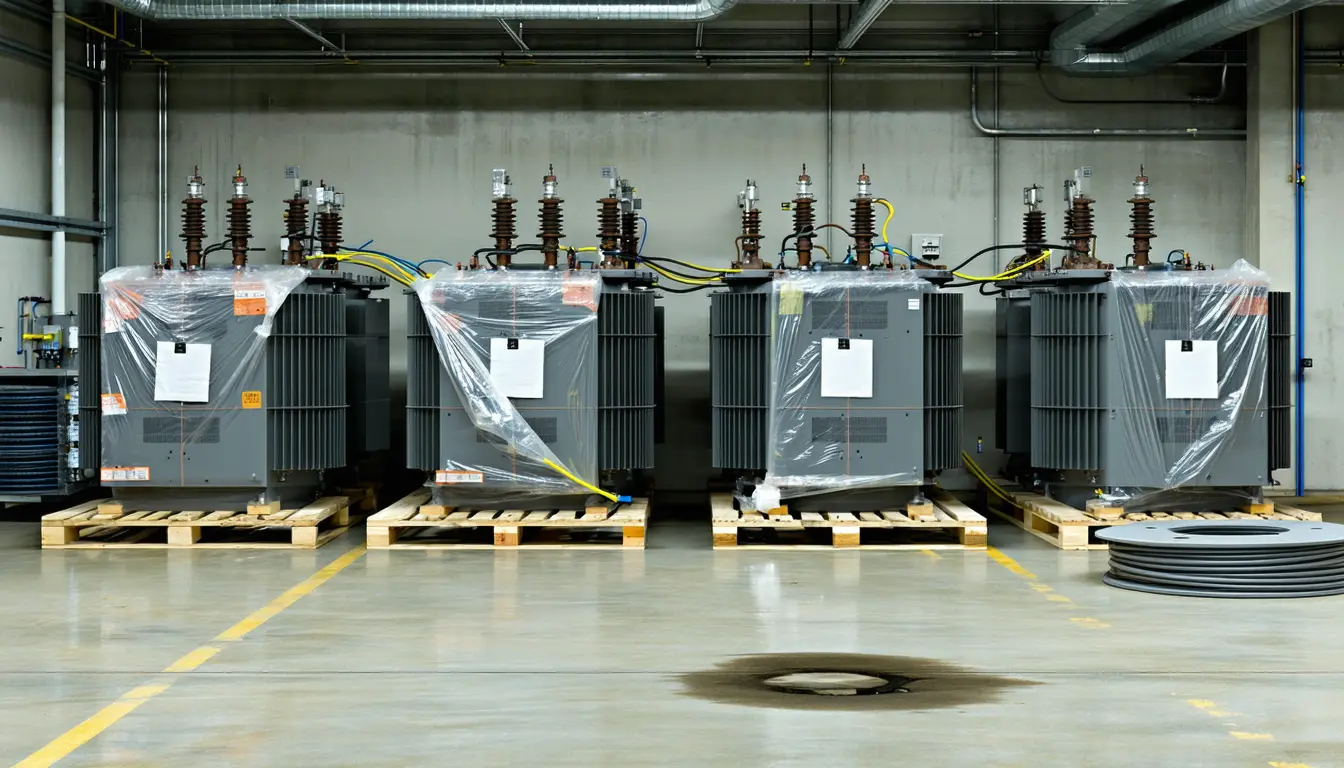
- exposure Solar and transformer fleets are the exposed positions here, given the concentration the IAEA describes in Chinese production capacity.
- decision Operators who struggled with the 2020 version and then watched it get shelved must now decide whether to fund discovery again before anyone tells them what qualifies.
- precedent Using an emergency declaration rather than a procurement standard makes the same instrument easier to reach for in the next sector that worries Washington.
The clause worth reading twice is the escape hatch. The White House fact sheet says purchases and installations can be "appropriately" conditioned to address risk rather than blocked outright [c3b]. Those are two very different compliance regimes wearing one policy. A prohibited-equipment list is finite and auditable: you check nameplates against a list and you are done. A conditions regime is a standing obligation on the operator, re-triggered by every firmware push and every remote support session from the vendor. Which of the two the Energy Department writes determines whether this costs a procurement review or a permanent function.
The stated basis is cyber. The order cites malicious cyber activities as an impetus [5] and warns that foreign-produced equipment "might have digital backdoors built into their systems that allow a foreign country to access that equipment remotely" [7]. The most concrete public grid-targeting evidence in the record here points somewhere else: in 2024, then-FBI Director Christopher Wray told Congress that hackers prepositioning in small office and home routers had the electricity grid among their targets should China and the United States go to war [13]. Consumer and small-business routers are not bulk-power system equipment, and they do not pass through utility procurement. An instrument aimed at transformers and their firmware does not reach that access path, whatever else it does.
Then the sequencing. Roughly four months of rulemaking sit between the emergency declaration and any published criteria [12]. During that window the phrase "significant national security risk" has no operational test, so anyone starting discovery now is guessing which attribute will be dispositive: country of final assembly, ownership of the vendor, or the origin of the code running on the device. Those three answers do not select the same equipment, and an inventory built against the wrong one is work that has to be redone.
That is the practical output of the first four months: someone has to be able to say what is installed and what it can reach. Producing that answer takes longer than writing the rule that will demand it, which is the part of the timeline nobody controls.
What to watch
- Whether the Energy Department's rules name specific vendors and countries or instead stand up a case-by-case conditions process.
- Whether firmware updates and vendor remote support to already-installed equipment are treated as covered transactions.
- Whether any utility publicly reports halted or delayed installations while the criteria remain unwritten.
Clarity's read
What the record supports and how the coverage leans. The claims behind it follow.
Reality
- Evidence78
- Adoption
- Insufficient
- Hype gap+30
- Incentives
- Insufficient
- Confidence70
Perspective Coverage
6 publishers- Builder
- Builder 23%
- Operator
- Operator 57%
- Investor
- Investor 20%
Claim ledger
Ranked by verification strength, evidence, and original report placement.
- [1]
President Donald Trump signed an executive order on Wednesday declaring a national emergency to secure the U.S. bulk-power system and aiming to prohibit certain foreign-produced equipment, software and systems from being used in the country, citing cyber and other security threats.
ReportedSupportedSource: cyberscoop.com5 sources— create a free account to open themView cited source - [2]
The order says it forbids "any acquisition, importation, transfer, or installation" of such foreign-produced equipment if it is determined to pose a significant national security risk.
ReportedSupportedSource: text of the executive order, via cyberscoop.com5 sources— create a free account to open themView cited source - [3]
A White House fact sheet says the order generally prohibits certain foreign-produced bulk-power system electric equipment, including associated critical software and digital capabilities that could pose cybersecurity or operational risks, from being purchased or installed in the United States.
ReportedSupportedSource: White House fact sheet, via cyberscoop.com5 sources— create a free account to open themView cited source - [4]
The same White House fact sheet says the order alternatively "appropriately conditions such purchases and installations to address those risks."
ReportedSupportedSource: White House fact sheet, via cyberscoop.com5 sources— create a free account to open themView cited source - [5]
The order, titled "Declaring a National Energy Emergency to Secure the United States Bulk-Power System," cites "malicious cyber activities" as one impetus.
ReportedSupportedSource: text of the executive order, via cyberscoop.com5 sources— create a free account to open themView cited source - [6]
The executive order is a response to fears of Chinese-made equipment housed within U.S. energy infrastructure and a continuation of other Trump administration measures to shun that equipment.
ReportedSupportedSource: cyberscoop.com4 sources— create a free account to open themView cited source - [7]
The order states that minimal restrictions on foreign-produced bulk-power system equipment augment the ability of some foreign entities to create and exploit vulnerabilities, and that such equipment "might have digital backdoors built into their systems that allow a foreign country to access that equipment remotely."
ReportedSupportedSource: text of the executive order, via cyberscoop.com4 sources— create a free account to open themView cited source - [8]
Near the end of Trump's first term he signed an executive order seeking to limit the purchase of foreign-made bulk-power equipment; the Biden administration suspended that order, citing the need to review its scope, and revoked and replaced a related Energy Department order.
ReportedSupportedSource: cyberscoop.com3 sources— create a free account to open themView cited source - [9]
Some utilities found compliance with the 2020 executive order difficult.
ReportedSupportedSource: cyberscoop.com3 sources— create a free account to open themView cited source - [10]
For the new order, the Energy Department has 120 days to develop rules to implement it, in consultation with other key departments.
ReportedSupportedSource: cyberscoop.com3 sources— create a free account to open themView cited source - [11]
China supplies 85% of solar supply chain production capacity, according to the International Atomic Energy Agency, and China is a major player in the power transformer manufacturing business.
ReportedSupportedSource: International Atomic Energy Agency, via cyberscoop.com2 sources— create a free account to open themView cited source - [12]
The Energy Department's 120-day rulemaking deadline is roughly four months from the signing of the order.
- [13]
In 2024, then-FBI Director Christopher Wray told Congress that hackers prepositioning themselves in small office and home routers had the electricity grid as one of their targets should China and the United States go to war.
ReportedSupportedSource: then-FBI Director Christopher Wray, congressional testimony, via cyberscoop.comView cited source
Sources
6 independent publishers whose own reporting we read for this story.
- cyberscoop.comCyber threats nudge Trump to sign executive order on foreign equipment in U.S. energy infrastructure
2 articles · August 26, 2026
- scworld.comTrump reissues ban on foreign bulk-power systems
1 article · August 28, 2026
- securityaffairs.comTrump Targets Foreign Technology in New U.S. Power Grid Security Order
1 article · August 28, 2026
- securityweek.comTrump Order Aims to Block Foreign Backdoors in US Power Grid Gear
1 article · August 27, 2026
- therecord.mediaWhite House bans foreign-made equipment for power generation over cyber backdoor concerns
1 article · August 27, 2026
- whitehouse.govDeclaring a National Emergency to Secure the United States Bulk-Power System – The White House
1 article · August 26, 2026
Topics and entities
Follow any of these and your For You feed starts watching them — no settings page required.
Topics
- Power grid cybersecurityFollow
- Industrial Control SystemsFollow
- Vendor and Supply Chain SecurityFollow
Entities
- Executive Order 14420Follow
- White HouseFollow
- Donald TrumpFollow
- ChinaFollow
- International Emergency Economic Powers ActFollow
- Christopher WrayFollow
- US Department of EnergyFollow