BuildIndependently confirmed4 publishers2 min readPublished
Museum's Cray-1 replica reaches a reported 1.3 teraflops from 30 Mac minis on a custom Python test
Spain's Museo de Historia de la Computación reports 1.3 teraflops from 30 Mac minis, mostly 2012 models, inside a Cray-1 replica. Both of its reported results come from one custom Python matrix-multiplication script, so the figures describe that test.
The Engineer · Build desk
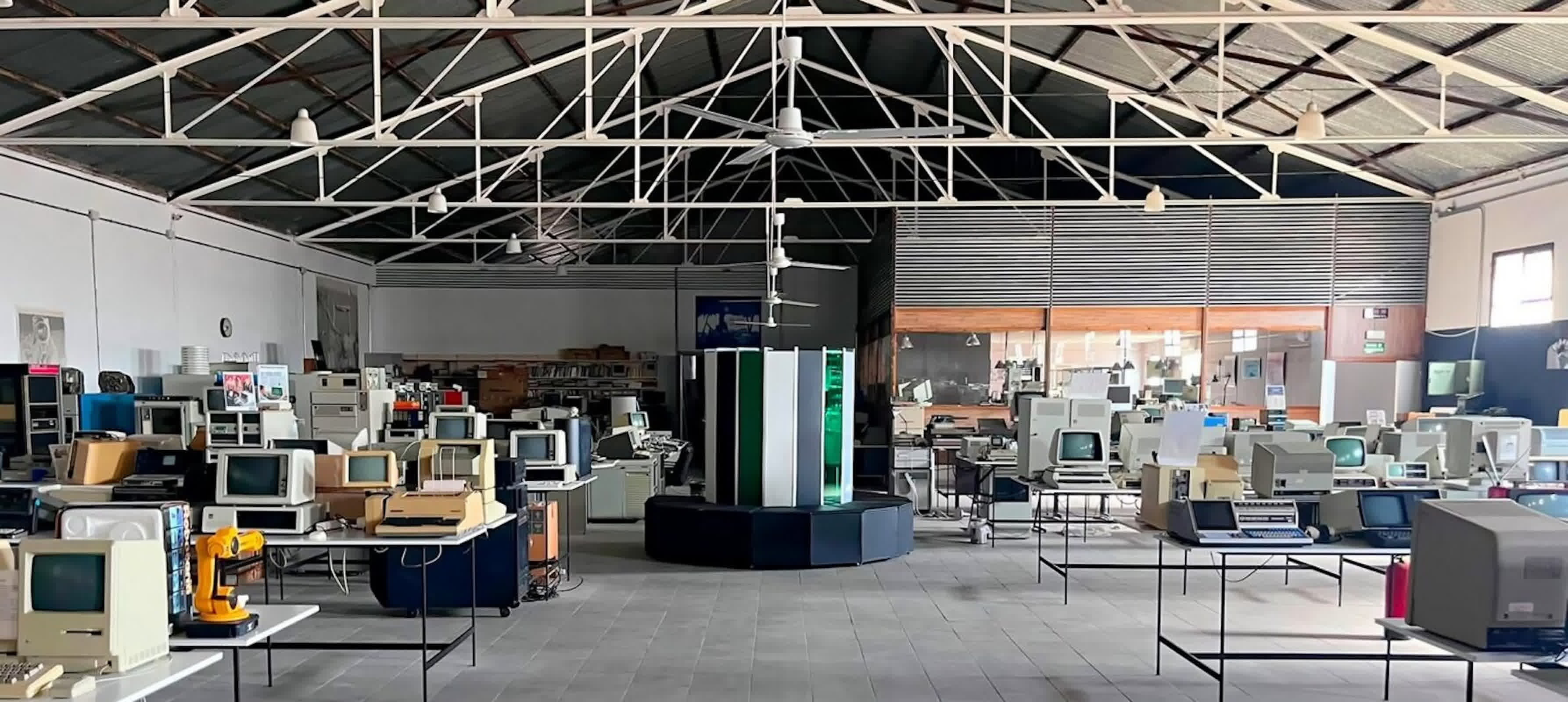
Tom's Hardware calls the 1.5 TFLOPS result a theoretical 9,375x jump from the original Cray-1's 160 MFLOPS; the Cray-1's theoretical peak was approximately 160 megaflops; 64 of 70 cores were active in the most recent tests; a proposed crowdfunding campaign would pay for 70 to 80 M4 Mac minis.
| Figure | Value | Note | Claim |
|---|---|---|---|
| Theoretical jump over Cray-1, per Tom's Hardware | 9,375 times | 9 | |
| Cray-1 theoretical peak | 160 MFLOPS, about | 8 | |
| Cores active, latest tests | 64 of 70 cores | 4 | |
| M4 Mac minis in proposed crowdfunding, at least | 70 Mac minis | up to 80 | 22 |
What happened
- The cluster is five quad-core Core i7 machines and 25 dual-core Core i5 machines, which adds up to 70 cores.
- The museum had earlier reported 1.5 teraflops with all 70 cores running.
- A master Mac mini in the control terminal coordinates the others, and the team runs macOS Mojave 10.14 with MPI instead of Linux.
- The museum proposes a crowdfunding campaign to buy 70 to 80 M4 Mac minis, aiming to reach the TOP500 list.
Why it matters
- capability Mac minis from 2012, pooled with MPI over gigabit Ethernet, reach roughly 1.3 teraflops on this test using standard parts.
- constraint The figure describes one custom Python script. The coverage does not include the matrix size, numeric precision or how work is split, so it cannot say what another workload would see.
- contradiction TechSpot says 64 cores were active after one node dropped out, while Tom's Hardware says that node was quad-core. That would leave 66, so the same 1.3 figure sits on two different core counts.
The exhibit shows the scaling directly. Visitors watch a calculation run on a single core before it is distributed across the cluster [18]. Nearly all of the hardware is one generation: all but two units date to 2012, and those two to 2014 [3].
Per core, the two reported results sit close together. The earlier 1.5 teraflops over 70 cores works out to about 21.4 gigaflops a core, and 1.3 teraflops over 64 cores to about 20.3 [20]. A flat figure is consistent with a job that splits cleanly. We'd expect that from matrix multiplication, and we'd expect it to break on a workload that moves more data per operation, because the nodes talk through two gigabit Ethernet switches at the base of the tower [11].
Tom's Hardware frames the result as a 9,375x jump over the Cray-1's 160 megaflops [9]. The division holds: 1.5 teraflops over 160 megaflops is 9,375, and the current 1.3 teraflops gives about 8,125 [19]. The denominator is a theoretical peak, and the numerator is a measured result from the museum's own script [14]. The replica reproduces the 1976 machine's appearance and none of its internal hardware [17]. The original used vector processing, and the replica distributes calculations among independent processors [16].
The Macs stand vertically on aluminum trays inside a steel rack. Warm air rises through the tower and out grilles at the top, so no mechanical fans are needed [12]. The original machine used refrigerant lines running to 20-ton compressors in a separate room [15]. The loudest part of the passively cooled replica is the network gear: the switches make 30 to 33 decibels, and the developers plan to replace them with silent models [13].
What to watch
- Whether the offline node comes back and the museum reports a full 70-core result to set against 1.5 teraflops.
- Whether the museum publishes the script, matrix size and numeric precision behind the 1.3 and 1.5 figures.
- Whether the proposed crowdfunding campaign launches and what the M4 Mac minis score on the same script.
Clarity's read
What the record supports and how the coverage leans. The claims behind it follow.
Reality
- Evidence35
- Adoption
- Insufficient
- Hype gap+40
- Incentives40
- Confidence55
Perspective Coverage
4 publishers- Builder
- Builder 61%
- Operator
- Operator 25%
- Investor
- Investor 14%
Claim ledger
Ranked by verification strength, evidence, and original report placement.
- [1]
The Museo de Historia de la Computación built a working cluster of 30 Mac minis inside a full-size replica of the Cray-1 and reports 1.3 teraflops in matrix-multiplication tests.
- [2]
The cluster contains five quad-core Intel Core i7 machines and 25 dual-core Core i5 models, giving 70 cores.
- [3]
All but two units, which date to 2014, were made in 2012.
- [4]
Only 64 of the 70 cores were active in the most recent tests after one node went offline.
- [5]
The museum previously reported 1.5 teraflops with all 70 cores running.
- [6]
Both results came from a custom Python matrix-multiplication script, so the figures reflect performance on that test rather than across a range of applications.
- [7]
A master Mac mini in the exhibit's control terminal coordinates the other machines; the team chose macOS Mojave 10.14 instead of Linux, using the Message Passing Interface (MPI) for communication between nodes.
- [8]
The original Cray-1 had a theoretical peak performance of approximately 160 megaflops.
- [9]
Tom's Hardware describes the 1.5 TFLOPS result as a theoretical 9,375x jump from the original Cray-1's 160 MFLOPS.
ReportedSupportedSource: Tom's Hardware3 sources— create a free account to open themView cited source - [10]
After one quad-core machine went offline, the current reported peak sits at 1.3 TFLOPS.
ReportedSupportedSource: Tom's Hardware3 sources— create a free account to open themView cited source - [11]
Two gigabit Ethernet switches are installed at the base of the tower.
- [12]
The Macs are mounted vertically on aluminum trays inside a steel rack chassis, so warm air rises through the tower and escapes through grilles at the top, cooling the enclosure by natural convection without additional mechanical fans.
- [13]
The Ethernet switches produce the most noticeable noise, at 30 to 33 decibels, and the developers plan to replace them with silent models.
- [14]
One figure is a theoretical peak (the original Cray-1's), while the others come from the museum's custom test.
- [15]
The original Cray-1 was cooled by a network of refrigerant lines that led to 20-ton refrigeration compressors in a separate room.
ReportedSupportedSource: Tom's Hardware3 sources— create a free account to open themView cited source - [16]
The original Cray-1 used vector processing, which applied an instruction to multiple data elements; the replica distributes calculations among independent processors.
- [17]
The replica preserves the appearance of the 1976 machine without trying to reproduce its internal hardware.
- [18]
Visitors can watch calculations run on a single core before seeing the workload distributed across the cluster.
- [19]
Against the original's 160 megaflops theoretical peak, 1.5 teraflops is a 9,375x ratio and 1.3 teraflops is about 8,125x.
- [20]
Per-core throughput is about 21.4 gigaflops at 1.5 teraflops over 70 cores and about 20.3 gigaflops at 1.3 teraflops over 64 cores.
- [21]
70 minus 64 is six missing cores, more than the four in any single node; one quad-core node offline would leave 66 cores.
- [22]
A proposed crowdfunding campaign would pay for 70 to 80 M4 Mac minis, with the goal of building a cluster powerful enough to make the TOP500 list.
Sources
4 independent publishers whose own reporting we read for this story.
- arstechnica.comA Cray-1 supercomputer replica from 30 "obsolete" Mac Minis
1 article · October 9, 2026
- interestingengineering.comMuseum pays tribute to Apple with a Cray-1 supercomputer made of 30 vintage Mac Minis
1 article · October 12, 2026
- techspot.comA Spanish museum built a Cray-1 replica powered by 30 old Mac minis
1 article · October 12, 2026
- tomshardware.comWorking Cray-1 supercomputer replica packs 30 vintage Mac Minis and 1.5 TFLOPS
1 article · October 11, 2026
Topics and entities
Follow any of these and your For You feed starts watching them — no settings page required.