Invest2 publishersIndependently confirmed3 min readPublished
Cox Automotive cuts its 2026 used-car price forecast to 0.2%, a tenth of its July call
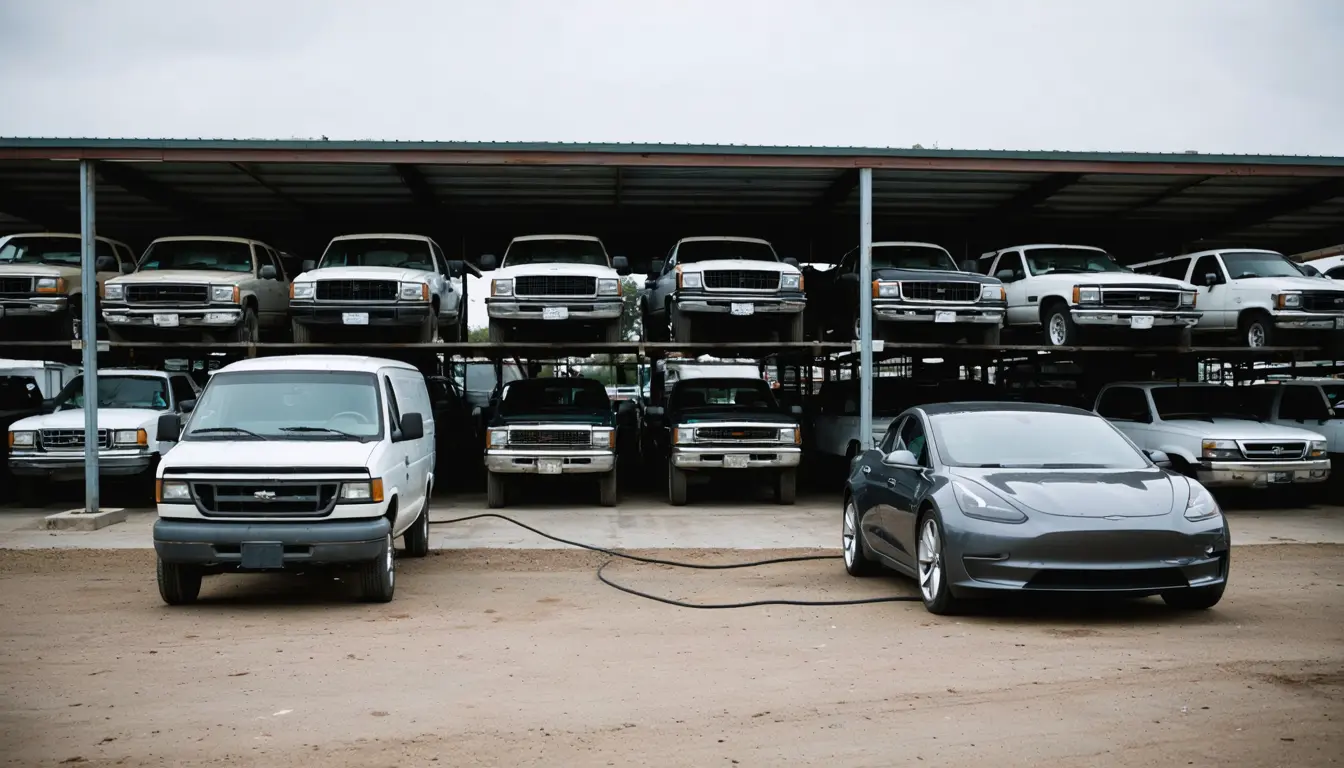
Cox Automotive now expects its Manheim used-vehicle price index to end 2026 up about 0.2%, down from the 2% gain it projected in July. Losses came in large trucks and SUVs while EVs and small cars gained value, a split that points to fuel costs.
The Investor · Invest desk
What happened
- The Manheim index fell 0.6% from a year earlier in September, its first month since early last year below the year-ago level, CNBC reported.
- Before seasonal adjustment, wholesale used-vehicle prices were down 1.2% from a year earlier and 1.3% from August as depreciation sped up through the third quarter.
- September gasoline averaged $4.33 a gallon nationally, according to AAA data cited by CNBC, beating the September record of $3.83 set in 2023 by 50 cents.
- Cox said off-lease volume and EV sales kept growing during the quarter, changing the supply mix in the used-vehicle market.
Compiled by The InvestorSomething wrong?How this is made
Why it matters
- cost Dealers holding large trucks and SUVs, and lenders whose loans those vehicles secure, absorb the quarter's depreciation, while owners of EVs and small fuel-efficient cars ended it with vehicles worth more.
- constraint With dealers apparently out of room to raise prices and retail tending to follow wholesale, the $27,239 average used listing has more room to fall than to rise this quarter.
- exposure Lessors sending a growing stream of off-lease cars to auction in the weakest season for valuations are selling into unadjusted prices already 1.3% below August's.
The Manheim index measures prices at Cox's own U.S. wholesale auctions [4], and its long-run average annual gain is about 2.3% [11]. Cox's July call of 2% was already 0.3 points under that average [1][20]. The move to 0.2% takes out 1.8 points, or 90% of the gain Cox had projected [16]. Add last year's 0.4% [11] and two years of auction prices compound to roughly 0.6%, against about 4.7% had the index held its long-run pace, a shortfall of about four points [18].
The cut can be read three ways. On a credit reading, higher rates price buyers out of loans, and the auction value of every car securing one falls with them. On a fuel reading, a September record for gasoline, about 13% above the old one [7][17], moved demand toward smaller cars. Cox said EVs and smaller fuel-efficient models gained value in the quarter while large trucks and SUVs performed poorly [8]. The third reading comes from Jeremy Robb, Cox's chief economist. "Many of the metrics we routinely track are converging back toward pre-pandemic norms, but the road to get there has been anything but smooth," he said [14].
The evidence favors fuel and normalization, with one caveat. A financing squeeze would hit small cars as well, and Cox said consumer demand for used vehicles is holding up reasonably well [9]. The price gap fits that demand: the average used listing in August was $27,239 against more than $50,000 for a new vehicle [12], so a used car cost under 55% of a new one [19].
The caveat is in Robb's own statement. "The first half of the year actually showed more appreciation than usual, even in the face of higher fuel prices. But with the conflict in the Middle East ongoing, diesel prices at record highs, and interest rates climbing rapidly, increasingly worrying both businesses and consumers, wholesale prices have felt the sting," Robb said [3]. Prices rose through expensive fuel in the first half. That leaves rising rates as the obvious second cause of the September turn. Auction prices cannot tell a buyer who was refused a loan from one who no longer wants a large truck, and neither report includes loan delinquency data.
Robb also described the season the market is now in. "We are in the weakest season for wholesale valuations, and as September closed, depreciation was steeper than we typically see this time of year," he said [6]. The fuel reading fails if fourth-quarter losses reach EVs and small cars, the segments that gained in the third quarter [8]. Losses across every segment would make financing costs the better explanation. Cox named post-election policy and the timing of Chinese EV imports as the critical variables for 2027 [15]. "Taken together, we're entering Q4 with our antennas up," Robb said [13].
What to watch
- Whether the Manheim index climbs from September's 0.6% year-over-year decline toward the 0.2% full-year gain Cox now forecasts.
- Pump prices: if gasoline and diesel ease while auction prices keep falling, interest rates become the cause to price.
- Cox's next forecast revision: a cut below 0.4% would leave 2026 trailing last year's gain.