Leadership1 publisher2 min readPublished
Scrutiny of the reopened Cornell case falls on what police passed to the district attorney
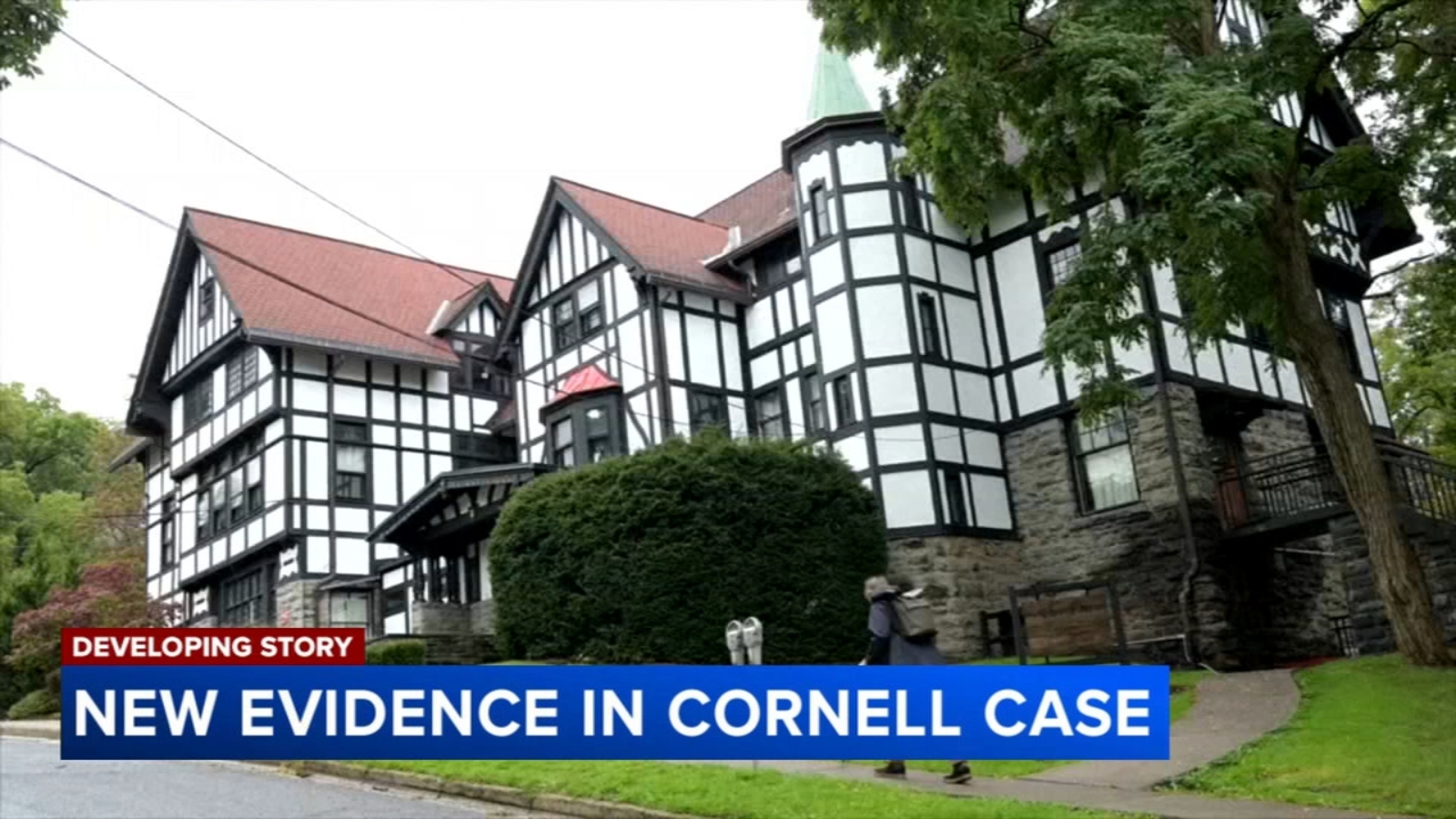
New York Attorney General Letitia James now oversees the Cornell fraternity rape case in which a district attorney filed no charges in 2024. The review now turns on what police passed to prosecutors, a question Gov. Kathy Hochul has asked in public.
The Board Room · Leadership desk
Drafted by a language model from the sources cited here and checked against its claim ledger before publication. How we use AISend a correction
What happened
- The woman, identified in documents only as Jane Doe, was a 20-year-old Cornell sophomore when she went to the Chi Phi house around 11 pm on October 19, 2024.
- She says she had already had about 10 drinks in three hours when a fraternity member pressured her into taking ketamine and marijuana and drinking more.
- She alleges two members assaulted her and one sent a Snapchat message inviting active Chi Phi members to join in, and several did.
Compiled by The Board RoomSomething wrong?How this is made
Why it matters
- exposure Hochul aimed her question at police, so the agency that took the report faces scrutiny that the district attorney's defense of his own handling does not answer.
- precedent A governor naming the police-to-prosecutor transfer as the failure makes intake handling, alongside charging calls, something state officials can be expected to question in later campus assault cases.
- contradiction Hochul spoke of five men, while the documents Wang described refer to seven fraternity members; until the counts are reconciled, it is unclear exactly what police were told.
"In what world," New York Gov. Kathy Hochul asked on Friday, "would the police learn from a victim that she'd been literally gang raped while she was intoxicated by five men in a fraternity house and not elevate those allegations to the district attorney?" [1] Her question puts the failure at one point in the chain, the point where police decide what a prosecutor gets to read. It is the governor's characterization of what happened. According to Vox, politicians and legal experts are examining whether certain details of the woman's account were neglected [5].
The weeks before she went to police show why that point is hard to judge from outside. Washington Post reporter Amy Wang, who has covered the story, laid out the sequence on Vox's Today, Explained [19]. Citing New York Times and CBS News reporting, she said that in the days after the party the woman was not using the words rape or assault [14]. When one of the men texted an apology, the woman sought to reassure him [15]. On October 22 she went to the campus health clinic and told a doctor she had been through a traumatic experience [16]. By November 3, according to investigative documents obtained by the Times, she had concluded that what happened was assault [17]. She texted one of the men: "This was not consensual. I was given more ketamine than I can remember." [18] That message came 15 days after the night at the house [1].
I think the question of what reached prosecutors turns on this sequence. Her account changed over two weeks. It includes an exchange in which she reassured one of the men she later accused. With a report like that, an officer's intake notes decide what a prosecutor sees. The source material does not include the police report or say what was forwarded to the district attorney, so whether details were dropped, and by whom, is not established in the public record.
The district attorney has defended his handling of the case [4]. His defense can stand alongside Hochul's question. If the account reached his office without the allegations Hochul describes, the decision to file no charges [3] could have been sound on the file he had and still miss what the woman reported. The two positions conflict only if the full account was in front of him.
That 2024 decision is now being revisited. Prosecutors have reopened the case [6], and James said it is now "an active criminal investigation." [7]
What to watch
- Any charging decision from the reopened investigation now running under Attorney General Letitia James's oversight.
- Release of the original police report, or a public account of what police forwarded to the district attorney in 2024.
- A public response from the police agency Hochul's question targeted, showing whether the dispute is over missing details or over judgment.