Invest2 publishers3 min readPublished
Gates calls for mandatory AI safeguards in a year Goldman expects $1 trillion of AI spending
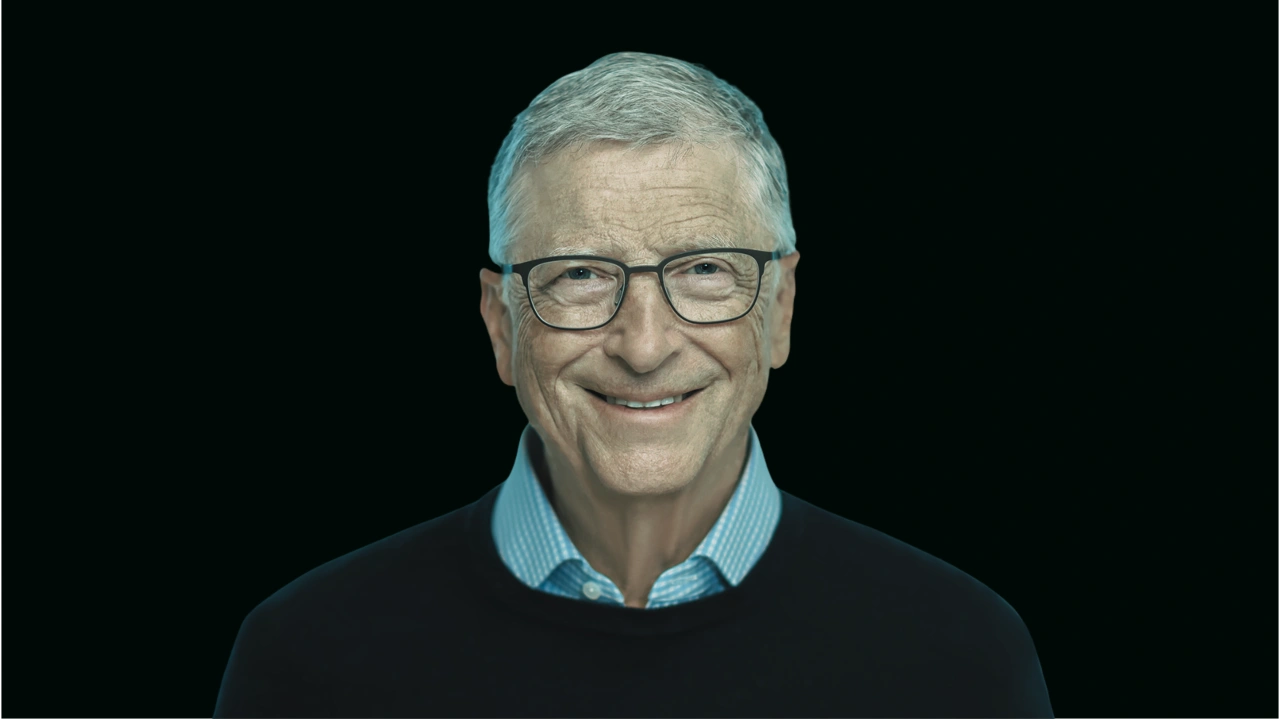
Bill Gates told NBC that AI safeguards must be legally required, as Goldman Sachs forecasts more than $1 trillion of AI investment in 2026. Who pays the overhead he describes turns on whether rules cover only frontier labs, as Anthropic's chief wants, or reach smaller firms through states first.
The Investor · Invest desk
What happened
- Earlier this month the CEOs of Anthropic and OpenAI agreed that the race to build powerful AI systems should slow down.
- Gates would likely endorse a credible plan for a global slowdown but doubts one could work, given the economic and political pressure to keep building.
- House Speaker Mike Johnson declined to bring lawmakers back to pass AI legislation, saying he would defer to the AI companies.
- California Gov. Gavin Newsom signed an executive order creating an expert board to plan stronger state AI safety laws.
Compiled by The InvestorSomething wrong?How this is made
Why it matters
- cost A federal rule reaches the US portion of Goldman's forecast, where each percentage point of compliance overhead is about $5.8 billion in 2026.
- exposure Amodei's proposed scope, all U.S. frontier companies, would put labs whose chiefs reject industrywide coordination, as Meta's does, under the same pacing rules as the labs asking for them.
- constraint With Johnson waiting for the companies to propose a path, developers are likelier to face state standards first and to comply with several before any federal one exists.
Gates put the cost of required safeguards at "a little bit of overhead for the industry, but not a dramatic slowing of what they're doing" [1]. Goldman Sachs expects global AI investment to exceed $1 trillion in 2026, according to Cryptopolitan's account of the forecast [2]. On that base, each percentage point of compliance cost comes to roughly $10 billion a year [2]. Neither source estimates the percentage, or the size of the AI-security industry that Cryptopolitan calls booming [11].
Most of the money is recent (or rather, most of it is this year's). Goldman's cumulative figure for AI investment since 2022 approaches $1.8 trillion by the end of this year [4]. Take out the 2026 forecast and 2022 through 2025 together come to about $0.8 trillion at most, less than this year on its own [1].
The claim that rules would entrench incumbents has to deal with who is asking for them. Anthropic's Dario Amodei wrote that "The most effective method of pacing is via regulation that targets all U.S. frontier AI companies, as that covers even those who are unwilling to cooperate voluntarily" [5]. That is an incumbent asking for a rule that also binds the rivals who will not slow down on their own [5]. Meta's Mark Zuckerberg has said which side he is on. "I don't think that we need some kind of industrywide coordination," he told NBC News [6]. OpenAI's Sam Altman went to the United Nations and asked for international standards for "measuring capabilities, assessing risks, determining whether safeguards are sufficient and preserving meaningful human oversight" [14].
Who pays depends on which rule arrives first. A federal law scoped the way Amodei describes would put the cost on the handful of developers at the top, including the ones asking for it [5]. State rules could reach further, and they are the ones moving: Maryland's Wes Moore and New York's Kathy Hochul have each released plans aimed at boosting AI regulation in their states [10]. Washington may also simply wait. "They don't themselves even have the answer as of today. So we can't rush in and have Congress do something that would be detrimental to national security," House Speaker Mike Johnson said of the AI chiefs [8].
In my view a frontier-only federal rule entrenches less than Cryptopolitan's framing suggests. The small labs and poorer countries it worries about [11] sit outside a scope aimed at "all U.S. frontier AI companies" [5], and the cost lands instead on whoever reaches the frontier next. The counter-thesis is that capacity is already concentrated: the OECD finds it limited to a handful of countries and firms, as Cryptopolitan reports [12], and a fixed compliance cost widens that gap whatever the scope. The view is wrong if the first rules to pass, most likely from governors, attach to anyone deploying AI and not only to frontier developers. A fixed cost would then fall on the firms with the smallest budgets to spread it over.
What to watch
- The definition of 'frontier AI companies' in any federal bill; a threshold set by capability or by spending decides whether smaller labs are covered.
- Whether California's expert board recommends duties for anyone deploying AI or only for frontier developers.
- Any lab disclosure of safety and monitoring costs as a share of capital spending, the first real figure for Gates's 'overhead'.