A condor covers a kilometer on a fifth of the energy of an equally heavy swan
Andean condors use a fifth of the energy per kilometer that equally heavy trumpeter swans need, a Science study reports. Its authors say laboratory rules based on body mass predict the same bill for both birds and leave out the air they fly through.
The Scientist · Science desk
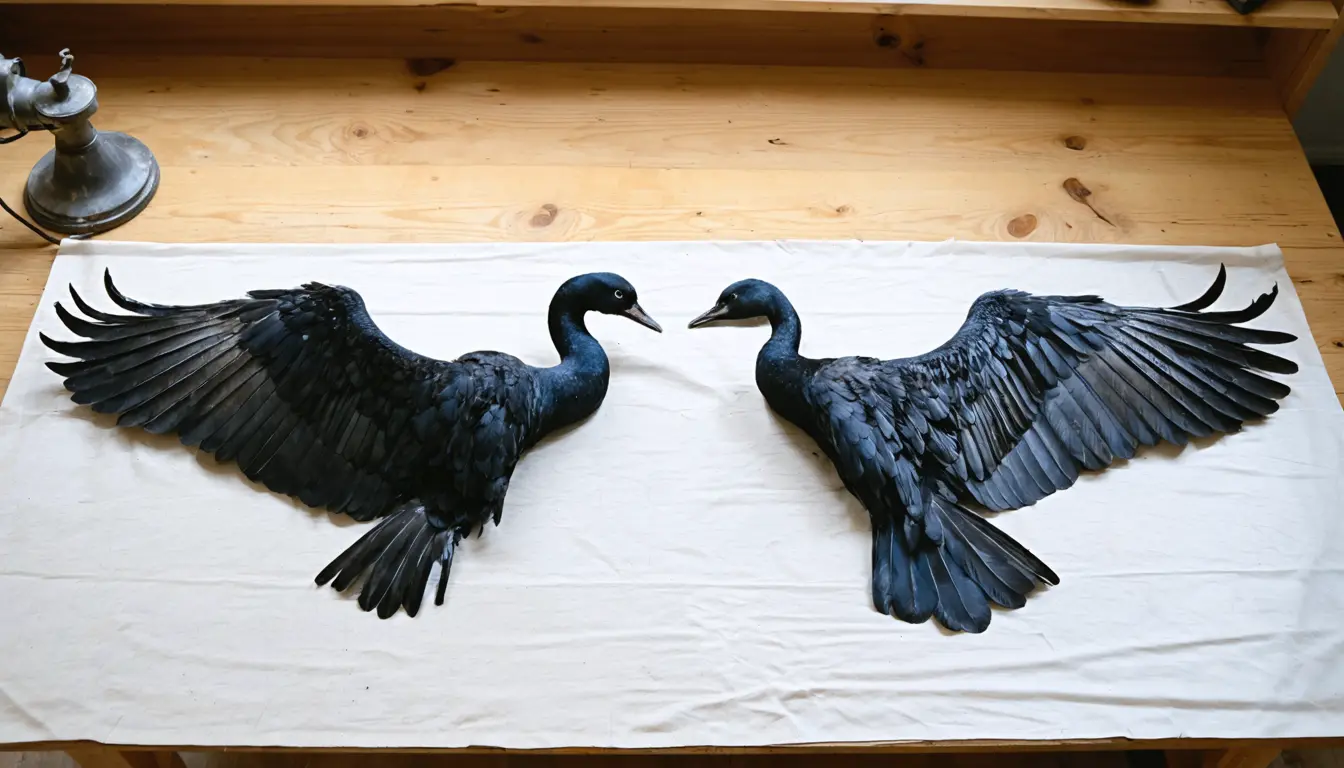
An Andean condor flaps for 0.1% of its flight time, riding rising currents; a trumpeter swan flaps for around 99%. Both birds weigh around 11 kg.
| Figure | Value | Note | Claim |
|---|---|---|---|
| Andean condor's flight time spent flapping | 0.1% | 2 | |
| Swan's flight time flapping | 99% around | 2 | |
| Weight of each bird | 11 kg, around | 1 |
What happened
- The condor rides rising currents and flaps for 0.1% of its flight time, while the swan flaps for around 99%.
- The team merged 17 years of tag records (GPS plus accelerometers) on 850 birds and bats, 38 species in all, with radar observations of smaller flyers in 12 size classes collected over four years.
- Textbooks have ranked swimming as the cheapest form of animal travel, followed by flying and running.
- Seven vulture species traveled more than 4.3 million kilometers while flapping for just 0.1% to 7% of their flight time.
Why it matters
- What it limits constraint Energy models for wild flight that use body mass as the only input cannot separate a soaring species from a flapping one of the same weight.
- Who's exposed exposure Because larger soaring birds were more restricted in when and where they could fly, we would treat the one-fifth figure as a best case for conditions with lift.
- What's now possible capability With airflow in the model, researchers can ask how shifting climate conditions would change the cost of a route and so where and when animals travel.
The two numbers in the headline comparison do not scale together. The swan flaps roughly 990 times as large a share of its flight time as the condor does, 99% against 0.1% [12], yet it needs only five times the energy per kilometer [13]. We think that makes flapping time a poor stand-in for cost on its own. The thing the phys.org summary doesn't tell you is how energy was estimated from the tracking and radar data, so the rest of the gap is unexplained here.
Emily Shepard, the Swansea University professor and senior author, said: "The laboratory rules tell us that condors and swans must have the same energy bill because they have the same body mass. Yet seeing how condors soar and swans flap, we know that clearly there must be a difference." [7] The study was led by the Max Planck Institute of Animal Behavior with Swansea University and published in Science [10].
Among soaring birds, heavier species generally flapped less and had lower costs [9]. That is a pattern within one group of fliers, and the summary does not give the units for "costs". Shepard framed the wider result against the textbook ranking this way: "When flying animals have access to natural atmospheric flows, they have free fuel from the sky. Soaring birds use this to move at costs that are cheaper than swimming." [8]
Martina Scacco, first author at the Max Planck Institute, said: "To us, the sky might just look like background for flying animals, but it is an essential resource that can dramatically change the cost of a journey." [11]
What to watch
- The Science paper's methods, for how energy per kilometer was estimated from accelerometer and radar data and how wide the uncertainty on the one-fifth figure is.
- Whether migration or movement models start adding airflow layers to test how changing atmospheric conditions alter flight cost.
- Direct energy measurements on soaring species that either confirm or complicate the swimming comparison.
Clarity's read
What the record supports and how the coverage leans. The claims behind it follow.
Reality
- Evidence68
- Adoption
- Not scored
- Hype gap+15
- Incentives
- Not scored
- Confidence55
Claim ledger
Ranked by verification strength, evidence, and original report placement.
- [1]
An Andean condor and a trumpeter swan both weigh around 11 kg, yet the condor can cover each kilometer of flight using a fifth of the energy the swan needs.
- [2]
Condors can ride rising currents, flapping for just 0.1% of their flight time, while swans flap for around 99%.
- [3]
Textbooks have traditionally ranked swimming as the cheapest form of animal travel, followed by flying and running; the comparisons largely rely on laboratory measurements that do not account for the winds and rising air animals encounter in the wild.
- [4]
The study brought together 17 years of GPS and accelerometer tracking from 850 birds and bats across 38 species, with four years of radar data covering 12 size classes of smaller flying animals.
- [5]
Seven vulture species traveled more than 4.3 million kilometers while flapping for just 0.1% to 7% of their flight time.
- [6]
Larger soaring birds were more restricted in when and where they could fly, while flapping species could cope with more variable conditions at a greater energetic cost.
- [7]
"The laboratory rules tell us that condors and swans must have the same energy bill because they have the same body mass. Yet seeing how condors soar and swans flap, we know that clearly there must be a difference."
- [8]
"When flying animals have access to natural atmospheric flows, they have free fuel from the sky. Soaring birds use this to move at costs that are cheaper than swimming."
- [9]
Among soaring birds, heavier species generally flapped less and had lower costs.
- [10]
The study, Airflows redefine the cost of aerial transport in the wild, was published in Science and led by the Max Planck Institute of Animal Behavior with Swansea University, supported by an international team of researchers.
- [11]
"To us, the sky might just look like background for flying animals, but it is an essential resource that can dramatically change the cost of a journey."
- [12]
The swan's share of flight time spent flapping is roughly 990 times the condor's (99% divided by 0.1%).
- [13]
If the condor uses a fifth of the swan's energy per kilometer, the swan needs five times the condor's energy per kilometer.
- [14]
The findings could help researchers understand how changing climate conditions may affect where and when animals travel in the future.
Get this ledger inside ChatGPT. Ask about any of our stories and the answer brings its figure, each claim’s verdict and the sources. Free, no account.
Sources
1 independent publisher whose own reporting we read for this story.
- phys.orgWild birds rewrite rules of flight efficiency: Study reveals power of 'free fuel' from the sky
1 article · October 15, 2026
Topics and entities
Follow any of these and your For You feed starts watching them — no settings page required.