Revenue from coding agents has grown faster than AI data center spending, a Noahpinion post says
Revenue from coding agents grew faster than hyperscaler data center spending, according to the Noahpinion blog, even as the companies began to borrow. The post says the new debt raises the stakes if that growth slows.
The Board Room · Leadership desk
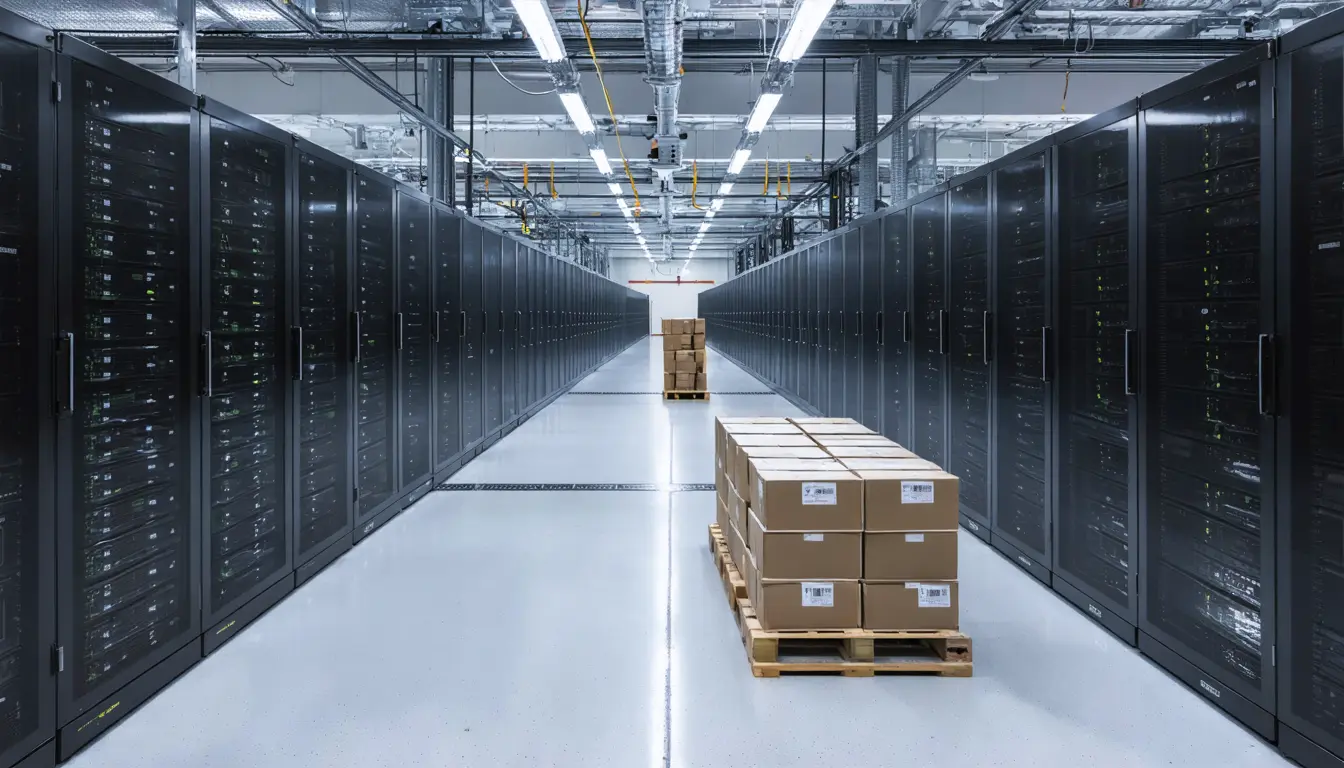
Per the Noahpinion post, hyperscalers started borrowing to keep raising spending; free cash flow at all but Microsoft went or is expected to go negative. Agentic coding tools left Anthropic and, less so, OpenAI rolling in cash. Any slowdown in AI revenue growth could cause a blowup.
- decision Hyperscalers Started borrowing money to keep increasing their spending, claim 10
- exposure Hyperscalers except Microsoft Free cash flow went negative in recent months or is expected to go negative late this year, claim 5
- capability Anthropic and OpenAI Agentic coding tools such as Claude Code and Codex left both rolling in cash, OpenAI to a lesser extent, claim 11
- exposure AI industry Any slowdown in the torrid pace of AI revenue growth could cause a blowup, the post wrote, claim 4
| Who | How | Kind | Claim |
|---|---|---|---|
| Hyperscalers | Started borrowing money to keep increasing their spending | decision | 10 |
| Hyperscalers except Microsoft | Free cash flow went negative in recent months or is expected to go negative late this year | exposure | 5 |
| Anthropic and OpenAI | Agentic coding tools such as Claude Code and Codex left both rolling in cash, OpenAI to a lesser extent | capability | 11 |
| AI industry | Any slowdown in the torrid pace of AI revenue growth could cause a blowup, the post wrote | exposure | 4 |
What happened
- Spending then accelerated, and hyperscalers started having to borrow to keep it rising.
- The post credits Claude Code, Codex and other agentic coding tools as AI's killer app, leaving Anthropic and, to a lesser extent, OpenAI rolling in cash.
- Stijn Van Nieuwerburgh puts AI at 3.63% of GDP against 2.24% for railroads, though the two figures cover different periods.
Why it matters
- exposure Whoever lends to the hyperscalers now shares the revenue risk, because operating cash no longer covers the build at most of them.
- constraint The case that no bust is near rests on one named driver, agentic coding tools, so it holds only as long as that revenue keeps growing.
- contradiction Estimates of the boom's size differ by cost assumption, so the 'bigger than the railroads' claim depends on data centers costing more than the hyperscalers have announced.
The bubble talk has returned, though its original premise did not come true. According to the Noahpinion post, the flood of revenue from coding agents quieted the talk for a while, and it is back [6]. The first reason the post gives is the rise of AI-related debt [6]. It adds that the chorus of skeptical voices is beginning to swell again [7]. The precedent they point to is 1873, a crash the post says caused a huge decade-long depression in the U.S. economy [8].
The 2025 version of the worry had a condition attached. Hyperscalers such as Amazon, Google, Meta and Oracle were mostly paying cash for data centers [9], so the danger was not imminent [2]. The fear was that spending would keep rising while revenue failed to accelerate [2]. Spending did rise [10]. Revenue rose by more [11]. On that test, the post concludes the industry is not obviously heading for a big AI bust in the near future [3]. The post's text does not include a dollar figure for revenue or for debt, so the size of the margin is not visible from it.
The cash position is thinner than it was. Microsoft aside, every hyperscaler has seen free cash flow drop below zero within the past few months or is forecast to see it do so late this year, the post says [5]. Money borrowed this quarter has to be serviced from revenue in later quarters, which is why the post's warning is narrow. It wrote that "any slowdown in the torrid pace of AI revenue growth could cause a blowup" [4].
Whether this boom is now bigger than the railroad boom is unsettled, and the post calls the argument pointless but fun [12]. Stijn Van Nieuwerburgh puts AI at 3.63% of GDP and railroads at 2.24% [12], a gap of 1.39 percentage points [16]. The post notes those figures cover different periods, and that some data put railroad spending at a peak of about 5.4% of GDP [13]. Dylan Patel claims more than 6% for AI once fab equipment, chips and energy are included [14]. The post traces much of the spread to cost assumptions. Banks and ratings agencies use announced dollar spending, while Van Nieuwerburgh starts from announced construction projects and assumes data centers will cost more than the hyperscalers think [15].
What to watch
- Whether free cash flow turns negative late this year at the hyperscalers where it is only expected to, and how the borrowing is financed.
- Revenue growth at Anthropic and OpenAI, since the post says any slowdown in its pace is the trigger for a blowup.
- Whether actual data center costs land nearer announced budgets or nearer the higher assumptions behind the 3.63% estimate.
Clarity's read
What the record supports and how the coverage leans. The claims behind it follow.
Reality
- Evidence35
- Adoption
- Insufficient
- Hype gap
- Insufficient
- Incentives
- Insufficient
- Confidence40
Claim ledger
Ranked by verification strength, evidence, and original report placement.
- [1]
A little over a year ago, many people worried that the AI data center boom would end in an epic bust like the railroad bust of 1873.
- [2]
In summer 2025, AI industry revenue was growing but not nearly as fast as the money being spent, and the hyperscalers were mostly spending their own cash instead of borrowing, so the danger was not imminent. The worry was that if spending continued to increase and revenue did not accelerate, there could be an 1873-style bust.
- [3]
As in summer 2025, the industry is not obviously heading for a big AI bust in the near future, but the stakes are higher because companies are borrowing a lot more.
- [4]
The post wrote that 'any slowdown in the torrid pace of AI revenue growth could cause a blowup.'
- [5]
For all of the hyperscalers except Microsoft, free cash flow either went negative in recent months or is expected to go negative late this year.
- [6]
The flood of revenue that accompanied the rise of coding agents quieted talk of an AI bubble for a while, but the talk is back. The first reason is the rise of AI-related debt.
- [7]
A lot of people are watching for an 1873-style crash to happen with data centers, and the chorus of skeptical voices is beginning to swell again.
- [8]
For the railroads, the path included a big crash in 1873, which caused a huge decade-long depression in the U.S. economy.
- [9]
In the early years, the hyperscalers, data center builders such as Amazon, Google, Meta and Oracle, mostly paid in cash for the data centers.
- [10]
Since then, spending accelerated and hyperscalers started having to borrow money to keep increasing their spending.
- [11]
Revenue accelerated even more than spending. Claude Code, Codex and other agentic coding tools proved to be the 'killer app' of AI, and Anthropic and, to a lesser extent, OpenAI were suddenly rolling in cash.
- [12]
The post calls the debate over whether AI or the railroads is bigger pointless but fun. Stijn Van Nieuwerburgh gives figures of 3.63% of GDP for AI and 2.24% of GDP for railroads.
- [13]
Those percentages are over different amounts of time because the railroad boom lasted a very long time. According to some data sources, railroad spending peaked at around 5.4% of GDP, and 19th century data are patchy and incomplete.
- [14]
Dylan Patel claims over 6% of GDP for the AI boom already, once all types of AI-related infrastructure such as fab equipment, chips and energy are included.
- [15]
The main difference among AI estimates is assumptions about costs: banks and ratings agencies use announced dollar spending, while Van Nieuwerburgh uses announced physical construction projects and assumes data centers will cost a lot more than the hyperscalers think.
- [16]
The gap between Van Nieuwerburgh's AI and railroad figures is 1.39 percentage points of GDP.
Get this ledger inside ChatGPT. Ask about any of our stories and the answer brings its figure, each claim’s verdict and the sources. Free, no account.
Sources
1 independent publisher whose own reporting we read for this story.
- noahpinion.blogAI vs. the railroads
1 article · October 15, 2026
Topics and entities
Follow any of these and your For You feed starts watching them — no settings page required.
Topics
- AI debt financingFollow
- AI Infrastructure SpendingFollow
- Coding AgentsFollow