Science1 publisher3 min readPublished
Chimpanzees at a Ugandan sanctuary steal less often from friends than from other chimps
UC Berkeley researchers found chimpanzees stole pineapple in 61% of trials with friends and 70% with nonfriends. Friendship trimmed theft without stopping it, and the team argues both parties' emotional reactions show chimps expect better treatment from friends.
The Scientist · Science desk
What happened
- Over more than 800 hours, the team watched 26 chimps at Uganda's Ngamba Island sanctuary, marking close bonds from grooming, daily interactions and arm's-reach proximity.
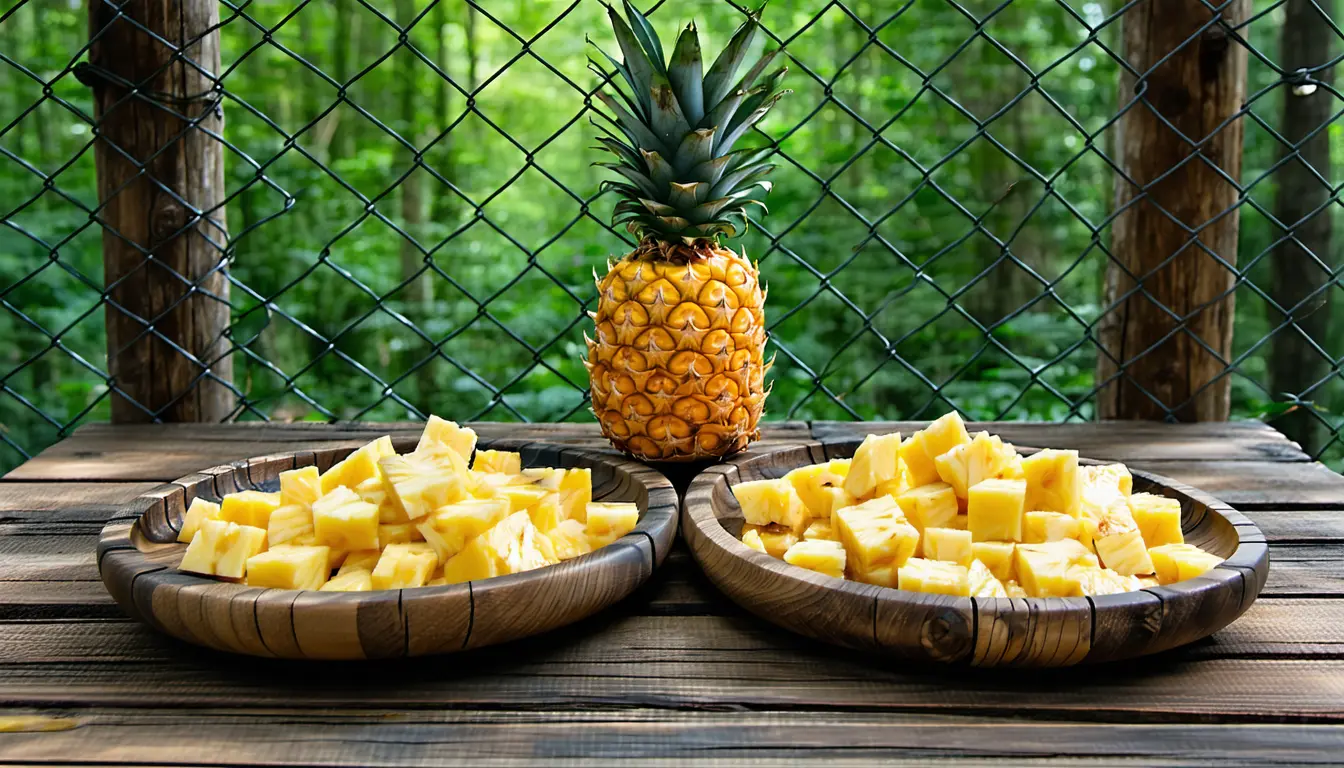
- In the test, a thief chimp in one room could pull a rope to drag three pineapple-baited trays away from a victim chimp in the next room.
- Thieves taking food from nonfriends showed negative emotion for much longer than those stealing from friends.
Compiled by The ScientistSomething wrong?How this is made
Why it matters
- constraint With friends still robbed in most trials, the data back bonds that lower the odds of theft by about 13% in relative terms, a weaker claim than friendship governing antisocial behaviour.
- contradiction Victims' sharper first reaction to a friend's theft cuts against a plain softening story, so any account of chimp friendship has to explain a bigger spike of anger that fades faster.
- precedent If it replicates, theories that root human moral norms in partner-specific expectations gain a nonhuman test case; Engelmann calls this the first such evidence in chimpanzees.
Each chimp in the study faced both a friend and a nonfriend at the other end of the rope [8]. That design makes every animal its own control. A chimp with a big appetite for theft is greedy in both conditions, so individual temperament drops out of the friend-versus-nonfriend comparison. According to the phys.org account, this is why the team is confident the nine-point gap is not chance [8].
Nine points off a 70% baseline is a relative cut of about 13% [1]. Put the other way, friends were spared in 39% of trials and nonfriends in 30% [2]. "Ours is the first study to show that they're able to hold back antisocial behavior with their friends," said Oded Ritov, the paper's first author and a Berkeley psychology PhD student [9][14]. Holding back is the right verb for a shift in odds. Most friend trials still ended with the pineapple gone [5]. The published account does not give trial counts or test statistics, so the precision of the gap cannot be judged from it.
The emotional data complicate the idea that friendship simply softens conflict. Victims were scored on stomping, fist-pounding and screeching [10]. When a friend did the stealing, victims were angrier at first and then calmed down faster than when a nonfriend did [6]. For thieves the pattern was simpler: those robbing nonfriends showed negative emotion for much longer [7]. "This suggests that there may be mutual expectations in chimps from both sides of the friendship, which makes it seem more like the complex friendships we see in humans," Ritov said [11].
Jan Engelmann, a senior author and principal investigator of Berkeley's Social Origins Lab, takes the result further [14]. "We expect more of our friends," he said. "This is, to my knowledge, the first evidence showing that chimpanzees also expect and maybe demand special treatment from their friends." [12] He added: "These kinds of social expectations might form the basis of human moral principles." [13] That second statement is a hypothesis about human evolution. The evidence under it is pineapple, a rope and 26 animals at the Ngamba Island sanctuary in Uganda [2][3].
Friendship here is an observed label. The team built it from more than 800 hours of watching grooming, daily interactions and who stayed within arm's reach of whom [2]. A bond cannot be assigned at random, so the comparison is between pairs that differ in whatever else comes with being close. The study appears in Evolution and Human Behavior [1].
I think it supports a narrower version of the claim that social bonds govern antisocial behaviour. Among these chimps, a close relationship lowered the rate of theft and changed the course of the anger that followed, on both sides of the rope [5][6][7].
What to watch
- Trial counts and statistical tests in the Evolution and Human Behavior paper, which set how much uncertainty surrounds the nine-point gap.
- A rerun of the rope test in another sanctuary group or a wild chimpanzee community.
- Whether the paper reports controls for kinship or dominance rank alongside the friendship label.