Product3 publishers3 min readPublished Updated
Castelion's $13bn valuation rests on $500m of contracts and a 2027 delivery date
The hypersonic missile maker raised $1bn to build a high-rate production line in New Mexico. The disclosed contract book is 26 times smaller than the valuation.
The Product Desk · Product desk
Drafted by a language model from the sources cited here and checked against its claim ledger before publication. How we use AISend a correction
What happened
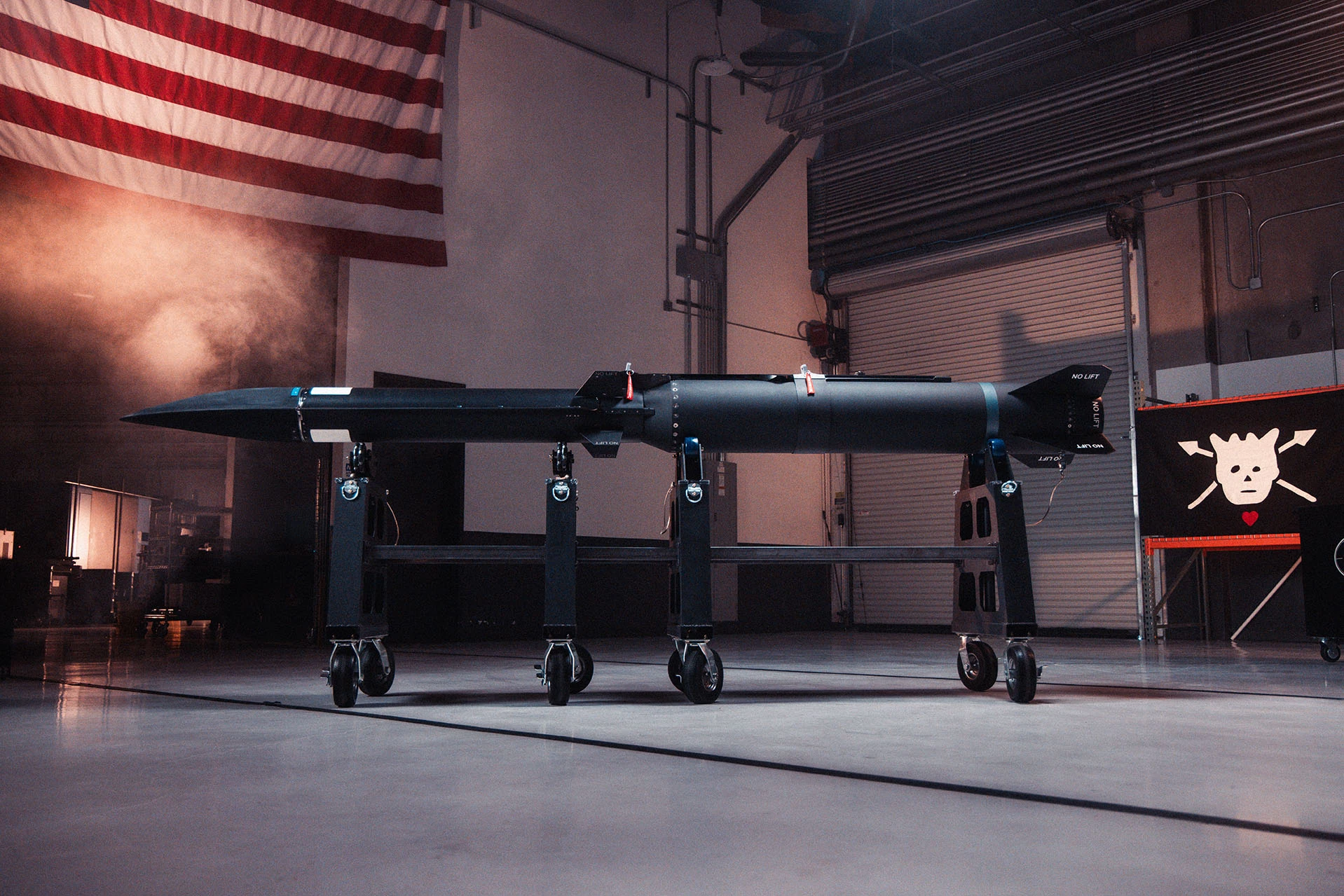
- Defense technology company Castelion raised $1 billion in Series C financing as it prepares to scale production of its Blackbeard hypersonic strike missile and expand into longer-range weapons and missile defense systems.
- The funding round values Castelion at $13 billion and combines $800 million in equity financing with $250 million in committed financing for a revolving credit facility, according to the company's announcement.
- JPMorganChase's Strategic Investment Group, Andreessen Horowitz, and funds managed by Carlyle co-led the equity financing.
- Existing investors including Lightspeed Venture Partners, Lavrock Ventures, Altimeter, General Catalyst and Interlagos also participated, alongside new investor T. Rowe Price.
- Castelion said it has secured more than $500 million in U.S. military contracts over the past 18 months.
Compiled by The Product DeskSomething wrong?How this is made
Why it matters
Castelion has raised $1 billion in Series C financing at a $13 billion valuation and says the money goes toward scaling production of Blackbeard, its low-cost hypersonic strike missile, plus longer-range weapons and missile defense [1][2]. The company also disclosed more than $500 million in US military contracts signed over the past 18 months and a fielding target of 2027, which is what turns this from a positioning exercise into something you can check [5][7].
Start with the structure of the round, because it is not one number. Castelion describes $800 million in equity plus $250 million in committed financing for a revolving credit facility [2]. Those two figures sum to $1.05 billion, so the headline $1 billion blends equity with borrowing capacity that has to be drawn and repaid [17]. JPMorganChase's Strategic Investment Group, Andreessen Horowitz and funds managed by Carlyle co-led the equity [3]. Lightspeed, Lavrock, Altimeter, General Catalyst and Interlagos returned; T. Rowe Price is new [4].
Now the ratio that matters. A $13 billion valuation against a disclosed $500 million contract book is 26 times [18]. Annualise the awards at the pace claimed, roughly $333 million a year, and the multiple is closer to 39 times [19]. That $500 million is signed work, not delivered weapons: fielding is targeted for 2027, so conversion from contract to inventory is still ahead of the company [5][7]. Investors are not paying for the backlog. They are paying for the assumption that the backlog compounds once a factory exists.
The factory is the real asset here. Project Ranger in Sandoval County, New Mexico, is a 1,000-acre campus that Castelion calls the nation's largest dedicated hypersonic missile manufacturing facility [8]. More than $250 million of private infrastructure spending is already committed there, with hundreds of millions more planned [9]. That prior commitment alone equals about a quarter of the announced raise [20]. Interlagos Capital chairman Tom Ochinero said the company is building toward producing thousands of hypersonic weapons annually [14]. No date was attached to that number, which is the single most important omission in the announcement.
Chief executive Bryon Hargis frames the strategy as producing advanced weapons in quantity while keeping unit costs low enough to be practical at scale [10]. Castelion says it took Blackbeard from clean-sheet design to program of record in under four years, and has moved through repeated flight testing, operational integration and production construction [6][15]. That is a genuinely fast cycle by primes' standards. The complication is that the same capital is also funding a much longer-range precision strike weapon, in development for several years and reusing Blackbeard components and manufacturing methods [11], aimed at undercutting larger long-range strike systems on cost [12], plus a push into air and missile defense built around higher production rates and what the company calls greater "magazine depth" [13]. Three programs competing for one industrial ramp is how schedule slips start.
What to watch: whether the contract book grows faster than the valuation multiple, since 26 times a $500 million book only makes sense if awards accelerate once deliveries begin [18][5]. Watch for a stated unit cost, because "low-cost at scale" is unfalsifiable without one [10]. Watch whether Blackbeard funding lands as targeted next year [16], and whether the 2027 fielding date survives the addition of two new product lines [7][11][13]. And watch for a date on "thousands annually" [14]. Out-producing the primes is a claim settled by delivery counts, not by round sizes.