Build2 publishers2 min readPublished
ElevenLabs doubles its valuation to $22 billion in a $300 million employee share sale
ElevenLabs is valued at $22 billion, double its February mark, after employees sold $300 million of shares to investors led by Wellington and T. Rowe Price. Its usage evidence is a self-reported conversation count, and teams sizing voice automation still need completion rates the announcement did not include.
The Engineer · Build desk
What happened
- ElevenLabs says its agents now handle more than 15 million conversations each week, three times the level in February.
- The February valuation of $11 billion came with a $500 million Series D, the round the new price is measured against.
- According to Mezha, citing TechCrunch, this is the company's second tender, after a $100 million share sale at a $6.6 billion valuation in September 2025.
- EQT and Goldman Sachs bought in as new investors, alongside existing backers Andreessen Horowitz and Lightspeed.
Compiled by The EngineerSomething wrong?How this is made
Why it matters
- constraint A weekly conversation count tracks traffic, so a support team cannot use it to estimate what share of its own refund or booking calls an agent would close without a human.
- decision A vendor choice justified by the $22 billion rests on a price set when about 1.4% of the implied value changed hands between private holders, so pilot data from a team's own calls still has to decide it.
- precedent ElevenLabs now has a repeated way to pay out staff before any listing, so employee liquidity puts less pressure on the timing of a public offering.
The headline price is a secondary one. In a tender, employees and existing shareholders sell stock to incoming investors, and the company does not necessarily raise new capital [3]. The amount that moved is about 1.4% of the valuation [3]. According to Mezha, citing TechCrunch, the two lead buyers purchase private stakes and usually expect to hold them after a listing [9].
The usage claim is the company's own. Divided back, the February level works out to about 5 million conversations a week [1]. The current rate is more than 2.1 million a day [2]. ElevenLabs described the work as processing refunds, renewing insurance policies and booking appointments [5]. Neither source defines a conversation or reports how many ended with the refund issued or the appointment booked.
A conversation counter is the easiest number in a voice stack to push up. Before sizing a deployment, I'd want the share of calls closed without a human, the escalation rate, and the error rate on the transaction itself. Refunds and renewals change records in a payments or policy system. A mistake there needs a person to reverse it. For the weekly figure to transfer to a given support queue, that queue would have to resemble ElevenLabs' customer mix in task type and tolerance for error. Language matters too. The company says its models speak, listen and translate in more than 90 languages [7].
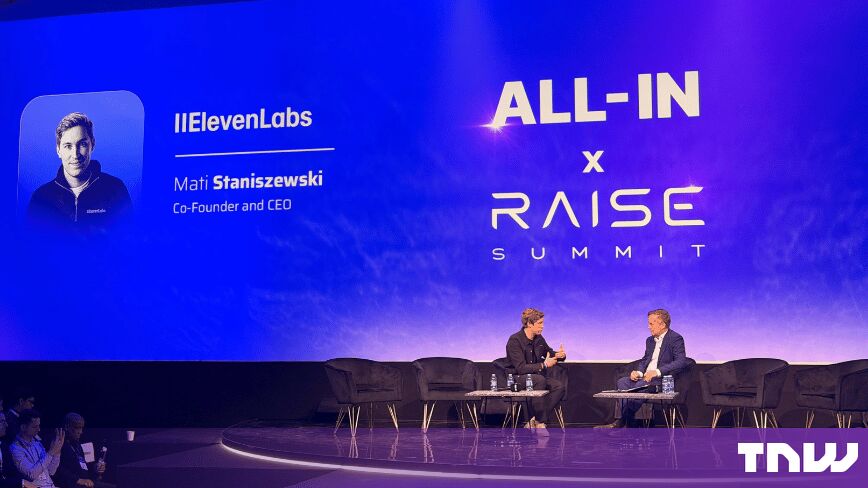
I think the growth is still evidence of production traffic at some customers, if the count holds up. "We're already seeing rapid adoption of expressive voice agents by enterprises and governments, who are deploying them in service of consumers and citizens," co-founder and CEO Mati Staniszewski said [6]. The Economic Times tied the doubled valuation to that demand in its headline [12]. Since February, reported weekly conversations rose threefold and the valuation twofold [6].
Staff liquidity is the other half of the deal. Across ElevenLabs' two tenders, the valuation rose about 3.3 times and the amount sold tripled [4] [5]. Mezha reports that such programs let employees cash out without waiting for a listing, and that fast-growing startups use them to keep specialists from leaving for competitors [10].
What to watch
- Whether ElevenLabs publishes completion, escalation or resolution rates next to its weekly conversation counts.
- Whether a primary round or an IPO filing puts audited usage and revenue figures behind the 15 million number.
- Named refund or insurance deployments that report per-call outcomes, not just call volume.