Product1 publisher3 min readPublished
Bridge Neurotech bets an ultrasound wearable can open brain interfaces to people who won't have surgery
Bridge Neurotech launched with $13.5 million to build a non-surgical ultrasound brain-computer interface, aimed at people who will not accept a brain implant. The device trades the fast, direct neural signal that lets implant users move robotic arms and type for a slower reading taken from blood flow.
The Product Desk · Product desk
Drafted by a language model from the sources cited here and checked against its claim ledger before publication. How we use AISend a correction
What happened
- About 100 people worldwide have received an implanted brain-computer interface in clinical trials, at least 21 of them volunteers in Neuralink's study.
- Bridge's first study, in Redwood City, California, is observational: a small ultrasound probe sits on the heads of healthy adults and people who have had skull surgery while they listen, watch, move and speak.
- Among Bridge's backers is General Catalyst, the venture firm that has also funded Anduril, Anthropic, Airbnb and Stripe.
- Both Bridge and Sam Altman-backed Merge Labs grew out of Forest Neurotech, a nonprofit Biederman cofounded in 2023, and Merge Labs spun off in January with Altman among its founders.
Compiled by The Product DeskSomething wrong?How this is made
Why it matters
- capability Because the device needs no surgery, Bridge's potential users include everyone who wants brain control but will not accept an operation, a far larger group than today's implant volunteers.
- constraint The real-time control that implants have already demonstrated, the thing a paralyzed user needs most, is the hardest for an indirect ultrasound reading to match.
- precedent With Bridge funded and Sam Altman backing Merge Labs on the same idea, the no-surgery ultrasound route is now a race of its own, apart from the implant makers.
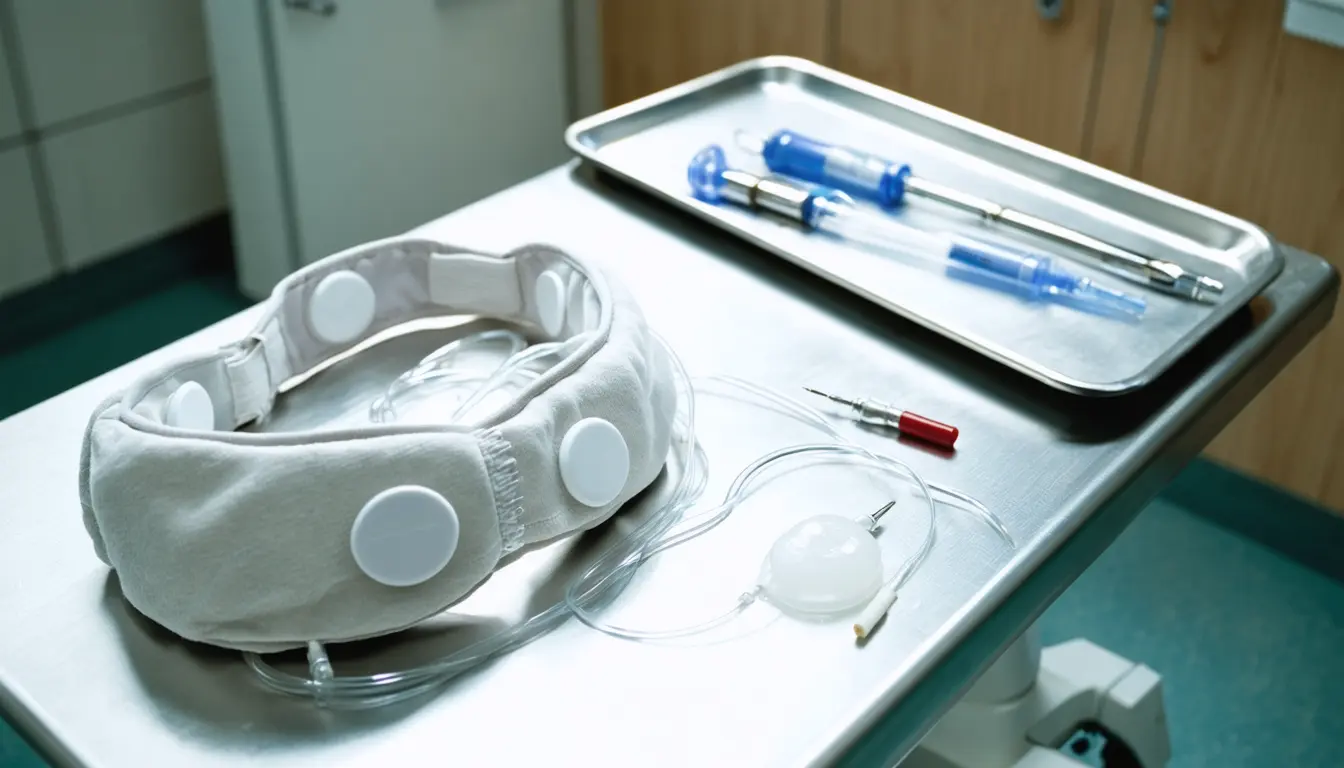
The thing a user would wear sits above the ear, roughly where headphones go. Bridge is not releasing pictures of the device yet, but Biederman calls it "something close to headphones" resting on the temporal window, the thinnest part of the skull. [4] Its probes use silicon chips from Butterfly Network, the portable ultrasound maker. [20]
Almost everyone else in this field cuts into the skull for the same reason: signal quality. Bone and skin weaken electrical signals before they reach a sensor on the outside, so most companies record impulses straight from neurons. [14] Neuralink, Synchron, Paradromics and Precision Neuroscience all take that surgical route. [8] Those implants have let paralyzed people control devices, move robotic arms, and communicate in real time by thought. [15]
Ultrasound skips the hole. It bounces high-frequency sound off moving red blood cells to measure blood flow, which in the brain tracks neural activity. [16] It reads the brain secondhand, though. Maryam Shanechi, a neuroengineer at the University of Southern California, says there is a natural delay of a few seconds between when neurons fire and the change in blood flow that follows. [1] "It captures a slower variation in neural activity," Shanechi said. "That's fine for a lot of applications, but it depends what you want to build." [2]
That delay lands hardest on the real-time tasks implants have already proven, like moving a robotic limb the instant you decide to or typing quickly, and Bridge says it will use predictive AI models to shrink the lag. [3] Biederman says the company is interested in both consumer and medical uses but would not describe specific plans. [18]
The pitch and the signal are two different things. The pitch is reach. Biederman developed the chip Neuralink licensed for its first devices during his PhD, then left to build a wearable he says could serve far more people than any implant. [10][11] "It fundamentally comes down to a difference in vision," he said. [12] "The risks of neurosurgery really cannot be minimized or dismissed, and so the level of safety and benefit that these devices must deliver really is quite high," Biederman added. "Nobody really wants a hole in their head." [13]
Bridge's closest rival is Merge Labs, the Sam Altman-backed startup chasing the same ultrasound approach. [7]
That makes the device a good fit for one kind of user and a poor one for another. Someone who wants brain input without surgery, and whose task can tolerate a second or two of delay, may find an ultrasound reader enough. [11] A person who needs to move a robotic arm the instant they decide to is still better served by an implant's direct signal. [15]
What to watch
- Results from the Redwood City study showing whether ultrasound reads brain activity well enough through the skull.
- Whether Bridge's predictive AI can cut the lag enough for instant control, where implants lead.
- Merge Labs' progress on the same ultrasound bet.