Science1 publisher3 min readPublished
Belgium's peat fire took seven days and four countries' aircraft to contain
The High Fens burned 3,000 hectares before being declared under control. The ground may keep smoldering until the end of autumn, and Belgium flew none of the water-bombers itself.
The Scientist · Science desk
Drafted by a language model from the sources cited here and checked against its claim ledger before publication. How we use AISend a correction
What happened
- Belgium's largest wildfire in a century was brought "under control" on Thursday after a seven-day fight involving hundreds of firefighters in the boggy terrain of the High Fens nature reserve.
- The local governor's office said: "At this stage, the fire is now under control in its entirety and should no longer spread," barring a major change in weather conditions or other unforeseen factors.
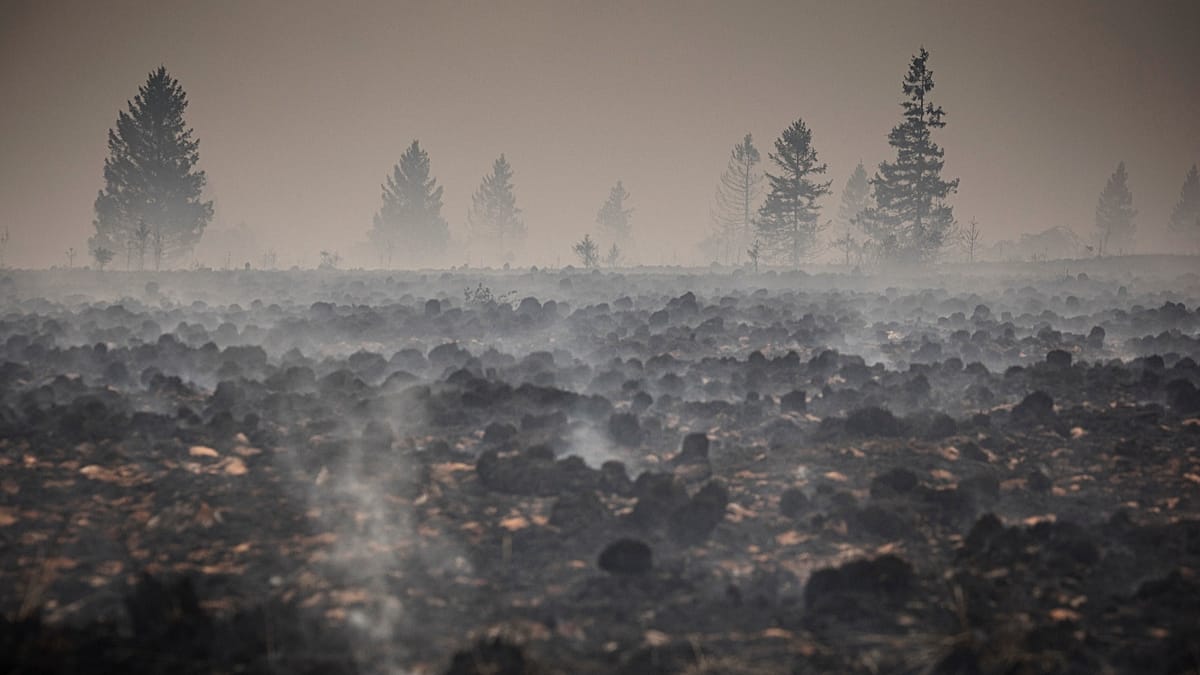
- The High Fens fire mushroomed over the weekend to half the size of Manhattan, 3,000 hectares (7,500 acres), charring peatland, pine trees and hiking trails.
- Firefighters brought numerous flare-ups under control overnight in very difficult conditions as powerful winds buffeted the eastern region bordering Germany, with a "mini-tornado" striking a town outside the park.
- The governor's office said the fire was fully contained on its western side, with operations continuing to the east.
Compiled by The ScientistSomething wrong?How this is made
Why it matters
Belgium declared its largest wildfire in a century "under control" on Thursday, seven days into a fight involving hundreds of firefighters on the boggy ground of the High Fens nature reserve [1]. The seven aircraft dropping water on the perimeter that day came from Germany, Norway, Belgium and Sweden [6], which is the part operators should note: a peat fire on the German border became a four-country civil protection operation [7], in a country that opposition parties say has no aerial firefighting capability of its own [23].
The fire mushroomed over the weekend to 3,000 hectares, or 7,500 acres, roughly half the area of Manhattan, burning peatland, pine trees and hiking trails [3]. The local governor's office said the fire was under control across its whole extent and should no longer spread, barring a major change in weather or other unforeseen factors [2]. It was fully contained on the western flank, with work continuing to the east [5]. Crews had spent the night knocking down numerous flare-ups in strong winds, and a "mini-tornado" hit a town outside the park [4]. Ground temperatures inside the burned perimeter remained extremely high [6].
Containment is not the end of this one. Peat is spongy, carbon-rich decomposed plant matter and an efficient fuel for buried embers, which can lie dormant until wind and dry weather bring them back to the surface, a pattern known as a zombie fire [10]. Authorities said it could take weeks or months of soaking to stop the site reigniting [9]. Nicolas Yernaux, a spokesman for the regional authorities, said earlier in the week that forest workers who know the terrain expect to be monitoring the underground fire at least until the end of autumn [11]. Around 350 firefighters and other emergency personnel remain deployed, alongside farmers who mobilised last week [12]. Aerial crews, grounded by bad weather earlier in the week, planned to fly until nightfall, when civil protection drones take over flare-up monitoring [8].
The terrain is what made this expensive: a patchwork of heath, peat bogs and raised wooden boardwalks [18]. The cause is still unknown [19]. The same area burned in 1911, during a comparable run of heat waves, and this is the largest Belgian wildfire since [19] - a 115-year interval [20].
The response has already turned political. Interior Minister Bernard Quintin defended the government at length before the Belgian Parliament on Thursday, saying the country faces risks that are increasingly complex and potentially large-scale, and pledging a national resilience plan [22]. The government's answer to the aviation criticism is that it invested in ground-based resources it considers more effective and has bought helicopters for water-bombing, with deliveries under way [24]. Evacuation orders were lifted from Wednesday, returning residents of several Belgian hamlets and a town on the German border [13]. Germany's firefighters began withdrawing on Thursday, replaced by Belgian personnel including volunteers [14].
What to watch: whether the site reignites once the borrowed aircraft have gone home, since the monitoring burden now falls on drones and a thinner domestic roster [8][14]; when the promised helicopters actually arrive [24]; and what the national resilience plan commits to in writing [22]. Also worth tracking is the black grouse, an endangered species with only 14 males and four or five females left in Belgium, one of which firefighters carried out of the fire zone on Thursday [15] - a national population of about 18 or 19 birds [16].