Connected refrigeration at hundreds of French supermarkets reportedly hit 50°C after an October 12 attack
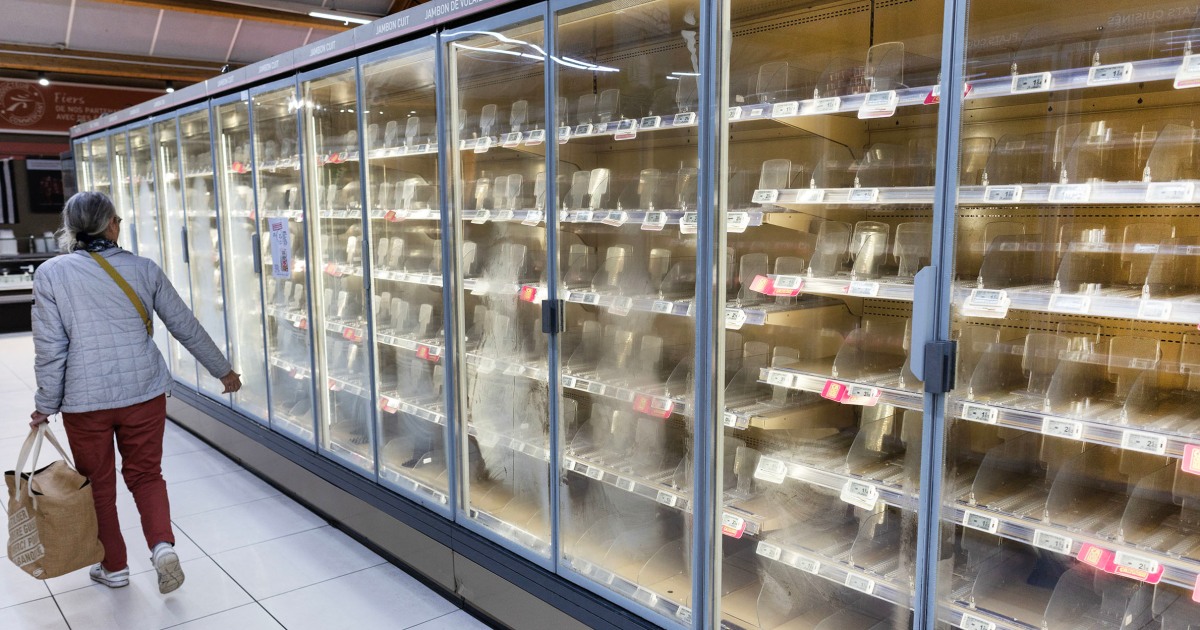
Hundreds of French supermarkets were hit on October 12 by an attack on connected refrigeration, with cold-storage temperatures reportedly reaching 50°C. The account comes from a developer post on dev.to, and the part engineers can carry over is its threat-model checklist.
The Engineer · Build desk
What happened
- Food losses and fires were among the consequences reported from the attack on the French refrigeration systems.
- Investigations into both incidents were ongoing, and no confirmed connection between them had been established.
- It advises correlating digital events with physical sensor readings where practical, alongside monitoring of configuration changes and unusual commands.
Why it matters
- contradiction The post presents the French incident as a demonstration of a design lesson, but it hedges the temperature figure. The lesson is general, and the case is unverified.
- decision Teams shipping control-plane code have to decide what a remote write may do to a physical parameter, and whether the device enforces a bound when the cloud service is wrong or compromised.
- constraint A device-side limit ships as firmware, and equipment that must run continuously makes that release slower and harder to plan than a web deploy.
- cost Unauthorised-write tests have to run on controlled rigs, so a team without a bench model of the cooling loop has to build one first.
The only account in hand is secondary. It is a developer post on dev.to that does not disclose the supermarket chain, the refrigeration vendor or the point of entry. It also hedges its own headline number: some cold-storage temperatures reportedly reached 50°C [11], and investigations were still open [14].
That gap limits what an engineer can build on it. The post says a hijacked controller might alter operating settings, with how far it gets hinging on its access rights and the protections in place [4]. The sentence describes what a compromised controller could do in general. The post does not tie it to the French incident.
A cold room can end up hot by several routes. A setpoint could be rewritten, a compressor told to stop, or a controller cut off from its sensors. Each leaves a different trace.
The post's risk list is ordinary: outdated firmware, exposed management interfaces, weak credentials, excessive privileges, and weak separation between operational and corporate networks [3]. For engineers who ship the code between a cloud console and a controller, excessive privileges is the item they control. In our view the hard limit belongs on the device. A controller that refuses a 50°C cold-room setpoint refuses it whoever holds the credentials.
That has a cost. It is a firmware change, and the post notes that a patch routine for a web server may need careful planning on equipment that must operate continuously [2].
The monitoring advice is the other half. Watch configuration changes and unusual commands, and where practical correlate digital events with physical sensor readings [5]. That check holds only if the sensor path does not share credentials with the command path. The post pairs it with procedures for isolating a compromised system and switching to a safe operating mode [8].
Testing belongs on a bench. The post says experiments against live industrial equipment can create safety risks and operational disruption [7].
TFG London, owner of Phase Eight, Hobbs and Whistles, reported a separate incident that disrupted some IT systems and online services [13]. No connection between it and the French attack had been confirmed [14].
What to watch
- Whether investigators or the affected retailers publish the entry point and the controller vendor, which would show whether the 50°C came from a rewritten setpoint or a stopped compressor.
- Whether a primary source confirms the 50°C figure and the hundreds-of-sites count, both of which currently rest on a secondary post.
- Whether investigators establish any link between the French refrigeration attack and the TFG London incident.
Clarity's read
What the record supports and how the coverage leans. The claims behind it follow.
Reality
- Evidence22
- Adoption
- Insufficient
- Hype gap+25
- Incentives30
- Confidence35
Claim ledger
Ranked by verification strength, evidence, and original report placement.
- [1]
Operational technology monitors or controls physical processes; examples include refrigeration and cold-storage controllers, industrial automation and building-management systems.
- [2]
A patch that is routine for a web server may require careful planning for equipment that must operate continuously.
- [3]
Common risk factors include outdated firmware, exposed management interfaces, weak credentials, excessive privileges and insufficient separation between operational and corporate networks.
- [4]
A compromised controller may be able to change operating parameters, depending on its permissions and the safeguards around it.
- [5]
Teams should monitor configuration changes, unusual commands, unexpected connections and deviations from normal operating behaviour, and where practical correlate digital events with physical sensor readings.
- [6]
Threat modelling should identify which systems can influence physical processes, what the consequences of unauthorised control could be, and how operators can detect and safely respond to abnormal behaviour.
- [7]
Testing should be authorised and performed in controlled environments; experiments against live industrial equipment can create safety risks and operational disruption.
- [8]
Safe recovery means preparing procedures for isolating compromised systems, switching to safe operating modes and restoring normal service.
- [9]
The post says the French incident demonstrates why the security of connected equipment should be considered part of the overall system design.
- [10]
On October 12, 2026, a cyberattack targeting connected refrigeration systems affected hundreds of French supermarket locations.
- [11]
Some cold-storage temperatures reportedly reached 50°C.
- [12]
Food losses and fires were among the reported consequences of the attack on French supermarket refrigeration.
- [13]
TFG London, owner of Phase Eight, Hobbs and Whistles, reported a cyber incident that disrupted some IT systems and online services.
- [14]
Investigations into both the French refrigeration attack and the TFG London incident were ongoing, and no confirmed connection between them had been established.
Get this ledger inside ChatGPT. Ask about any of our stories and the answer brings its figure, each claim’s verdict and the sources. Free, no account.
Sources
1 independent publisher whose own reporting we read for this story.
- dev.toWhen a Cyberattack Heats Supermarket Refrigerators: Lessons for Developers and Security Engineers
1 article · October 14, 2026
Topics and entities
Follow any of these and your For You feed starts watching them — no settings page required.
Topics
- Operational technology securityFollow
- Retail cyberattacksFollow
- Incident Response and RecoveryFollow