Product1 publisher2 min readPublished
Aqara moves the FP400's promised posture detection to an installer-focused Pro model
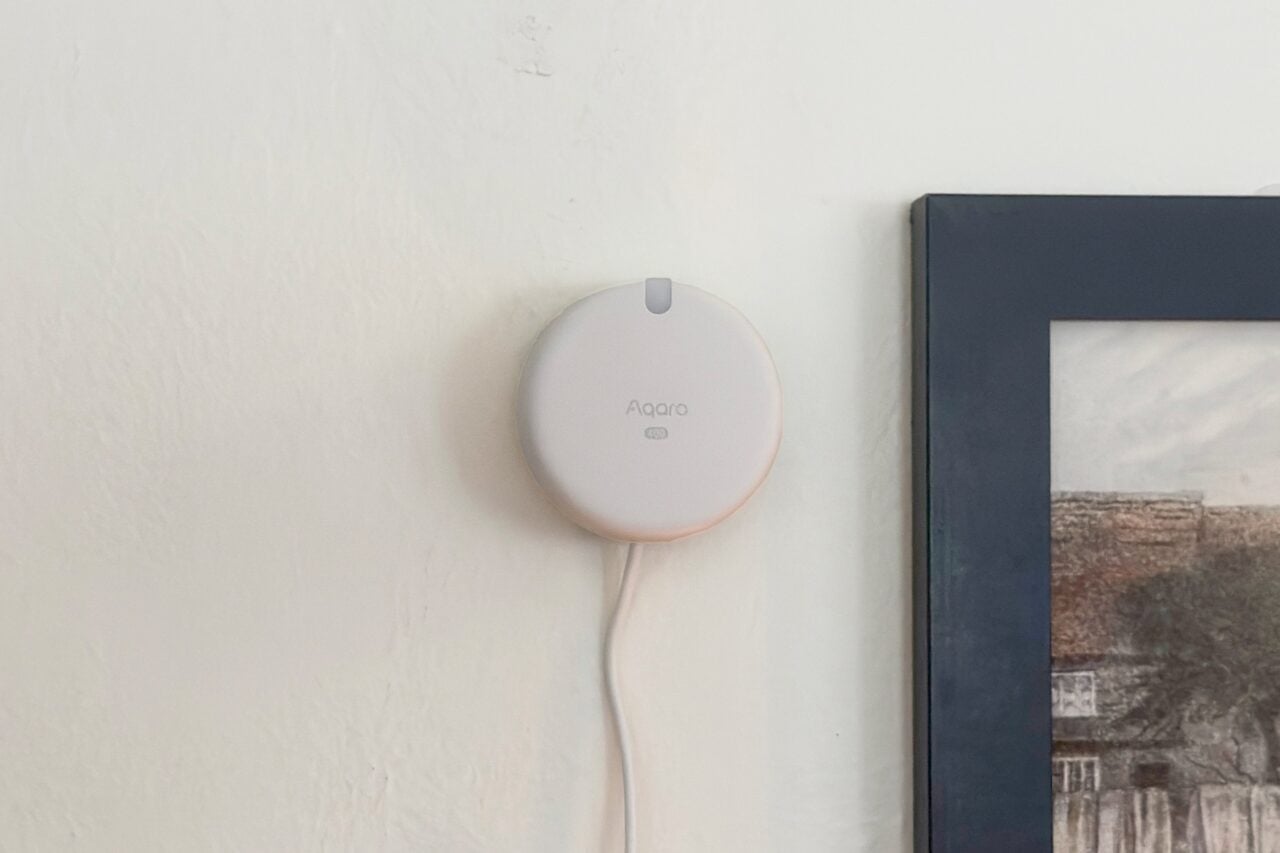
The $80 sensor tracks ten people over Thread or Zigbee with no internet needed, but Aqara told Gizmodo that the standing, sitting and lying detection it once promised for the FP400 is now a job for a separate FP400 Pro.
The Product Desk · Product desk
What happened
- Aqara's $80 Multi-Sensor FP400 uses mmWave radar to detect up to 10 people in a room, including anyone sitting still enough that only their breathing gives them away.
- Gizmodo's reviewer reports that the FP400 looks and feels like an updated version of the older FP2, despite a name implying it follows the battery-powered FP300.
- The FP400 has no battery and relies on constant power from a USB-C cable, while the FP300 runs on two replaceable CR2450 cells.
- Aqara responded, through a PR representative Gizmodo had been corresponding with, that posture detection is no longer planned for the FP400 and will arrive in a non-consumer FP400 Pro for installers in new construction and elder care.
- The review credits the sensor with custom detection zones, a built-in light sensor, Matter compatibility and no need for an internet connection.
Compiled by The Product DeskSomething wrong?How this is made
Why it matters
- constraint Mains power decides placement. An FP400 can only go where a live USB-C cable reaches, so the ceiling corner that suits the radar may need an electrician that a CR2450-powered unit would not.
- cost The $80 covers the sensor. In the setup Gizmodo tested it also needs an Aqara hub, and the cheaper M200 adds $70, so the first room is $150 before wiring or commissioning time.
- decision Anyone who specified the FP400 for posture-aware sensing in care or assisted living now chooses between deploying presence-only hardware and waiting for a Pro model Aqara has described but not dated.
- precedent Routing posture detection into an installer SKU sets the expectation that the health-relevant sensing reaches homes through contractors, and that buyers at retail get presence and counting.
Commissioning one begins with a walk. You scan the QR code on the base, add the puck to the Aqara app, pick Thread or Zigbee, then trace the edges of the room and step outside so the sensor can learn what the space looks like with no humans in it [9][12]. In a living room that is ten enjoyable minutes. Room by room across a building, that is ten minutes of an installer's time in every room.
Switch between Thread and Zigbee and the device swaps firmware, a few minutes each time [9]. Whichever radio you pick, daily use needs no internet connection at all, and Gizmodo notes the Wi-Fi based FP2 can be slower to fire as a result [10].
Measured against that FP2, the difference is how many people the sensor tracks. The older sensor tracks five people at once, the FP400 ten, double, with more versatile automation rule sets [6][21]. Gizmodo's drawbacks list still says the FP400 is "little improved versus the three-year-old FP2", and flags some of its automation triggers as finicky and unreliable [5][18].
Radar reacts to whatever moves. For households with pets, a robot vacuum or a child who leaves toys out, Aqara's answer is to lower the sensitivity or switch on "AI Enhanced Person Detection" [13]. According to the app, that setting uses AI algorithms to pick out things like vacuum cleaners, pets and moving toys as interference targets [14]. On whether it works, Gizmodo's reviewer wrote: "It seemed to do that in my testing, but it's hard to say for sure." [15]
Start with whether the capability you need exists in the model you can order today, or in one the vendor has described and not priced. Gizmodo's review does not include a price or a date for the FP400 Pro [22]. Then ask whether the sensor can go where the sensing has to happen, or only where power already is [7].
On the wider question of whether mmWave presence sensing has settled down, this record is one reviewer testing one company's hardware, with no other manufacturers' sensors in the comparison [23]. Aqara's numbering is not a sequence of improvements. The FP300 and the FP400 differ mainly in how they get power, and the posture detection both consumer models lack is going to contractors [8][17].
What to watch
- Whether the FP400 Pro ever reaches retail buyers or stays a contractor-only SKU.
- Whether Aqara ships posture detection to existing FP400 units by firmware after telling Gizmodo it is no longer planned for that model.
- Whether the battery-powered FP300 gets a successor now that the higher-numbered sensor needs constant power.