Wall Street analysts link a 5.22% 10-year Treasury yield to AI borrowing
The 10-year Treasury yield reached about 5.22% from 4.75% in August, a level last seen in 2007, Axios reported. Wall Street analysts say heavy AI borrowing could make financing harder for the government, other companies and households.
The Engineer · Build desk
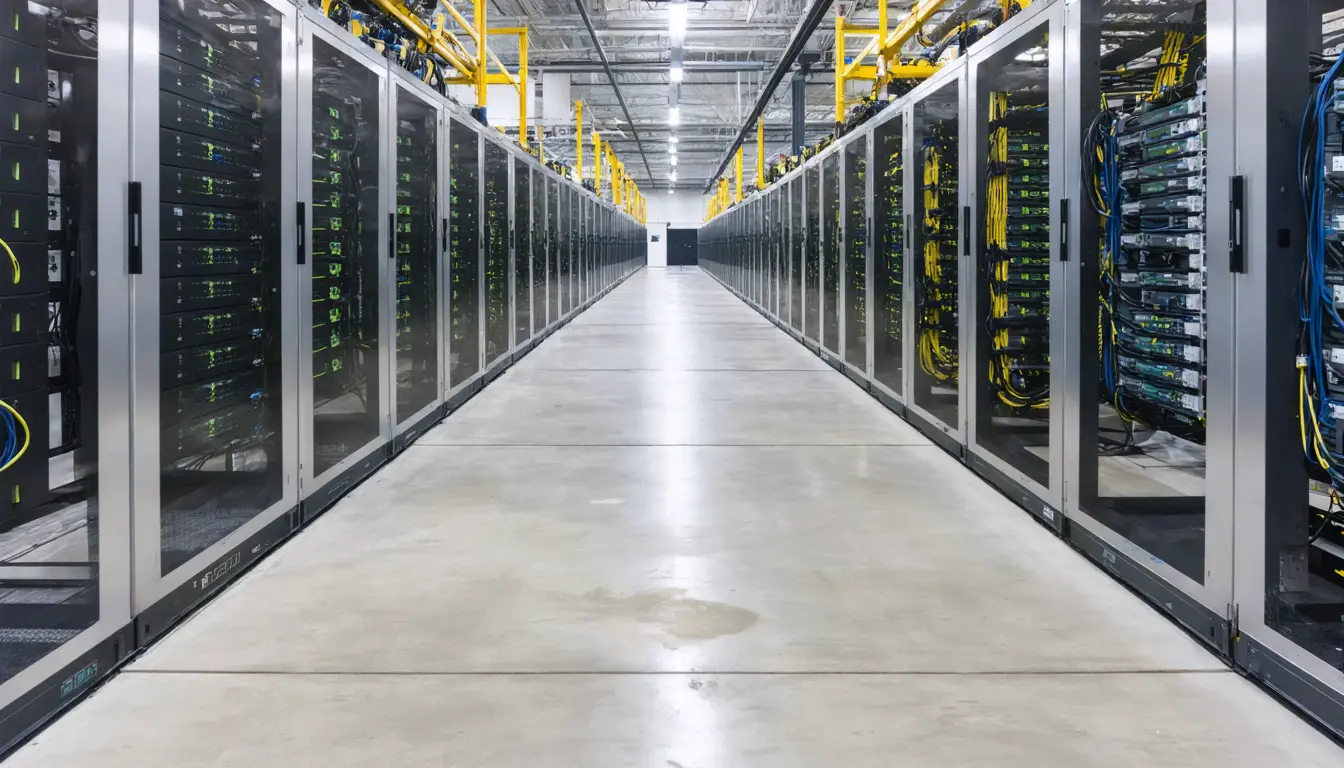
Global AI-related debt issuance was $113 billion in June, a record, and $23 billion in September, according to Morgan Stanley data cited by the Financial Times.
| Measure | Value | As of | Claim |
|---|---|---|---|
| AI debt issuance, June record | $113 billion | June | 10 |
| AI debt issuance, September | $23 billion | September | 10 |
What happened
- Krishna Guha of Evercore tied the rise in global yields since early September to AI development and energy prices.
- Amazon, Alphabet, Microsoft, Meta and Oracle, along with data-center operators and energy companies, keep raising more money despite the higher rates.
- In July, foreign investors' net purchases of US corporate bonds exceeded their net purchases of Treasuries.
- Morgan Stanley data cited by the Financial Times put September global AI debt issuance at $23 billion, nearly half of August and below June's $113 billion record.
Why it matters
- cost A 47 basis point move since August is the size to price into floating-rate debt and refinancing. The report says only that mortgages and car loans may get costlier, not by how much.
- contradiction AI borrowing cannot carry the whole explanation. Issuance fell in September while yields were rising, and Guha lists energy prices next to AI.
- exposure Apollo's Torsten Slok says home building and the auto industry lose capital, electricity and labor to an AI boom that ignores interest rates.
The benchmark rose 0.47 percentage points from August [11]. Yesha Yadav, a Vanderbilt University law professor who studies Treasury market structure, said in an interview that government debt has to compete with other places investors can put money [9]. Investors ask why they should hold it when the money can go to the stock market, Yadav said [9].
Higher funding costs normally curb investment, because borrowing gets less attractive and companies cut spending [13]. The AI buildout has so far been less sensitive to rate rises [13]. We'd expect the adjustment to fall on borrowers that do respond to price. Guha described the same risk: dearer borrowing could push out some demand for financing that has nothing to do with AI [6].
One month of data points the other way. September issuance was about a fifth of the June record, a gap of $90 billion [12]. Liaquat Ahamed, who has written books on global economic crises, called the jump in rates a typical sign that a period of heavy private investment is ending [15]. He said earlier US investment booms ended in rising rates that caused a wave of defaults [15].
The record is second-hand. mezha.net summarizes Axios, which quotes the analysts [3], and adds a Financial Times figure from Morgan Stanley [10]. The report does not include a forecast for the yield. Its sources split on direction: the September drop in AI issuance suggests less pressure from AI debt, and Ahamed's pattern suggests trouble after rates rise [10][15].
What to watch
- Whether monthly AI debt issuance stays near September's $23 billion or climbs back toward June's $113 billion record.
- Whether foreign investors keep favoring US corporate bonds over Treasuries after July's reading.
- Whether the 10-year yield holds above August's 4.75% if hyperscaler borrowing slows.
Clarity's read
What the record supports and how the coverage leans. The claims behind it follow.
Reality
- Evidence55
- Adoption40
- Hype gap+25
- Incentives
- Insufficient
- Confidence55
Claim ledger
Ranked by verification strength, evidence, and original report placement.
- [1]
In the period the report discusses, the 10-year US Treasury yield was about 5.22%, against 4.75% in August.
- [2]
A 10-year yield at this level was last recorded in 2007.
- [3]
Wall Street analysts warn that heavy borrowing for AI, together with stock market growth, could make financing harder for the government, non-tech companies and households.
- [4]
A higher yield can mean costlier mortgage and car loans and higher financing costs for the state and for business.
- [5]
Krishna Guha of Evercore linked the rise in global yields since the start of September to AI development and energy prices.
- [6]
In Guha's assessment, dearer borrowing could push out some demand for financing not connected to AI.
- [7]
Amazon, Alphabet, Microsoft, Meta and Oracle, plus data-center operators and energy companies, are raising more and more money despite rising rates; the AI infrastructure buildout continues.
- [8]
In figures cited for July, foreign investors' net investment in US corporate bonds exceeded their investment in Treasuries.
- [9]
Yesha Yadav, a Vanderbilt University law professor who specializes in Treasury market structure, said in an interview that government debt must compete with other investment options; investors ask why put money into government debt when it can go to the stock market.
- [10]
According to Morgan Stanley data cited by the Financial Times, global AI-related debt issuance in September was $23 billion, nearly half the August level and below the June record of $113 billion.
- [11]
The 10-year yield rose 0.47 percentage points (47 basis points) from August.
- [12]
September AI debt issuance of $23 billion was about 20% of the $113 billion June record, a gap of $90 billion.
- [13]
Higher funding costs normally restrain investment, as borrowing becomes less attractive and companies cut spending, but the AI investment boom has so far proved less sensitive to higher rates.
- [14]
Torsten Slok of Apollo compared the AI boom's effect on the US economy to Dutch disease, saying a boom insensitive to interest rates pulls capital, electricity and labor away from vulnerable sectors, including home building and the auto industry.
- [15]
Liaquat Ahamed, author of books on global economic crises, called the jump in rates a typical sign of the end of a period of active private investment, and said earlier US investment booms ended in rising rates that caused a wave of defaults.
Get this ledger inside ChatGPT. Ask about any of our stories and the answer brings its figure, each claim’s verdict and the sources. Free, no account.
Sources
1 independent publisher whose own reporting we read for this story.
- mezha.netБум ШІ у США підвищує вартість капіталу й тисне на інші галузі
1 article · October 14, 2026
Topics and entities
Follow any of these and your For You feed starts watching them — no settings page required.
Topics
- AI infrastructure financingFollow
- Treasury YieldsFollow
- Government Bond MarketsFollow
Entities
- ApolloFollow
- Liaquat AhamedFollow
- Yesha YadavFollow
- Torsten SlokFollow
- Morgan StanleyFollow
- Krishna GuhaFollow
- AxiosFollow
- Financial TimesFollow
- EvercoreFollow