Build1 publisher2 min readPublished
Amnesty's Argentina numbers price a national surveillance stack at about $600,000 a year
Amnesty says Argentina bought social-media monitoring, facial recognition and drones for at least $1.2 million across 2024 and 2025. The invoice is small because the expensive work sits elsewhere.
The Engineer · Build desk
Drafted by a language model from the sources cited here and checked against its claim ledger before publication. How we use AISend a correction
What happened
- Amnesty International published a report on August 19 alleging Argentina expanded AI-enabled state surveillance during Javier Milei's first two years in office.
- By Amnesty's count, procurement of surveillance technology across 2024 and 2025 came to at least $1.2 million.
- Amnesty's findings rest on procurement records, technology-acquisition data and freedom-of-information responses.
Compiled by The EngineerSomething wrong?How this is made
Why it matters
- cost At the reported floor the annual outlay is small enough that money stops being the thing deciding which agencies can operate a monitoring stack.
- constraint Oversight anchored to purchase disclosure can establish what was licensed but not who it was pointed at, so the accountability question stays open long after the spending clears.
- precedent Standing up an equivalent capability becomes a purchasing decision available to a provincial force or a single ministry, not a national programme requiring political cover.
- contradiction Amnesty's mass-surveillance framing rests on an allegation no court has tested, which means the receipts are the durable part of the report and the verdict is not.
Amnesty's floor figure works out to roughly $600,000 a year [15]. That is the number carrying this story, and it is low not because someone found a discount but because the costly parts of the stack were paid for by other people.
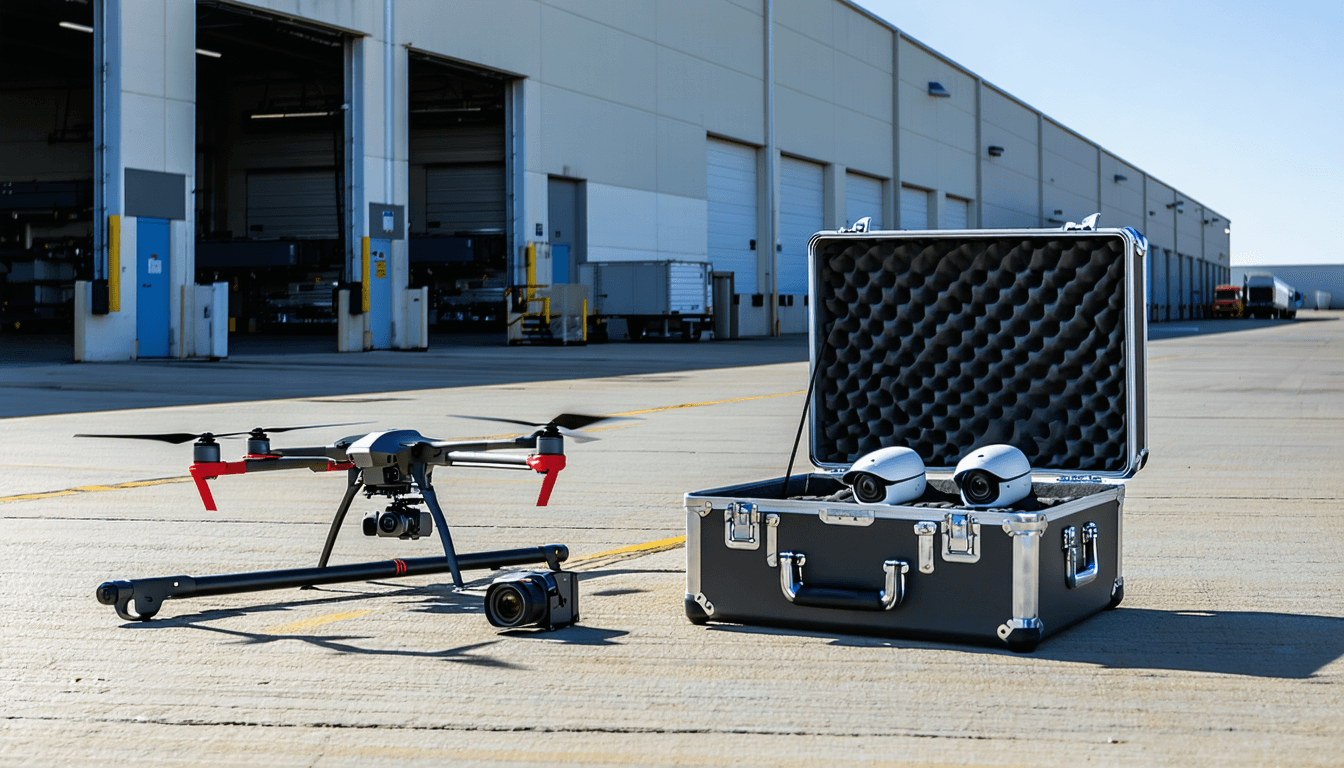
Take the Clearview AI facial-recognition licence that the Buenos Aires Times' account of the report places among the purchases [7]. A licence is rent on a face database the buyer did not assemble and does not maintain. The same logic runs through the open-source intelligence platforms Amnesty describes, which collect, cross-reference and visualise material from social networks, websites, the dark web, personal-data sources, technical infrastructure and public databases [8]. The collection already happened; what is being bought is a query interface over it. The drones, thermal cameras and ground-control systems with automated tracking sit on commercial supply chains [3]. Licences and integration are what is left to procure.
Amnesty also cites executive decrees and resolutions it says expanded intelligence and surveillance powers [9]. Those appear on no invoice at all. So both halves of what Paola Garcia Ray, deputy director of Amnesty International Argentina, called an infrastructure of state control arrive through channels that budget review does not watch [14].
The wording of the money figure deserves attention too. "At least $1.2 million" [2] is what procurement records, technology-acquisition data and freedom-of-information responses surfaced [5], which makes it a floor rather than a total.
What the record does hold is testimony. Amnesty interviewed 21 journalists, activists, pensioners, young people and human-rights defenders [4], a count Le Monde and Heise also reported [c10b]. Researcher Matt Mahmoudi told RFI that people who feel increasingly visible to drones and facial-recognition cameras may alter their behaviour around protests [12]. Absent usage logs, that behaviour is the testable quantity: whether turnout and conduct at demonstrations move while the equipment is overhead. Mahmoudi told Le Monde that Argentina was not an isolated case, describing a worldwide pattern of governments using these tools against rights defenders, dissidents, young people and migrants [13]. The arithmetic supports him. Nothing about a six-figure annual bill requires a national government behind it.
What to watch
- Whether Argentine authorities publish deployment or usage logs for the facial-recognition and OSINT tools, which is the gap Amnesty's procurement evidence cannot close.
- Whether further freedom-of-information responses lift the $1.2 million floor, and by how much.
- Whether any single deployment reaches a court, converting Amnesty's allegation into a finding one way or the other.