AI supply chain incidents are still bad packages and unwatched build pipelines
A vendor CEO says poisoned weights and hostile MCP servers remain demo material, while attackers register the package names your coding assistant invents.
The Watch · Security desk
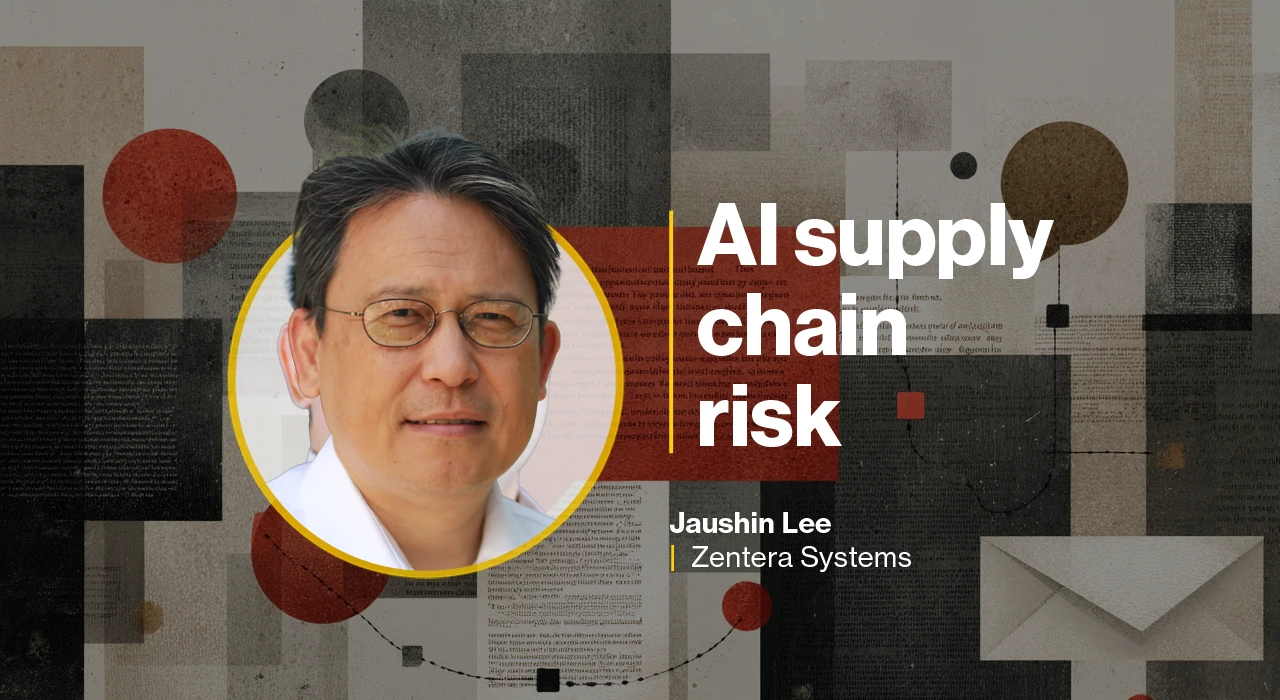
What happened
- Zentera Systems CEO Jaushin Lee tells Help Net Security that most active supply chain incidents still hit developer workflows and open-source package repositories.
- The example he names is Phantom Raven, where attackers register the package names generative AI tools hallucinate and fill them with malicious payloads.
- Asked to pick one funded project, he ranks segmenting the developer environment above instrumenting AI tooling on risk reduction per dollar.
- He also calls self-hosting a model a false comfort, describing it as a transfer of operational responsibility rather than a reduction in risk.
Why it matters
- decision A containment layer indifferent to which tool a developer installs is the only line item that keeps working when the tool list changes mid-year; AI instrumentation has to be re-scoped each time.
- contradiction Lee's per-dollar ranking and his account of what leadership actually signs off point in opposite directions, and audit pressure is the one with a deadline attached.
- exposure Any build system where an agent or script resolves dependencies without review is reachable by this class of attack without an attacker touching a model at all.
- constraint Segmentation needs architecture work and agreement across departments, so it cannot be bought late in a quarter to satisfy a finding, which is exactly why it loses to tooling.
The model's contribution to Phantom Raven, as Lee describes it, is a string. Generative tools invent package names during vibe coding sessions; a human attacker registers those names in a public repository and attaches a payload [14]. The compromise lands when an unmonitored developer script or an agent automatically fetches the recommended dependency and installs it into the build pipeline [15]. So the failure sits at dependency resolution, not at inference [10]. Pinned lockfiles, an internal mirror, a publisher check before an unfamiliar name enters the graph: none of those are AI controls, and all of them would have been on the same list five years ago.
That placement is what should decide the purchase order. A session monitor wrapped around an AI assistant sees a suggestion. It does not gate the fetch, because the fetch happens in the build system, usually under a service account, often on a schedule. Bought to close an audit finding, it sits beside the attack path rather than across it [10]. Lee gives one condition that overrides his own per-dollar ranking, and it is not the presence of AI: where an environment holds ultra-sensitive intellectual property, high-value financial records or regulated data that cannot cross a boundary, he says segmentation has to come first regardless [4].
The self-hosting argument runs the same way. Bringing a model in house stops data going to a third-party SaaS provider, but Lee calls it a false comfort if you treat it as the security answer, because the operational responsibility simply moves onto your team [5]. Local hosting does nothing to bound what the agent can reach: it can still run malicious local commands, pull unverified external dependencies, or leak credentials when its execution environment has no boundaries [6]. Patching the model infrastructure becomes yours too [9]. The thing that constrains an agent is the network around it, which is the same control being weighed for the boring package problem.
Worth keeping the evidence in proportion. This is one interview with one named executive, published by Help Net Security [1], with no incident counts, no dates and no customer detail behind the word "majority" [12]. Lee is not claiming the exotic vectors are fiction. He calls manipulated weights, poisoned vector stores and compromised MCP servers real structural threats that currently live in research and demonstrations [13], and warns that a single campaign found in the wild turns a proof of concept into a headline overnight [7]. The useful reading is that the containment layer he describes as indifferent to which tool or exploit is involved [17] is the one purchase that covers both the incidents already happening and the ones still on the conference circuit [11]. Instrumentation only covers the surfaces you have already named.
What to watch
- A published incident report, not a demonstration, involving tampered model weights or a compromised MCP server inside a production pipeline.
- Whether package registries answer hallucinated-name squatting with name reservation or publisher verification at resolution time.
- Whether the next budget cycle actually funds segmentation work or defaults to AI session monitoring bought under audit pressure.
Clarity's read
What the record supports and how the coverage leans. The claims behind it follow.
Reality
- Evidence24
- Adoption
- Insufficient
- Hype gap+15
- Incentives80
- Confidence33
Claim ledger
Ranked by verification strength, evidence, and original report placement.
- [1]
The material is a Help Net Security interview with Dr. Jaushin Lee, CEO of Zentera Systems, on where AI supply chain risk shows up.
- [2]
Lee says proper environment segmentation requires deliberate architectural planning and cross-departmental alignment, which takes time.
- [3]
Lee says that where an organisation runs an AI-native development pipeline or faces immediate governance, risk and compliance audit pressure, leadership may demand dedicated AI session controls and visibility tools first.
- [4]
Lee says data sensitivity would change his answer: environments handling ultra-sensitive intellectual property, high-value financial records or strict regulatory data that can never leave its boundary must prioritise environment segmentation first, because tooling instrumentation alone cannot be relied on where a single leak is a catastrophic compliance breach.
- [5]
Lee says self-hosting a model keeps data from being transmitted to third-party SaaS providers but is a false comfort if treated as solving the security problem, because it transfers operational responsibility onto the internal team.
- [6]
Lee says hosting a model locally does nothing to control what the local AI agent can do across the network or the open internet: an agent can still execute malicious local commands, pull unverified external dependencies, or leak credentials if its execution environment lacks boundaries.
- [7]
Lee warns that assuming emerging vectors stay theoretical is dangerous, since it takes only a single discovered campaign in the wild for a proof-of-concept threat to become a headline incident overnight.
- [8]
The interview frames supply chain risk as having expanded from dependencies and software bills of materials to model weights, MCP servers, agent tools and vector stores.
- [9]
Lee says self-hosting raises the operational bar because the internal team becomes entirely responsible for patching model infrastructure vulnerabilities.
- [10]
In the Phantom Raven path as described, the compromise occurs at dependency resolution and install inside the build pipeline, so the controls that sit on the attack path are package-management controls rather than controls on the model or the AI session.
- [11]
Because the containment Lee describes is indifferent to which AI tool or exploit is involved, one segmentation project covers both the incident class currently landing and the demonstration-stage vectors.
- [12]
Lee says the majority of active supply chain incidents hit basic developer workflows and open-source package repositories.
- [13]
Lee says manipulated model weights, poisoned vector stores and compromised MCP servers are real structural threats but today live primarily in security research and conference demonstrations.
- [14]
Lee cites the active Phantom Raven campaign: threat actors observe the non-existent package names generative AI tools hallucinate during vibe coding sessions, then register those names in public repositories loaded with malicious payloads.
- [15]
According to Lee, when an unmonitored developer script or AI agent automatically fetches the recommended dependency, it silently installs malware into the build pipeline.
- [16]
Asked whether a company funding exactly one project should segment the developer environment or instrument the AI tooling, Lee says environment segmentation delivers significantly more risk reduction per dollar.
- [17]
Lee describes segmentation as a structural containment layer against unknown unknowns: it does not matter what new AI tool a developer runs or what novel exploit an agent uses, because if the surrounding network prevents that machine or process reaching adjacent corporate assets the damage is strictly contained.
Get this ledger inside ChatGPT. Ask about any of our stories and the answer brings its figure, each claim’s verdict and the sources. Free, no account.
Sources
1 independent publisher whose own reporting we read for this story.
- helpnetsecurity.comAI supply chain risk is showing up in developer workflows first
1 article · August 24, 2026
Topics and entities
Follow any of these and your For You feed starts watching them — no settings page required.
Topics
- AI Supply Chain SecurityFollow
- Security Budget PrioritizationFollow
- Network SegmentationFollow
- AI Agent SandboxingFollow
- Hallucinated Package AttacksFollow
Entities
- Model Context ProtocolFollow
- Dr. Jaushin LeeFollow
- SBOMFollow
- Zentera SystemsFollow
- Help Net SecurityFollow
- Phantom RavenFollow