Invest1 publisher2 min readPublished
AI hardware exports carry most of the World Bank's East Asia upgrade to 4.5%
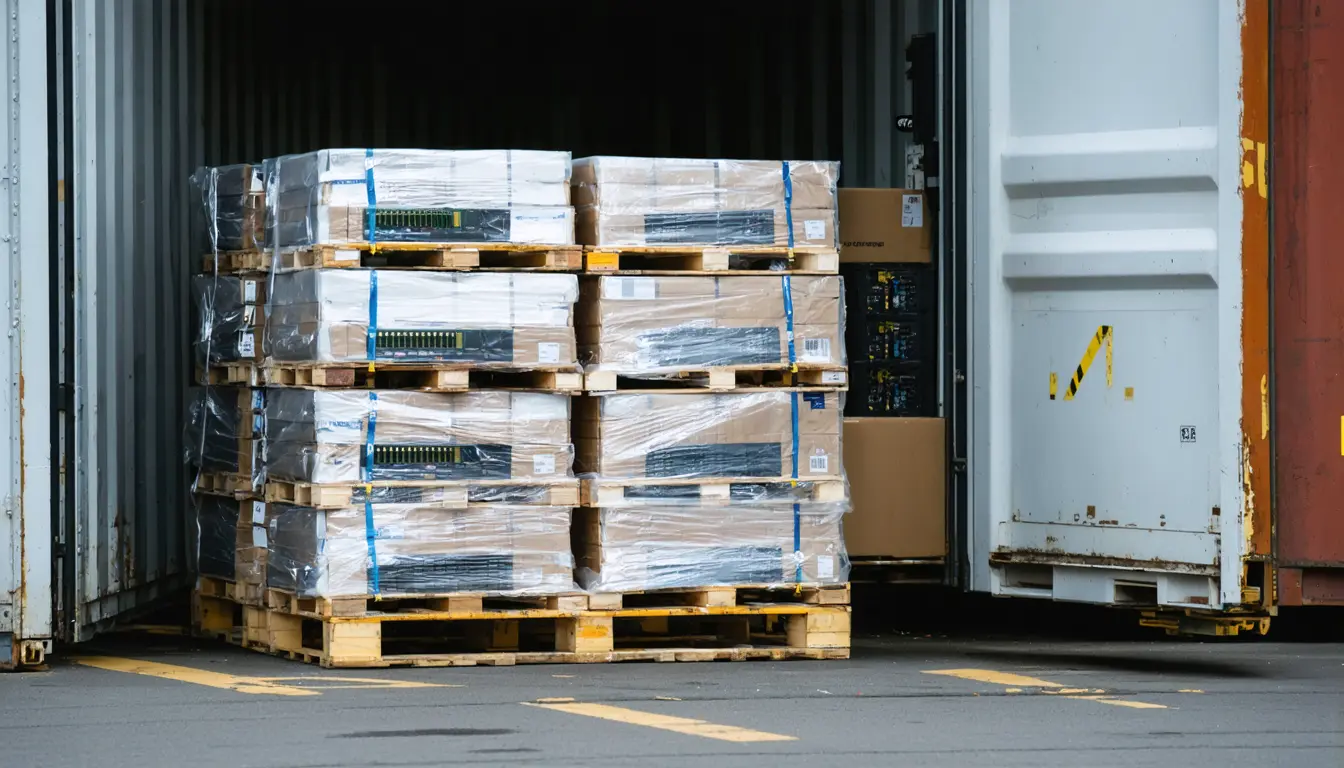
World Bank forecasters lifted East Asia and Pacific growth to 4.5% this year, up 0.3 points, mostly on AI hardware exports from Vietnam, Malaysia and Thailand. Those gains now depend on global AI spending, and the lender lists a correction there as a key downside risk.
The Investor · Invest desk
Drafted by a language model from the sources cited here and checked against its claim ledger before publication. How we use AISend a correction
What happened
- Vietnam led the upgrades at 7.4%, up 1.1 points, while Malaysia and Thailand each gained 0.7 points, to 5.1% and 2.0%.
- The report links more than 70% of export growth in Thailand, Malaysia, the Philippines and Vietnam to AI-related products.
- China is pegged at 4.4%, held back by labor-market weakness and property trouble, and the Pacific Islands were cut to 2.2%.
- A day earlier, AMRO held its ASEAN+3 outlook at 4.1% for 2026-2027 and said an AI slowdown could cut growth by as much as 1.5 points.
Compiled by The InvestorSomething wrong?How this is made
Why it matters
- exposure Thailand has the most to lose per point: if this year's gain unwound, it would lose more than a third of the growth it is now expected to post.
- contradiction The Philippines sits in the same 70%-plus AI-export group yet got no upgrade, so AI exposure alone does not decide whose forecast rose.
- cost AMRO's worst-case AI hit is five times the World Bank's entire regional upgrade, though the two cover different country groupings and horizons.
Subtract the revisions from the new numbers and the World Bank's earlier calls come out at 6.3% for Vietnam, 4.4% for Malaysia and 1.3% for Thailand [20][21][22]. Measured against the new forecasts, the upgrade is about 15% of Vietnam's projected growth and 14% of Malaysia's [24][25]. For Thailand it is 35% [23].
How much of the regional lift came from AI hardware is harder to pin down. Crypto Briefing's account of the East Asia and Pacific Economic Update, published October 6 [3], says the revision came "largely" from economies that export chips, electronics and data-center components [5]. The same account credits artificial intelligence with "most of the improvement" [16]. It does not give China's previous forecast. Without it, the 0.3 points [4] cannot be split between China, now at 4.4% [9], and the AI exporters.
The Philippines makes the simple version harder to hold. It sits inside the group whose export growth is more than 70% AI-linked, and its forecast stayed at 3.7% [12][10]. I think that gap means the 70% figure describes where export growth comes from. It says less about how far exports move any single economy.
The upgrades survive if global AI spending holds, and Vietnam's 7.4% becomes the base for the next update [6]. If spending corrects, AMRO's estimate gives the scale: 1.5 points off its 4.1% ASEAN+3 outlook would leave 2.6% [1][2][18]. A third outcome has AI demand holding while costs rise. The World Bank also lists sustained high energy prices tied to Middle East tensions and El Nino damage to agriculture [14]. Crypto Briefing argues that because many of these economies import fuel, those energy prices could erode the margins of the factories selling into the AI build-out [26].
I think the three upgrades amount to a forecast that global AI capital spending keeps its current pace. That view is wrong if AI-linked export growth slows before the next update and the Vietnamese, Malaysian and Thai forecasts hold anyway.
The report also describes a region that supplies AI hardware while its own companies are slow to use AI tools. High costs, shortages of skilled workers and worries about security and privacy are holding adoption back [15]. Crypto Briefing's reading is that the region risks capturing the manufacturing revenue from AI without the broader productivity boost [17].
What to watch
- The World Bank's next East Asia and Pacific update, and whether Vietnam, Malaysia and Thailand keep their upgrades if AI-linked export growth slows.
- Evidence of a correction in global AI capital spending, the downside both the World Bank and AMRO name.
- Energy prices tied to Middle East tensions, the route by which fuel-importing exporters lose margin even with AI demand intact.