Starknet weighs its own chain while zkSync proves Ethereum blocks in real time on one GPU
Matter Labs says its Airbender Prime prover cleared 99% of 7,200 Ethereum blocks in under 10 seconds each on one GPU. Starknet is weighing its own L1 for 2027. The record shows no fee stream behind either route.
The Investor · Invest desk
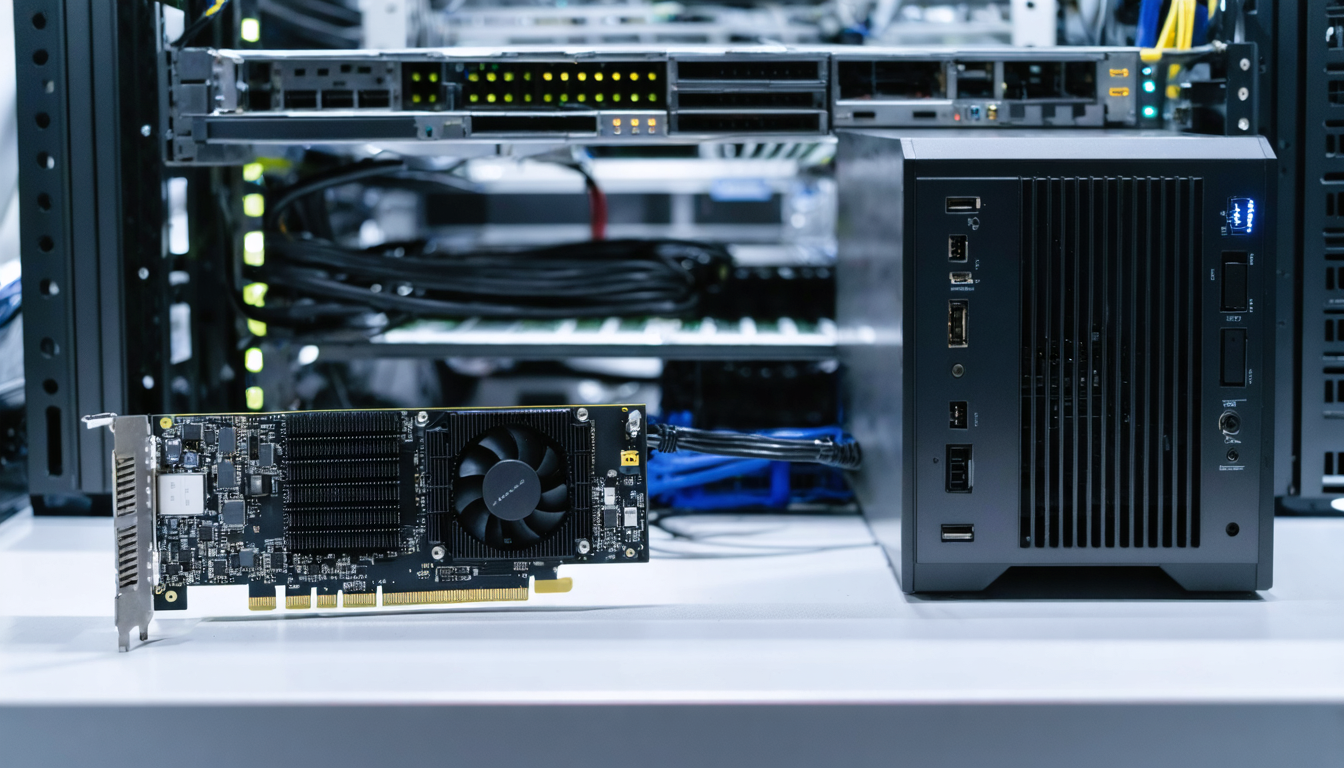
Key figures: the RTX PRO 6000 Blackwell card's price near $16,000 per marketplace reporting, then the Ethereum Foundation's on-premise capital spending target near $100,000; the card's Nvidia-rated 600 watts of board power, then the Foundation's power draw target under 10 kilowatts.
| Figure | Value | Note | Claim |
|---|---|---|---|
| Card price, reported near | $16,000 | 9 | |
| Foundation capex, near | $100,000 | 10 | |
| Card board power, Nvidia | 600 watts | 9 | |
| Foundation power, under | 10 kilowatts | 10 |
What happened
- zkSync's result maps to the Ethereum Foundation's real-time definition, with every block finishing in under 12 seconds once witness preparation is counted.
- Ethereum is aiming for a quantum-resistant L1, covering execution, consensus and data, by December 2029, and the Foundation describes that timeline as aggressive.
- LlamaRisk recommended winding down Aave V3 on six chains including zkSync, saying zkSync, Scroll and Sonic each produced under $5,000 in quarterly protocol revenue.
- An L1 would put Starknet's bridge messaging and blob data availability under its control, but the idea still needs governance approval and engineering execution.
Why it matters
- What it limits constraint The prover sits outside Ethereum's consensus protocol, and account signatures, validator signatures and data commitments are separate work, so the benchmark leaves the 2029 date where it was.
- What doesn't add up contradiction CryptoSlate ties both moves to the quantum deadline, yet Matter Labs' report attributes zkSync's roadmap change to what bank users asked for: private execution, direct Ethereum settlement, atomic transfers.
- Who has to decide decision Starknet's governance would be choosing to run its own chain in a year when Blast set an exit deadline over maintenance costs above revenue and Abstract is shutting down.
Next story · Invest · yesterday
Starknet asks STRK holders to back research into leaving Ethereum for a quantum-resistant Layer 1Confirmed4 publishers
The benchmark is easier to check than most. A 99% pass rate on 7,200 blocks leaves about 72 blocks outside the 10-second line [22]. The card that did the work costs near $16,000 on marketplace reporting [9]. That is 16% of the roughly $100,000 on-premise budget in the Foundation's target framework [23][10], and the card alone draws 600 watts against a 10-kilowatt ceiling, or 6% of it [25]. A card is not a server, though: electricity use for the full system, proof sizes and long-term operating costs still await independent measurement [5].
The two chains are solving different problems. CryptoSlate's summary is that zkSync builds components for Ethereum while Starknet explores independence from it [21]. Starknet's 2027 target [7] sits 24 to 35 months ahead of Ethereum's own date [26], and the exposure it would be buying its way out of is narrow, because its proving layer already rests on hash functions, according to StarkWare's June roadmap [13]. What remains is Ethereum-facing: bridge messaging and blob data availability [13]. zkSync's prover, for its part, replaces BN254 pairings with Keccak-256-based commitments in its L1 proofs [4].
On money, we think neither route has shown it pays, and the record is thicker for zkSync than for Starknet. CryptoSlate makes the same call [19]. Aave's risk provider LlamaRisk put zkSync, Scroll and Sonic each under $5,000 in quarterly protocol revenue [12], which annualizes to under $20,000, about one and a quarter of those GPUs [24]. That is Aave's revenue on the chain, not Matter Labs' income, so it is a thin proxy.
The better evidence is Matter Labs' third-quarter report. It prioritized private institutional interoperability over public Gateway interoperability, took the interop fees out of the original public Gateway proposal, and lists the private-interoperability fee model as ongoing work [15]. The customer list is long on paper: five founding US regional bank partners holding more than $8 trillion in assets [18], and Deutsche Bundesbank testing the permissioning engine in its own infrastructure, according to Matter Labs [17]. Those are the banks' balance sheets, and the source does not put a fee on any of them.
The counter-thesis is CryptoSlate's own: cheap execution earns too little by itself, and liquidity, distribution, compliance and institutional access are becoming the defensible layers [20]. That is the case for zkSync's bank route, and a bank network of more than 30 institutions with over $10 trillion in combined assets, per a zkSync-hosted summary [18], could produce fees once a schedule exists.
We would be wrong if Matter Labs publishes a private-interoperability fee schedule with revenue behind it. We would also be wrong on Starknet if governance approves an L1 with a funded plan, or if the idea simply lapses and Starknet stays an L2, which the source leaves open since it says only that the idea remains under consideration [14].
What to watch
- Independent measurement of Airbender Prime's full-system power draw, proof sizes and operating costs against the Foundation's 10-kilowatt and 300 KiB targets.
- A Starknet governance proposal that turns the L1 idea into a vote, with a cost and revenue plan attached.
- A published Matter Labs fee schedule for private interoperability on Prividium, with revenue figures from the bank partners.
Information, not investment advice. This story is general information about companies and markets, drawn from cited reporting. It is not a recommendation to buy, sell or hold any security; check the cited sources before acting.
Clarity's read
What the record supports and how the coverage leans. The claims behind it follow.
Reality
- Evidence55
- Adoption25
- Hype gap+30
- Incentives60
- Confidence62
Claim ledger
Ranked by verification strength, evidence, and original report placement.
- [1]
Matter Labs says Airbender Prime handled 99% of 7,200 consecutive Ethereum mainnet blocks in under 10 seconds each on a single NVIDIA RTX PRO 6000 Blackwell GPU.
- [2]
The Ethereum Foundation defines real-time proving as 99% of mainnet blocks proven in 10 seconds or less, which fits Ethereum's 12-second slot and propagation assumptions.
- [3]
zkSync's result maps to the Foundation's real-time definition, including witness preparation, with every block finishing in under 12 seconds.
- [4]
Airbender Prime uses hash-based STARKs combining GKR sumcheck, WHIR polynomial commitments and BLAKE2s hashing, with Keccak-256-based commitments for L1 proofs replacing BN254 pairings.
- [5]
Full-system electricity use, proof sizes and long-term operating costs for Prime await independent measurement, and the Foundation's public proving program continues to evaluate security and reliability.
- [6]
Ethereum's ECDSA account signatures, BLS validator signatures and KZG data commitments belong to separate protocol-level work, and the prover operates outside Ethereum's consensus protocol.
- [7]
Starknet said it is actively considering becoming an independent layer-1 blockchain, targeting full quantum resistance in 2027; the zkSync announcement came five days later.
- [8]
Ethereum's own target for L1 quantum resistance across execution, consensus and data is December 2029, a schedule the Ethereum Foundation calls aggressive.
- [9]
Nvidia rates the RTX PRO 6000 Blackwell card at 600 watts of board power, and marketplace reporting puts its price near $16,000.
- [10]
The Ethereum Foundation's target framework also covers proof sizes under 300 KiB, a long-term 128-bit security level, on-premise capital spending near $100,000, and power draw under 10 kilowatts.
- [11]
Blast set an Oct. 26 user-exit deadline, saying maintenance costs exceeded revenue, and Abstract is shutting down.
- [12]
Aave's risk provider LlamaRisk recommended winding down V3 deployments on six chains, including zkSync, saying zkSync, Scroll and Sonic each generated less than $5,000 in quarterly protocol revenue at current balances.
- [13]
Starknet's proving layer already rests on hash functions, according to StarkWare's June roadmap, with its Ethereum dependencies sitting in bridge messaging and blob data availability.
- [14]
Becoming an L1 would bring Starknet's bridge messaging and blob data availability under its own control and let it set its own timeline, but the idea remains under consideration and would need governance approval and engineering execution.
- [15]
Matter Labs' third-quarter report says it prioritized private institutional interoperability over public Gateway interoperability, removed the interop fees from the original public Gateway proposal, and lists the private-interoperability fee model as ongoing work.
- [16]
Institutions building on Matter Labs' Prividium platform asked for private execution, direct Ethereum settlement, and atomic transfers between Prividium chains.
- [17]
Matter Labs says Deutsche Bundesbank is testing Prividium's open-source permissioning engine in its own infrastructure.
- [18]
The Cari case study from zkSync describes five founding US regional bank partners holding more than $8 trillion in assets; a zkSync-hosted summary puts the broader network at more than 30 institutions with over $10 trillion in combined assets.
- [19]
zkSync is courting banks while Starknet weighs independence, but neither strategy has established a sustainable commercial model.
- [20]
Cheap execution earns too little on its own, and liquidity, distribution, compliance and institutional access are becoming the defensible layers for Layer-2 chains.
- [21]
zkSync is investing in technology useful to Ethereum's own architecture and pointing its commercial effort at regulated finance, while Starknet explores independence from the base layer.
- [22]
About 72 of the 7,200 blocks fall outside the 10-second mark if exactly 99% were under it.
- [23]
The roughly $16,000 GPU is 16% of the roughly $100,000 on-premise capital budget in the Foundation's framework.
- [24]
Less than $5,000 a quarter annualizes to less than $20,000 a year, about 1.25 times the $16,000 price of one GPU.
- [25]
The card's 600 watts of board power is 6% of the Foundation's 10-kilowatt power-draw ceiling, before counting the rest of the system.
- [26]
Starknet's 2027 target sits between 24 and 35 months ahead of Ethereum's December 2029 target, depending on the month in 2027.
Sources
2 independent publishers whose own reporting we read for this story.
- cryptobriefing.comZKsync’s Airbender hits real-time proving on one GPU, and Vitalik Buterin weighs in
1 article · October 14, 2026
- cryptoslate.comEthereum’s quantum race takes a new turn as zkSync courts banks and Starknet weighs exit
1 article · October 14, 2026
Topics and entities
Topics
- Layer-2 economics
- Ethereum quantum resistance
- Institutional blockchain infrastructure
Entities
- Deutsche Bundesbank
- Vitalik Buterin
- Starknet
- Nvidia
- StarkWare
- Aave
- LlamaRisk
- Ethereum Foundation