Loading today’s stories
Invest1 distinct publisher3 min readUpdated
Ottawa and Washington stopped negotiating: price the tariff as a permanent line, not a bridge
Talks collapsed, 50% duties landed on $20 billion of Canadian goods, and retaliation is dated Sept. 8. Nothing in the record gives a planner a date to wait for.
The Investor · Invest desk
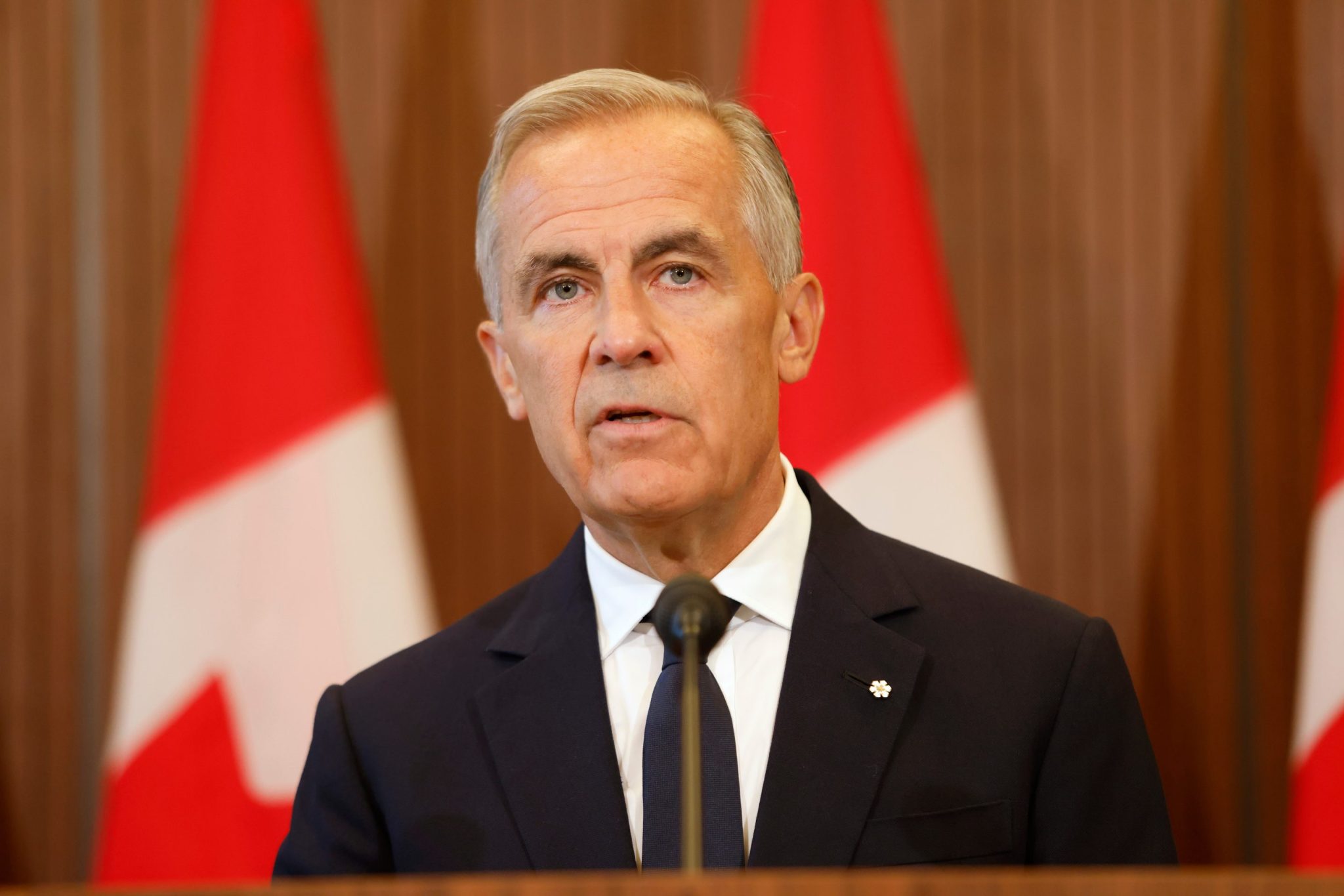
What happened
- After negotiations in Washington collapsed late Friday, the U.S. imposed 50% tariffs on $20 billion worth of Canadian goods.
- Trump's import taxes will hit about 5% of what Canada ships to the United States every year, ranging from hockey sticks to tongue depressors.
- Canada set Sept. 8 as the start of its retaliatory penalties.
- Carney said Ottawa would respond with targeted tariff protection for industries exposed to the new U.S. duties, including some steel products, and mentioned the dairy, appliance, agricultural equipment, pulp and paper and electronics sectors.
- No further talks were planned.
Compiled by The InvestorSomething wrong?How this is made
Why it matters
At unchanged volumes, a 50% rate on $20 billion of goods is roughly $10 billion a year of gross duty [1]. Against the $880 billion of goods and services the two countries sold each other last year [10], the tariffed basket is about 2.3% of the relationship [2], and about ten days of the $2 billion in goods that crosses the border every day [11][3]. The money is small and calculable. The reason the dispute broke is neither.
Carney's account of the final session is that Washington added terms late: less tariff relief for Canadian-made vehicles, limits on Canada's ability to strike trade deals with other countries, and weaker protections for language, culture and sovereignty [6]. Greer's account is that the U.S. was offering cuts on steel, autos and lumber, that Canada always had the best deal, and would have had a better one [7]. Both descriptions can hold simultaneously, and that is the difficulty. A rate can be split down the middle. A restriction on who else Ottawa may sign with cannot be half-conceded, because the half concedes the principle. Canada, for its part, had been willing to drop its remaining retaliation on steel, aluminum and autos in exchange for substantially lower U.S. duties [16], which is the shape of a deal that money could have closed.
Then there is Carney's line that Washington's "signature was written in pencil" [8]. Take it as a negotiating position rather than a verdict: it still means Ottawa now discounts American paper, which raises the size of the concession needed to buy Canadian signatures later. That pushes settlement further out, not closer.
Escalation room is wide. If $20 billion is about 5% of annual Canadian shipments south [2], the base is on the order of $400 billion [4], so 95% of the flow is untouched by this round. Canada's response is dated but only sketched: targeted protection for some steel products, with dairy, appliances, agricultural equipment, pulp and paper and electronics named as sectors of interest [4]. Neither side is near the end of its list.
The politics point the same way. Ontario's premier, whose province carries the auto and steel exposure, publicly thanked Carney for refusing the deal and told Ottawa to use every tool available [14]. That is the constituency most exposed to duties asking for more retaliation, not relief. Meanwhile the collapse has been dropped into the trilateral review: Carney called it "certainly not good news" for that process and said the failure gave Canada a new perspective on what Washington wants [12], and the agreement in question underpins industry in all three countries [13].
The practical change for anyone costing a North American footprint is the treatment of the word temporary. The tariffs were meant to start at 12:01 a.m. Wednesday and were pushed three days to let talks run [17]; the talks ended, and no further ones are scheduled [5]. A quote written on the assumption of relief next quarter now has no calendar event to hang on. Landed cost, dual sourcing and inventory carry should be modelled at the current duty with no expiry, and the upside case, if it comes, arrives as a windfall rather than a plan.
Loading topic controls
Loading related stories