Loading today’s stories
Invest1 distinct publisher3 min readUpdated
A 50% tariff on $20B of Canadian goods, matched dollar for dollar, reopens the border cost question
Talks broke Friday and the levy landed Saturday, with Ottawa pledging to match. The covered slice is about 5% of Canada's exports south, but the rate is five times the old headline.
The Investor · Invest desk
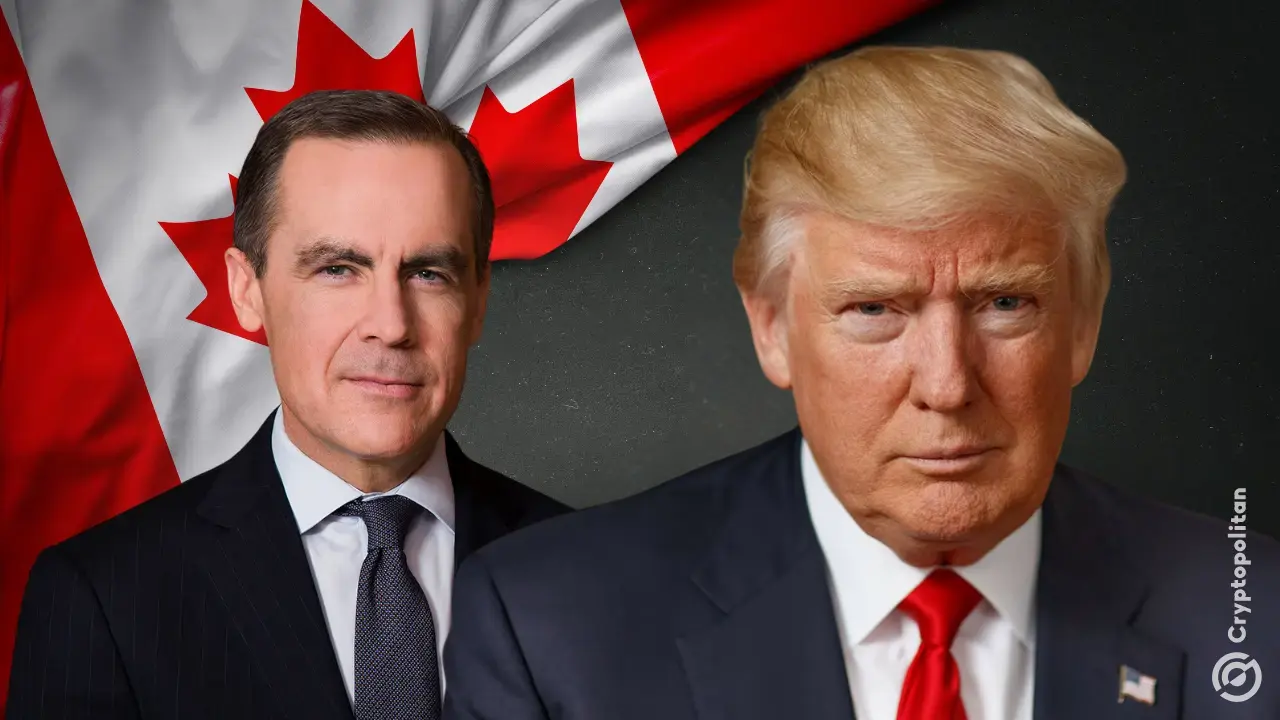
What happened
- Early Saturday, President Donald Trump imposed 50% tariffs on $20 billion worth of Canadian products after the two sides failed to reach a deal.
- Canada promised an immediate, equivalent retaliatory levy package, with Prime Minister Mark Carney saying Canada will match the US tariffs dollar for dollar to protect Canadian workers and businesses.
- Carney said he decided to suspend trade negotiations with the US and directed Canada's negotiators to return to Ottawa.
- The tariffs will apply to around 5% of Canada's yearly exports to the US.
- Before the new levies the Trump administration maintained a 10% tariff on Canadian imports, but the vast majority of Canadian goods were exempt under the USMCA pact.
Compiled by The InvestorSomething wrong?How this is made
Why it matters
Work backwards from the two numbers Washington released together. Fifty percent applies to $20 billion of Canadian goods, and $20 billion is about 5% of what Canada ships to the US in a year [1][4], which puts the implied annual base near $400 billion [16]. This is a chosen slice rather than a wall. The other 95% keeps moving on the prior terms, which for the vast majority of goods meant exemption under USMCA, with a 10% headline rate sitting over the top [5].
The rate is doing more work than the coverage. On a covered line, 10% to 50% is a forty-point increase, five times the old rate [17]. Hold volumes flat and 50% on $20 billion is roughly $10 billion a year in duty; Ottawa's dollar-for-dollar match implies about the same again in the other direction, so on the order of $20 billion of new duty across a border where Canada is the second-largest US trading partner after Mexico [18][14]. Volumes will not hold flat at that rate, which is the mechanism: the covered lines either reprice or stop.
The reason this was priced out is legible in the calendar. The levies were set for early Wednesday and Trump granted a three-day grace period to keep talking [6], which read to anyone watching as the usual choreography before a signature. Then the accounts split. Trade Representative Jamieson Greer said Canada declined to finalize the deal under terms agreed earlier in the week, citing "new demands and walk-backs of other commitments" [7]. Carney's account is that late-stage US revisions were unfair and economically damaging and broke the foundational trust of the talks [8]. Both cannot be a scheduling problem.
What Canada was asking for tells operators where the exposure actually sits: relief on steel, aluminum, autos and lumber [9]. Those are input categories where a US buyer cannot re-source in a quarter, and the source material makes the same point in general terms, that firms in tightly integrated chains may have limited options to replace Canadian suppliers quickly while retaliation raises costs for US exporters selling into Canada [15].
Two signals suggest neither capital is planning for a weekend. Carney suspended negotiations outright and recalled his negotiators to Ottawa [3], and he promised federal aid for Canadian workers and businesses within days [10]. Aid packages are what you build when you expect the cost to be absorbed rather than reversed. On the US side, Candace Laing of the Canadian Chamber of Commerce argues the move will inflate costs for American consumers and jeopardise Canadian enterprises and investment [11], which is an interested party making a forecast, not a measurement. The measurement arrives with the first invoices on covered lines.
Loading topic controls
Loading related stories