Product1 distinct publisher3 min readPublished
Xiaomi says the chip has cleared validation and is headed for commercial use in 2027, without publishing a TOPS rating. The figure product teams should read instead is the 160GB of unified memory it addresses.
The Product Desk · Product desk

invest
XPeng's $900m robot spin-out comes with a seven-year clock and a $1bn put2 distinct publishers
invest
China's record Tesla recall ships as labels and firmware. The 2027 handle ban is the bill.1 distinct publisher
product
Waymo imported more than 3,000 Chinese-built EVs by selling rides instead of cars1 distinct publisher
product
XPENG's robotics unit banked $900M against a December deadline it set itself1 distinct publisher
Compiled by The Product DeskSomething wrong?How this is made
In a tunnel, a driver asks the car to reroute around the queue at a charger. That request is either answered by what is already in the car or it waits for signal to come back. Everything a spec-sheet argument about TOPS is trying to settle shows up to the driver in that one gap.
Xiaomi has not published a TOPS figure for the D100, and the 700-to-1,000 numbers circulating are unconfirmed [4]. What it did publish is 160GB of unified memory alongside a 20-core CPU and a 16-core NPU [2], plus support for locally deployed models of up to 200 billion parameters [3]. Weights have to sit somewhere, so the memory line is what makes the parameter line legible, and it is the line a procurement spec can actually be written against.
For scale on the throughput question, XPeng runs four of its in-house Turing chips in its GX robotaxi platform for a claimed 3,000 TOPS [8], which works out at 750 TOPS per chip [12]. That sits inside the unconfirmed band being guessed for the D100 [14]. On the numbers available, then, Xiaomi's real purchase looks less like raw throughput nobody else has and more like somewhere for a large model to live.
The entry fee is disclosed, which is unusual and useful. Xiaomi says it has put more than 21 billion yuan, roughly $3.1bn, into its semiconductor program and now runs a chip team of nearly 3,000 people [9]. That is about $1m of cumulative program spend per person on the team [13], before a single customer car ships with the part. Xiaomi says the D100 has reportedly completed validation but has not identified the first production vehicle [10].
Separate the thing being pitched from the thing being done. The pitch is independence from a supplier. The work is cost control at volume: Xiaomi's stated reason for owning the chip, the domain controller and the software stack is component cost as production volumes rise [6]. Its existing SU7 and YU7 rely on Nvidia automotive computing platforms [5], so this is a replacement program with a year attached, swapping into a design already in production.
For a team picking a compute target for a 2027 program, two things decide it and neither is peak throughput. First, whether you control the model that runs on the part. Second, whether your volume amortises a chip team at the scale Xiaomi has disclosed [9]. Both yes and you build, accepting that your silicon schedule now gates your feature schedule. Model yes, volume no, and you stay a buyer, spending your leverage on memory capacity and portability rather than TOPS, because the parameter budget is what your features are made of. Volume yes, model no, and your real supplier conversation is the domain controller and the bill of materials. Neither, and the honest plan assumes your chip target changes once mid-program and budgets the port.
The broader read from the source is that custom silicon stays expensive enough to remain an option mainly for automakers with large volumes and deep pockets [11]. Below that line, the negotiation worth having with a merchant vendor is about memory ceilings and how easily your model moves, not headline operations per second.
Ranked by verification strength, evidence, and original report placement.
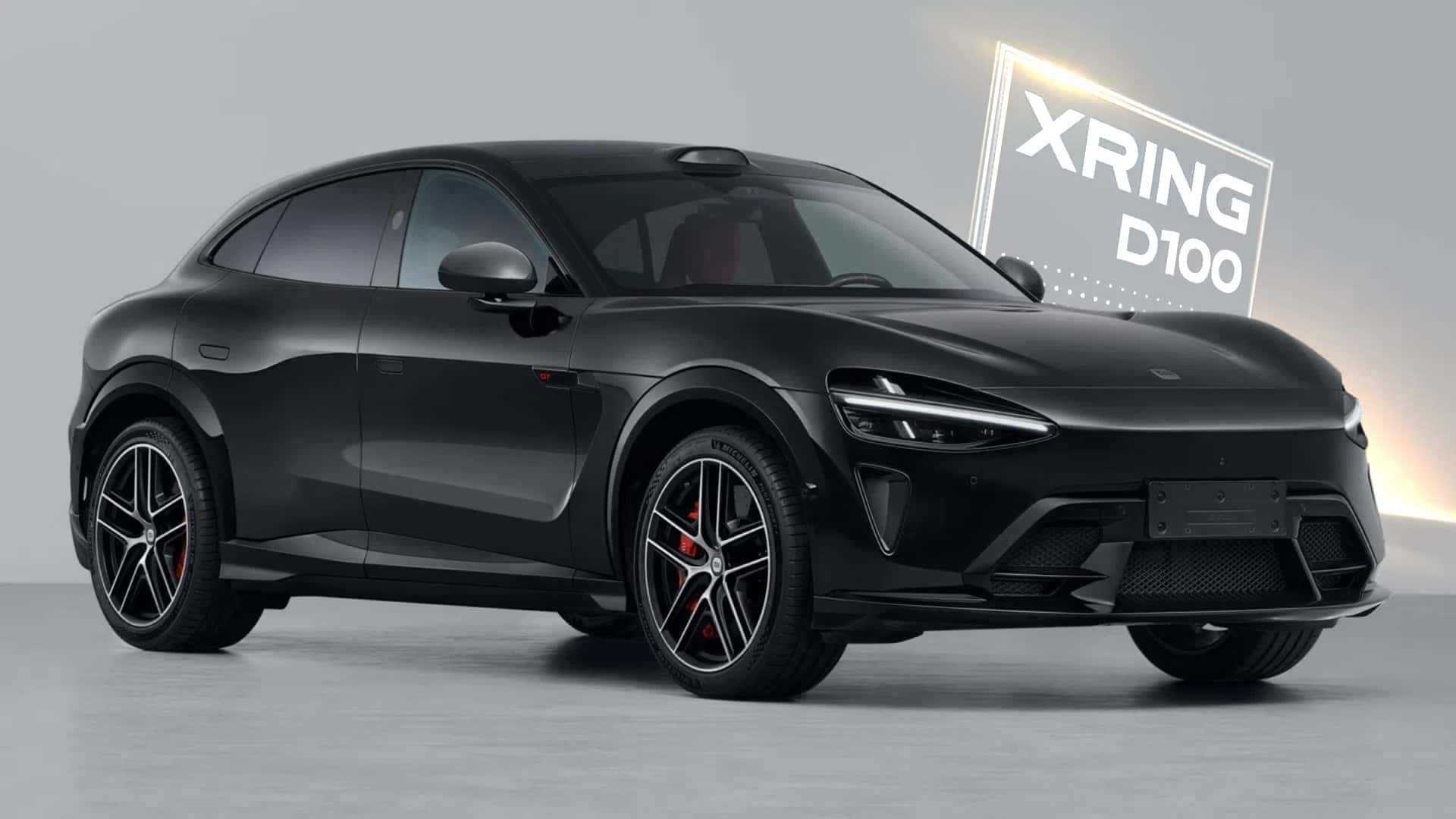
Xiaomi unveiled the Xring D100, its first self-developed high-performance intelligent-driving chip, built on a 3-nanometer process; Xiaomi says it is China's first high-computing-power intelligent-driving chip on 3nm and plans to begin commercial use in 2027.
Xiaomi says the D100 can support local deployment of AI models containing up to 200 billion parameters.
Xiaomi has not disclosed the D100's computing power in TOPS; estimates placing the chip between roughly 700 and 1,000 TOPS remain unconfirmed.
Xiaomi's existing SU7 and YU7 electric vehicles have used Nvidia's automotive computing platforms for their intelligent-driving systems.
Xiaomi has said that controlling the chip, domain controller and underlying software stack could help reduce component costs as production volumes increase.
BYD introduced its 4nm Xuanji A3 intelligent-driving chip earlier this year, and Nio, Li Auto and XPeng have also developed proprietary automotive processors.
Distinct publishers with included, body-backed reporting in this cluster.
1 article · August 28, 2026
Follow any of these and your For You feed starts watching them — no settings page required.
Evidence-backed comparisons of source perspectives and observed adoption signals. Read the methodology
Which Builder, Operator, and Investor concerns the observed source mix emphasized—not a truth score.
Evidence, demonstrated adoption, hype gap, incentives, and confidence are assessed independently, each on its own current evidence. How these are measured.
One outlet, one announcer
Trace the load of this story and it all runs back through Xiaomi's launch material, relayed by Interesting Engineering. The most quoted figure in the reporting, 160GB of unified memory, is credited to unnamed 'reports' rather than to a datasheet or a named executive; validation is 'reportedly' complete. What is solid is what Xiaomi chose to say and what it declined to say, and the piece is straight about the second part.
Announced, not installed
Zero vehicles. Xiaomi's cars on the road today drive on Nvidia silicon, the D100 has no named launch model, and commercial use is a 2027 intention. The only adoption facts in this story that involve real hardware in real vehicles belong to competitors: BYD's Xuanji A3 and XPeng's four-Turing robotaxi stack.
Superlatives now, silicon in two years
A China-first-on-3nm framing, a 200-billion-parameter headline and an implied billion-dollar-scale bet all land two years before any customer can buy the thing, and without the one number every competitor publishes. The gap is not fabrication, it is timing and selection: the disclosed metrics flatter, the withheld one would invite comparison against XPeng's stated 3,000 TOPS. Interesting Engineering's own last section, on proving reliability and integration, is the correction the top of the piece needs.
The claimant is also the cost accountant
Xiaomi supplies the spend figure, the headcount, the parameter ceiling and the argument that vertical integration will cut its own component costs, at a moment when a credible silicon story supports both its EV positioning and its case for independence from Nvidia. The programme total is not broken out by product line, so nothing constrains how the $3.1 billion is attributed. Interesting Engineering adds no counterparty: no Nvidia, no foundry, no sceptic.
Firm on the announcement, thin on the part
We are confident an announcement occurred and confident about its shape, including the pointed silence on TOPS. Beyond that the ground softens: one publisher, unnamed intermediaries behind the specifications, a hedged validation claim and a two-year runway in which the design, the node and the launch vehicle can all change. A second independent account, or a foundry confirmation, would move this materially.