Product1 distinct publisher3 min readPublished
The Ojai vans picking up riders in San Francisco and Phoenix are built in Ningbo and land under a 127.5 percent tariff, a cost a fleet operator can spread over years of paid trips and a dealership cannot.
The Product Desk · Product desk

Compiled by The Product DeskSomething wrong?How this is made
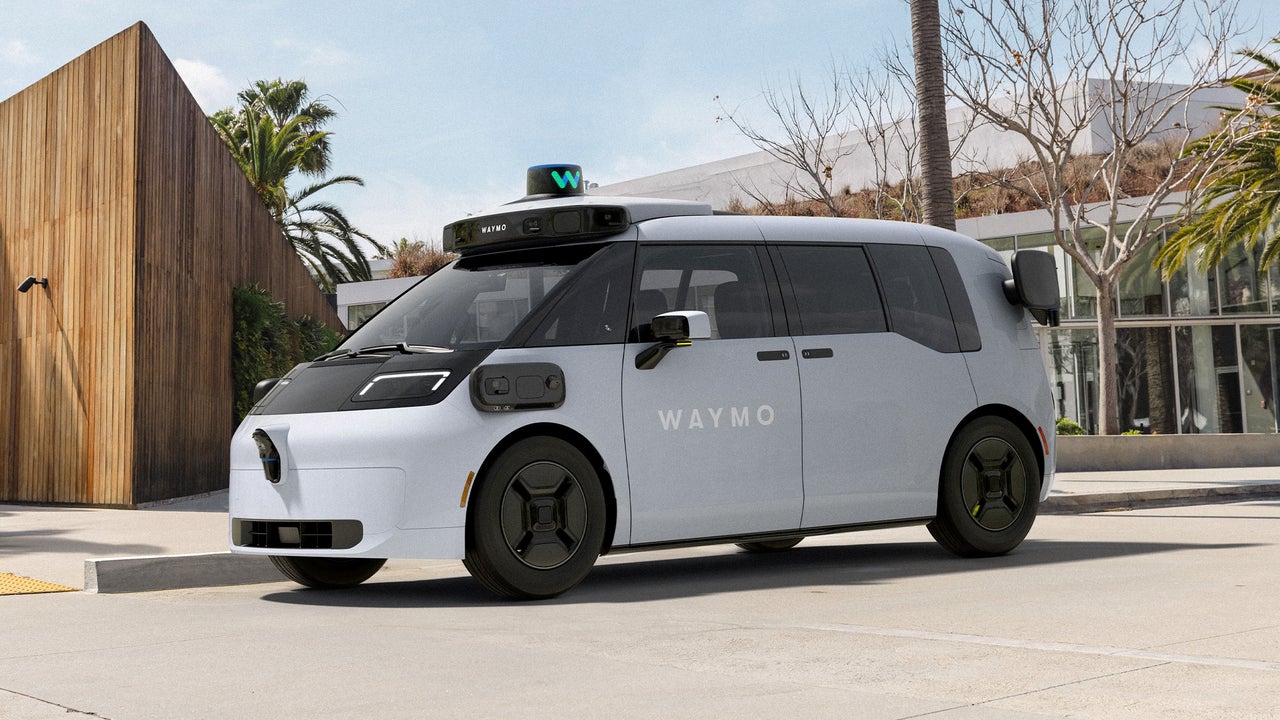
A rider in Phoenix opens the app, a van pulls in, and the doors part sideways like an elevator's [11]. Nothing in that sequence asks where the van was built. Country of origin is a shopping question, and nobody hailing a robotaxi is shopping for a car.
Users just take the vehicle that shows up; where it was built isn't part of the transaction. Product and policy teams tend to assume the American market is shut to Chinese-built EVs, but that's shut to Chinese-built EVs sold to individuals, a narrower claim. Waymo's spokesperson Ethan Teicher says the company picked the Zeekr platform because it was designed from the ground up for autonomous ride-hailing, with the safety, accessibility and durability Waymo wanted [9].
The reported figures show why the arithmetic survives the tariff. At a base price around $38,000, 127.5 percent adds roughly $48,450, putting the bare van near $86,450, close to the roughly $86,000 landed cost reported by Fast Company [13][5][1]. The duty costs more than the vehicle. Across the 2,600 units imported last year, that implies on the order of $126 million in duty [2]. It is still the cheaper path: with a driving system reported at under $20,000, an equipped Ojai lands near $106,000, about 53 percent of the roughly $200,000 a fully equipped Jaguar I-Pace was said to cost [14][15][10][3]. The current sensor set, 13 cameras, four lidars and six radars, is smaller than earlier versions and cheaper for it, according to Teicher [12].
The Connected Vehicle Rule names connectivity systems, not sheet metal [6]. Waymo's position is that the connected hardware and software in the car are its own, so the rule does not reach the Ojai, and Fast Company reports it is not fully clear how the government decides which cars are covered [16]. Timing helped more than any legal reading: the Zeekr relationship dates to 2021, before the tariff and before the rule [7]. Tu Le of Sino Auto Insights told Fast Company that Waymo "inked this deal years ago" and probably got "a pretty smoking deal" against a committed number of units [8].
For anyone whose product is blocked by a rule rather than by weak demand, the outcome usually turns on two distinctions: whether the rule attaches to the thing you sell or to a component you can supply yourself, and whether you recover the cost at the point of sale or over years of metered use. Waymo falls on the component and metered-use side, which is how a 127.5 percent tariff becomes a line item in a fleet build rather than a deal-breaker. A dealer selling the same van to a family falls on the other side, where the vehicle itself is the product and the cost lands at the point of sale, and $86,000 for a $38,000 vehicle ends the conversation [13]. There's also a third factor: timing. The Zeekr contract predates both the tariff and the rule, an advantage a team starting fresh on Monday simply couldn't line up now [7].
Ranked by verification strength, evidence, and original report placement.
Waymo has reportedly imported more than 3,000 of the vehicles, including 2,600 last year.
Waymo's custom-made Ojai vehicles are manufactured in Ningbo, China, then shipped to the US, where Waymo adds its own autonomous driving technology.
The Ojai vehicles started public rides in San Francisco, Los Angeles and Phoenix this summer.
Hundreds of the vehicles are on the road now, and the number will jump to the thousands as Waymo rolls them out in Denver, Las Vegas and San Diego later this year.
Tariffs of more than 100 percent have essentially stopped imports of Chinese-made EVs to the US; the total is now 127.5 percent, including an extra 25 percent vehicle tariff the Trump administration added last year.
The Connected Vehicle Rule, finalized at the beginning of 2025, bans the import of Chinese-made vehicles that include vehicle connectivity systems, on the concern the technology could be used for spying by the Chinese government.
Distinct publishers with included, body-backed reporting in this cluster.
1 article · August 28, 2026
Follow any of these and your For You feed starts watching them — no settings page required.
leadership
Waymo pays $38,000 for a Chinese-built robotaxi, then pays more than that again in tariffs1 distinct publisher
product
Waymo opens the trunk: a 5nm ASIC, a quadrillion ops, and a supplier list rivals can price3 distinct publishers
invest
China's record Tesla recall ships as labels and firmware. The 2027 handle ban is the bill.1 distinct publisher
product
Geely puts a date on solid-state: 500 Wh/kg pilots across six brands by 20271 distinct publisher
Evidence-backed comparisons of source perspectives and observed adoption signals. Read the methodology
Which Builder, Operator, and Investor concerns the observed source mix emphasized—not a truth score.
Evidence, demonstrated adoption, hype gap, incentives, and confidence are assessed independently, each on its own current evidence. How these are measured.
Firm on rules, second-hand on money
Two different grades of fact are stacked in one story. The regulatory half — the 127.5 percent total, the Connected Vehicle Rule's 2025 finalization, the June order against Polestar — is checkable and specific. The financial half is not: the paragraph that gives $38,000, $86,000, under $20,000 and $200,000 opens by conceding Waymo has not shared figures, and even the 3,000-plus import count arrives as something 'reportedly' true rather than as a customs record. One publication, no documents.
Paying riders, not a pilot
Whatever the accounting turns out to be, the vehicles are visibly in commercial service: public rides in San Francisco, Los Angeles and Phoenix since this summer, hundreds on the street, three more metros queued. That is well past demonstration stage. What holds the score short of high is that the fleet-scale number — 3,000-plus imported, 2,600 in one year — is the part told second-hand, so the size of the commitment is less certain than the fact of it.
A workaround still waiting on a ruling
The framing — Waymo 'found a way around the barriers' — is a shade more settled than the facts underneath it. What the reporting actually establishes is that Waymo asserts the Connected Vehicle Rule does not reach it, and in the same breath that nobody can see how the government picks targets. Polestar, same corporate parent, was stopped. A pending bill would close the argument entirely. Add cost figures that make the manoeuvre look shrewd but which Waymo declined to confirm, and the gap is modest and mostly in the framing rather than the facts, which Fast Company hedges honestly throughout.
Both quoted voices have skin in it
The company explaining why its Chinese-built vans are lawful is also the company that benefits if regulators accept the explanation, and the sensor counts plus the 'fewer sensors, better performance' line come from its spokesperson with nothing to check them against. The lone outside voice, Tu Le, runs a consultancy whose subject is precisely this trade — and his most quotable claim, a 'smoking deal' with committed volumes, he flags as a guess. Zeekr, Customs and Commerce, all of whom would have reason to contest or confirm, are absent from the record.
Sure what is happening, unsure what it costs
We would bet on the shape of this — Chinese-built vans, imported at scale, in paid service, under a rule whose reach is disputed — and would not bet on any single dollar figure in it. A second outlet, a customs record, or one line from Commerce on how the Connected Vehicle Rule is being applied would move this sharply in either direction.