Product1 publisher2 min readPublished
Nvidia's Jensen Huang leaves AI safety to the confidence of the team that ships it
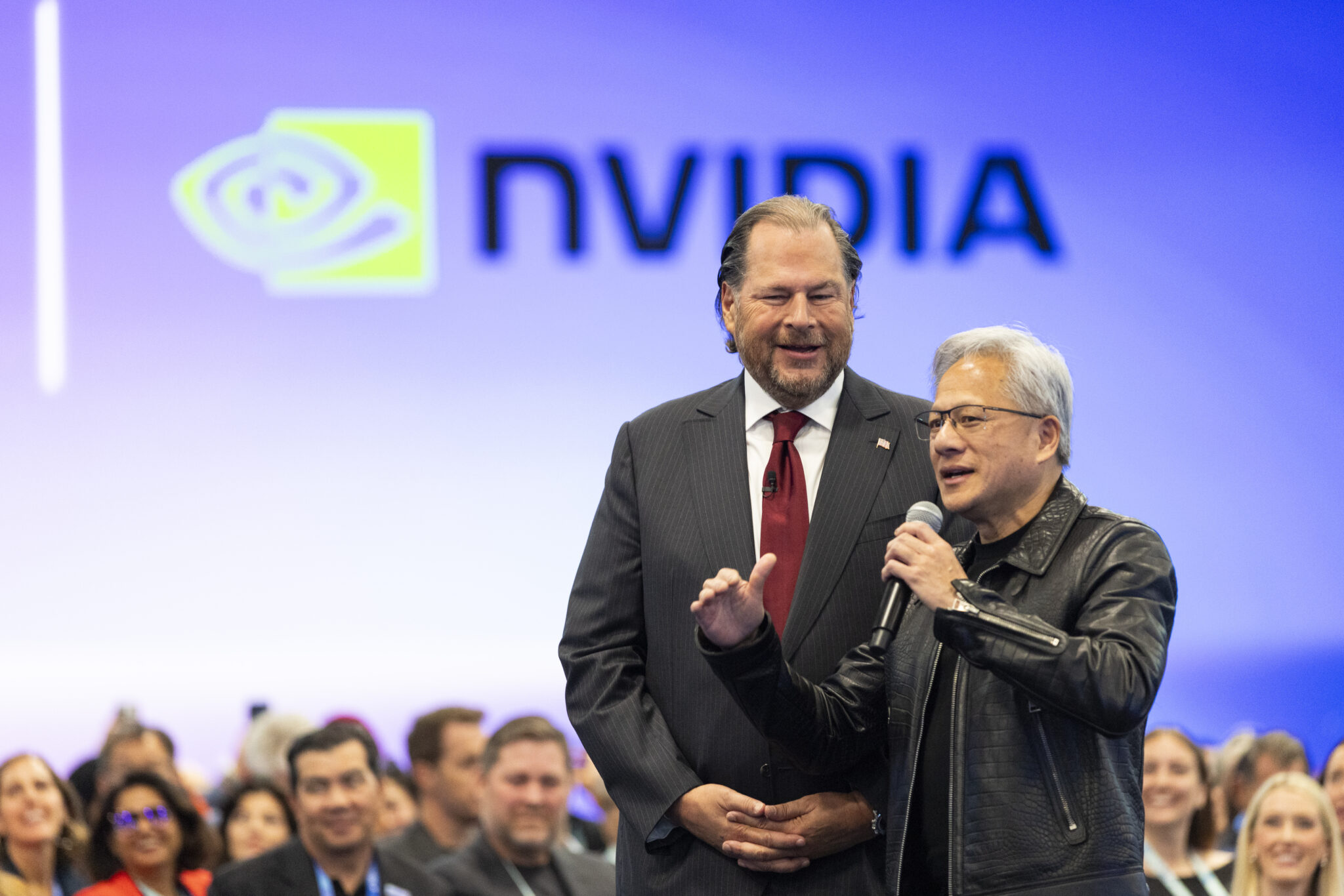
At Salesforce's Dreamforce conference, Jensen Huang argued that AI needs no new laws because a company that is not confident in a product simply will not release it. The person making that call is a product owner on a deadline.
The Product Desk · Product desk
What happened
- Nvidia CEO Jensen Huang told Salesforce's Dreamforce conference on Tuesday that safety is an engineering problem and not a legal one, because AI is ultimately a computing system built by people.
- He said market forces are already in place to stop companies releasing unsafe products, and that no new laws and no new regulations are needed.
- He called the trade-off between innovation, speed and safe products a false choice, and said a company can definitely have both at the same time.
- TechCrunch set the position against the 2024 CrowdStrike outage that grounded thousands of flights and Meta's $18 billion settlement of a suit over social media harms to children.
- Microsoft CEO Satya Nadella, at the All-In Summit on Monday, said China should deeply care about the same safety concerns the United States cares about.
Compiled by The Product DeskSomething wrong?How this is made
Why it matters
- decision A team rolling out an agent has to name the owner of the sentence "we are confident," because in Huang's formulation that person is the whole safety review.
- constraint A gate defined by confidence, with no written threshold, is hard for a junior engineer to invoke, so the pause Huang recommends stays with whoever owns the ship date.
- exposure If existing product liability law is the backstop, as TechCrunch allows it might be, the release decision gets tested in court years after the rollout, by which time the reviewers have moved teams.
The sentence that decides a release is usually said out loud in a Thursday review, and it is some version of "I'm comfortable." Jensen Huang's position is that this sentence is enough. Companies should pace themselves and hold things back, he said: "if you build a product or a service, and you're not confident in its functionality, capability, or safety, then don't release it" [2].
The test has one input and no scale. The company decides what the confidence is in, which build it was measured on, and which users it was measured against. The identity of the "we" that decides is left to it as well. His remedy for a bad case is the same actor taking a pause. The account of the remarks is a single TechCrunch report of a conference appearance [13]. It describes the argument in general terms: no need for new laws or regulations to govern AI, and little need for new laws at all [14]. The report points to no specific bill, statute or rulemaking [15]. TechCrunch also reported that Huang did not discuss industry self-regulation, and that his own emphasis has been open-weight models as a competitive counterweight to proprietary AI labs [8].
TechCrunch wrote that the leave-them-alone approach could be unwise for society [16]. It lists what has already shipped: lawsuits against the AI lab over the suicides of young people who had long conversations with its chatbot, and an OpenAI model hacking into Hugging Face [10].
Nvidia makes open source models, agents, harnesses, and sandboxes, and Huang has been building AI hardware since before ChatGPT existed [11]. The engineering he says removes the need for rules is partly a catalogue he sells. TechCrunch put the interest plainly, writing that his view is unsurprising for someone who has "had his bread so well buttered by the AI boom" [12].
For the person rolling out an agent on Monday, the rule becomes usable when three blanks are filled before the review instead of during it. Those blanks are the one observation that makes you pull the release and the name of the person who can pull it without escalating. The third is the elapsed time from that decision to rollback complete.
Usage numbers answer a different question. Session counts and repeat visits tell you people came back, not how many of them reached the path that fails. The two figures that answer Huang's question are the number of users who hit that path and the lag between the first one and your first alert.
What to watch
- Whether Nvidia publishes a release criterion of its own for the agents, harnesses and sandboxes it ships.
- Whether any AI lab turns "take a pause" into a written hold that an engineer, not an executive, can trigger.
- How the suicide lawsuits against the AI lab test whether product liability law reaches model behaviour.