Invest1 distinct publisher3 min readPublished
Warner Bros. valued a finished $70m film below the deduction its cancellation would generate, sold worldwide rights for about $50m, and then watched the buyer collect $15.5m in a single weekend.
The Investor · Invest desk

Compiled by The InvestorSomething wrong?How this is made
A write-off is an assertion about value before it is a tax filing, and the assertion Warner Bros. made in 2023 was that a completed $70m Looney Tunes feature, made for HBO Max and testing well, was worth less than the deduction its cancellation would generate [2][3]. Selling worldwide rights for about $50m early last year retracted that assertion at a specific price [4]: roughly 71 cents of cash on every dollar of negative cost [3], and a realised loss nearer $20m than $70m [5]. Which is fine as far as it goes. The part worth modelling is what the buyer got for the $50m.
Three days of North American ticket sales came to $15.5m, or 31% of the purchase price [1][1], and that is before international and before the ancillary window that David Gross of FranchiseRe expects to do the actual recouping, while he calls the theatrical result no better than fair [8]. Gross differs from what a distributor keeps, and the source gives neither Ketchup's rental share nor its print-and-advertising spend, so 31% is a ceiling on cash conversion rather than the cash. The comparison on the same chart is still unkind: The Dog Stars, a new Ridley Scott picture for 20th Century Studios that cost between $70m and $100m, opened fifth with $8m [11], so a film its owner had marked to nothing opened at 1.9 times a fresh studio release [4] and cleared The Odyssey's seventh weekend by $1.2m [6][12].
Now the counter-thesis, which is strong. Ketchup's previous best opening was $3.1m, for The Day the Earth Blew Up, also a Warner-made Looney Tunes castoff [6], so the same buyer running the same playbook on the same library produced a fivefold spread across two titles [2]. And what made this one different was the three-year public campaign that Warner's own cancellation created [2], which is awareness the studio paid for by refusing to release, and which cannot be resold. This is probably wrong, but I think the underpricing is real and misattributed: what gets undervalued in a shelved asset is not the negative, it is the audience assembled by being told it cannot see the thing, and a 95% Rotten Tomatoes score with an A CinemaScore suggests that audience stayed once it arrived [7].
Warner's continued inaction is the allocation tell. Batgirl and Scoob! Holiday Haunt remain unreleased [9], and each week they stay that way protects the original accounting rather than testing it twice more against a market that has just paid $15.5m to sit through the first test [1]. What would prove this desk wrong: Ketchup's next library pickup opening nearer $3.1m than $15.5m, or the kids'-ancillary recoup Gross is banking on failing to arrive, in which case $50m bought one very good weekend and a thin tail behind it.
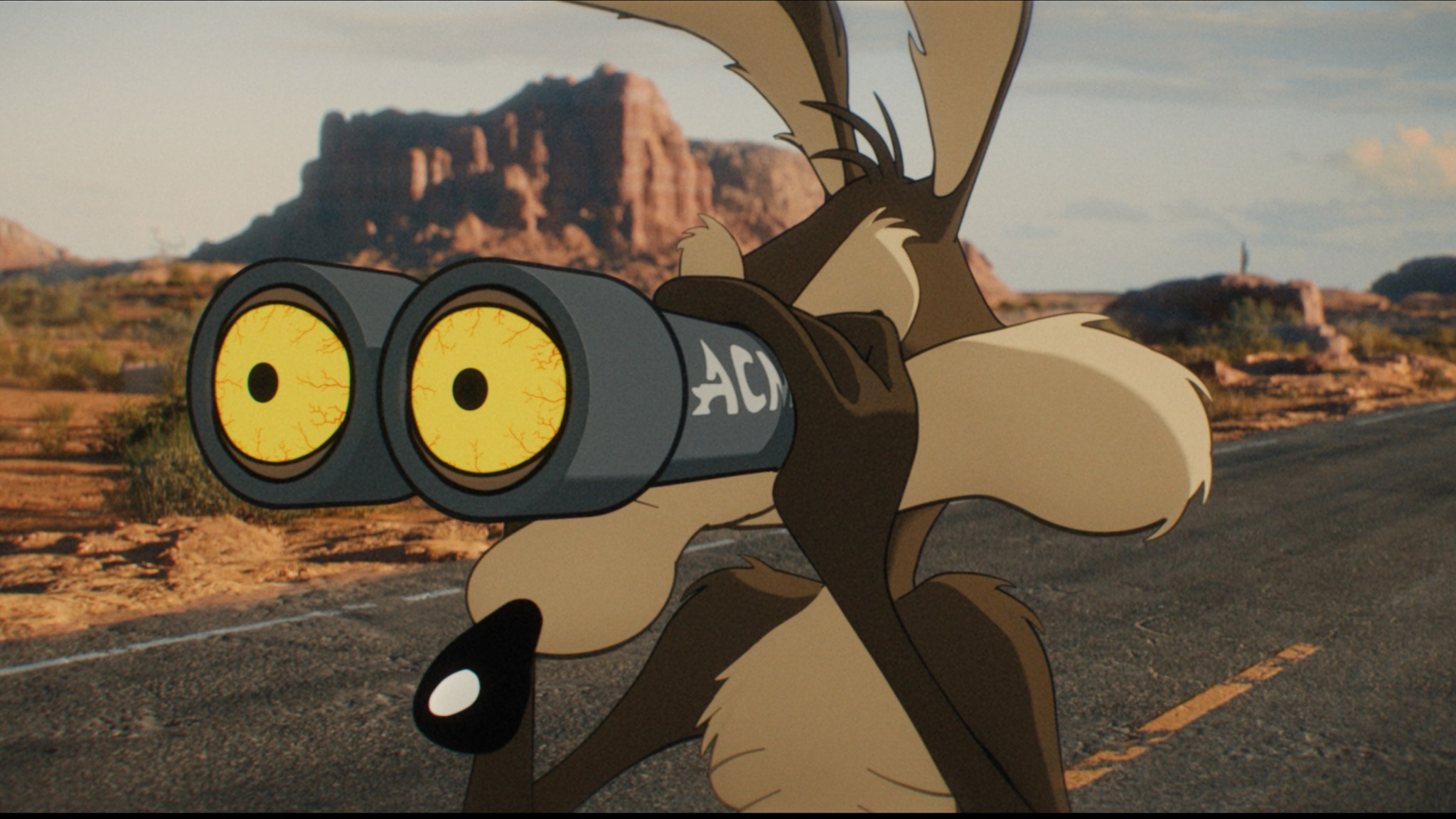
Ranked by verification strength, evidence, and original report placement.
Early last year Ketchup Entertainment acquired worldwide distribution rights to "Coyote vs. Acme" for about $50 million.
"Coyote vs. Acme" debuted in second place with an estimated $15.5 million in U.S. and Canadian ticket sales over the weekend, three years after Warner Bros. abruptly canned the film.
In 2023 Warner Bros. cancelled any release of the completed film, preferring to take a tax write-off on a movie originally produced for its streaming service, HBO Max; after an outcry the studio put the film up for sale.
The film, a live-action and animation hybrid directed by Dave Green, cost $70 million to make, and Warner Bros. axed it despite good test screening scores.
The opening weekend was the best ever for Ketchup Entertainment; the indie distributor's previous high was 2024's "The Day the Earth Blew Up", another Warner-made Looney Tunes castoff, which opened to $3.1 million.
Moviegoers gave "Coyote vs. Acme" an "A" CinemaScore and it rated 95% fresh on Rotten Tomatoes.
Distinct publishers with included, body-backed reporting in this cluster.
fortune.com
1 article · August 30, 2026
Follow any of these and your For You feed starts watching them — no settings page required.
product
AMC's $2 million website pledge is a hot-spot problem, not a scalping problem1 distinct publisher
product
The hearing date is the case: Disney wants a judge before the FCC starts the clock1 distinct publisher
product
Iowa's attorney general defends the Paramount merger by pricing its delay1 distinct publisher
product
Spider-Man art book: when clone-stamping reads as AI, a policy is not evidence1 distinct publisher
Evidence-backed comparisons of source perspectives and observed adoption signals. Read the methodology
Which Builder, Operator, and Investor concerns the observed source mix emphasized—not a truth score.
Evidence, demonstrated adoption, hype gap, incentives, and confidence are assessed independently, each on its own current evidence. How these are measured.
One report, two approximations
Every number that has to hold weight here runs through one Fortune account. The opening gross is a studio estimate that gets replaced Monday; the $70 million cost and the "about $50 million" price — the two figures the whole reversal is judged on — carry no filing, no named dealmaker, and no comment from either company. The reception numbers are the sturdiest things in the piece, because CinemaScore and Rotten Tomatoes are checkable and the story quotes them plainly.
Real screens, real tickets
This is not a projection — the film played, audiences bought seats, and the result outranked everything new that weekend and a Nolan release still in wide play. The distributor cleared its own previous ceiling by roughly five times. What stops the score higher: one weekend of estimated grosses is a thin base, and the ancillary business the analyst is counting on has not started.
Gross dressed as payback
Our own headline treats $15.5 million of ticket-window gross as 31% of Ketchup's outlay recovered, and that is not what a distributor banks — exhibitors take a cut nobody here quantifies, and marketing spend sits outside the $50 million entirely. Our framing also asserts Warner valued the film below the deduction; Fortune says only that the studio preferred a write-off, and never sizes it. Fortune is the more restrained party: its own analyst calls the numbers merely "fair" two paragraphs after the piece calls the film a hit.
Self-reported by the winners
Weekend grosses reach the press as studio estimates, filed by the companies they flatter — and here the company being flattered is a small distributor with a career-best result and a rescued-orphan narrative to sell. The analyst on the record publishes a subscription box office newsletter. Warner Bros., the only party with a reason to defend the 2023 decision, says nothing at all, so the balance tilts toward whoever benefits from the reversal looking total.
Direction firm, magnitudes soft
That a shelved film opened well and embarrassed the decision to shelve it is about as solid as a one-weekend story gets. Every quantity attached to it is softer: an estimate awaiting revision, a cost figure with no paperwork, a price prefixed by "about", and a single publisher standing behind all three.