Invest1 publisher2 min readPublished
Saudi export inventories buy days against a repair estimate of five to six weeks
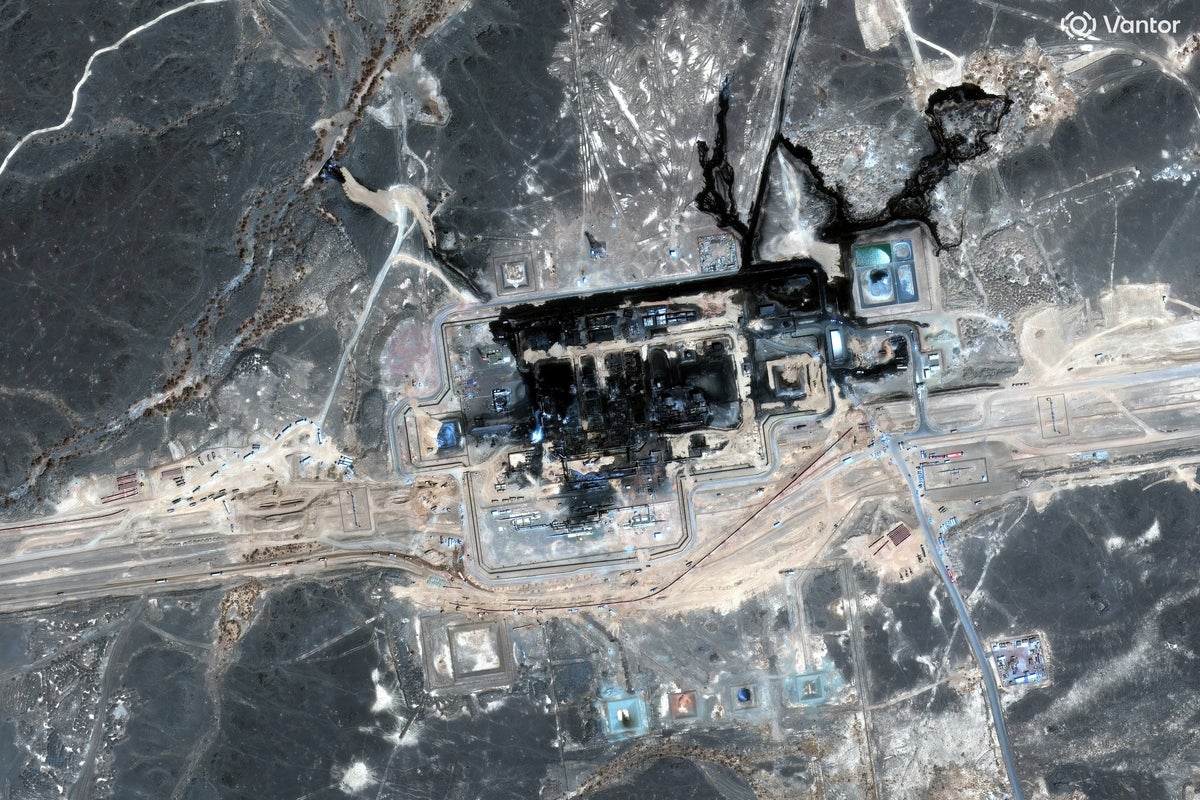
Drone attacks shut the East-West pipeline that moves about 4 million barrels a day to Yanbu. WTI added 2.5% to $102, and the industry sources Reuters cited cannot agree whether repairs run five to six weeks or less.
The Investor · Invest desk
What happened
- Drone attacks have forced Saudi Arabia to shut its East-West pipeline, according to Monday's Wall Street Breakfast briefing.
- The line can carry about 4 million barrels a day to the Red Sea port of Yanbu, the key route for Saudi exports that avoids the Strait of Hormuz.
- WTI traded 2.5% higher at $102 a barrel on Monday morning, with Brent up 2.5% at $107.
- Industry sources cited by Reuters split on repairs, one putting the work at five to six weeks and another suggesting limited operations might resume sooner.
- Saudi Arabia could exhaust the oil inventories available for export within days unless the line restarts, potentially removing as much as 4% of global supply.
Compiled by The InvestorSomething wrong?How this is made
Why it matters
- constraint Storage counted in days cannot cover a repair counted in weeks, so unless partial loadings resume, Saudi exports drop before the pipeline is back.
- decision Refiners and traders have to take a position this week on damage the Saudi government has not described, and the two available estimates sit weeks apart.
- exposure Every Saudi export cargo now depends on the strait the pipeline existed to avoid. Transit risk is back in the price of barrels that had been insulated from it.
The line can carry about 4 million barrels a day [2] and Saudi Arabia pumped 6.2 million a day in August [6], so the shut route covers roughly 65% of what the kingdom is currently producing [1]. Take the 4% of global supply figure at face value and the implied market is about 100 million barrels a day [2].
Saudi output has already fallen 4.7 million barrels a day since February, a 43% drop [3], and that is 0.7 million a day more than the pipeline's entire capacity [4]. WTI's 2.5% gain to $102 implies a Friday close near $99.50 [5]; Brent, up the same 2.5%, came into Monday near $104.40 [6]. So the bigger loss of volume happened without WTI closing in triple digits, and the smaller, newer one took it there in a session. In my view Monday's move prices the route and the freight. The counter-thesis is that February's 10.9 million a day [6] was never coming back, that the market has been repricing available supply all year, and that the Wall Street Breakfast briefing was right to call the outage another reason crude sits above $100 [9] instead of the reason.
The freight side is where the outage bites soonest. The pipeline went down in the week after Bloomberg reported supertanker rates surging to fresh record highs, following the biggest wave of attacks on Middle East shipping since the start of the U.S.-Iran war [8]. Cargoes that would have loaded at Yanbu now compete for those tankers [2].
Five to six weeks at 4 million barrels a day is 140 million to 168 million barrels of routing capacity that has to travel another way or not travel [d7, c4]. A buyer is underwriting 140 million to 168 million barrels when the alternative estimate on the same Reuters call was a sooner partial restart [4].
The test is narrow. If Riyadh describes limited damage, restarts partial loadings, and WTI slips back under $100, then Monday's 2.5% was route risk [3]. If the price holds near $102 through a restart announcement, the market is pricing lost production, and August's 6.2 million barrels a day is the binding number [6].
What to watch
- A Saudi disclosure of the damage would replace the five-to-six-week range with a date.
- Whether supertanker rates hold at last week's record highs as cargoes reroute.
- Whether Saudi export volumes fall in September as the tanks draw down.