Invest1 publisher2 min readPublished
Vanguard has already allocated all of its new Singapore fab's first-phase capacity
Vanguard is fast-tracking a second Singapore fab while phase 1 of its first, rated at 44,000 wafers a month, is already fully allocated. Its chairman expects a long specialty-node crunch, but the expansion's decision date and financing are both still open.
The Investor · Invest desk
Drafted by a language model from the sources cited here and checked against its claim ledger before publication. How we use AISend a correction
What happened
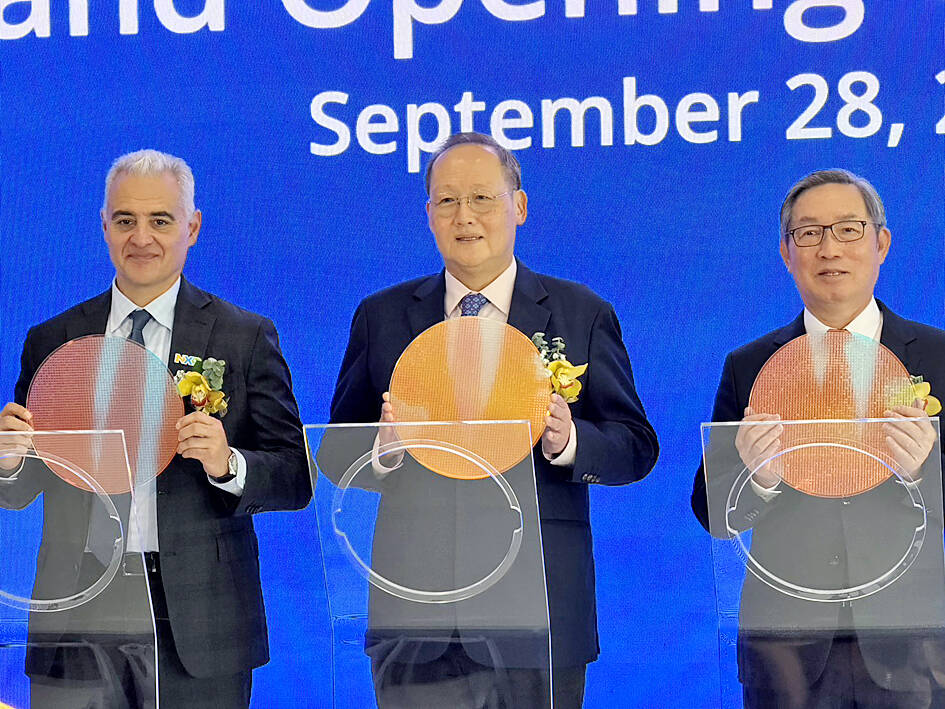
- The fab is run by VSMC, a Vanguard and NXP joint venture, and covers 130nm to 40nm processes for mixed-signal, power management, analog and interposer chips.
- Chairman Fang Leuh said AI demand is squeezing non-AI manufacturing capacity and that demand for specialty-node chips "has gone through the roof."
- More than 10 customers have visited the Singapore site to discuss their future demand and capacity needs, according to Fang.
- Risk production is likely to start next quarter, which Fang said keeps mass production on schedule for the first quarter of next year.
- NXP chief executive Rafael Sotomayor said the fab is NXP's largest investment since it acquired Freescale in 2015.
Compiled by The InvestorSomething wrong?How this is made
Why it matters
- contradiction Vanguard calls the second fab fast-tracked yet will not promise a decision this year. For now, the urgency is in the chairman's statements.
- exposure Customers who missed phase 1 must wait for the expansion to get more capacity at this site, and its date is not yet approved. Meanwhile Fang says AI is squeezing non-AI capacity generally.
- exposure By Fang's own explanation, a lasting non-AI shortage needs AI spending to keep absorbing capacity, so Vanguard's expansion case carries AI-cycle risk as well.
- decision Licensing 28nm or 22nm would get Vanguard to volume faster than developing its own process, trading ownership of the technology for time.
An allocation is a claim on future wafers. The report does not say whether customers paid anything to hold theirs, what either phase of the fab costs, or how the rated output splits between phases. At the rated 44,000 12-inch wafers a month [16], a full year of output would be about 528,000 wafers [1], and Fang said demand beyond phase 1 will be accommodated in a phase 2 expansion [19].
Fang's explanation for the demand is a displacement story, in which AI work takes non-AI manufacturing capacity [5] and the crunch that follows persists for a long time [6]. Asked about a slowdown in AI investment, he called AI's trajectory "unstoppable and irreversible" and said slower growth would not leave foundry capacity idle [13]. On his own account, then, a lasting non-AI shortage depends on AI spending continuing [5][13]. Some of the fab's output is also tied to advanced packaging: the company described an interposer, one of its four application lines, as a critical component in chip-on-wafer-on-substrate packaging [3][4].
The expansion could be finalized and funded soon, with the party holding the capital betting that the shortage lasts [1]. The decision could instead drift. Asked whether the expansion plan would be finalized by the end of this year, Fang said the company would not rush [9], and it is still structuring its financing while weighing 28-nanometer or 22-nanometer technologies [10]. A third path has AI spending slow, the squeeze on non-AI capacity ease, and the fab run full on weaker terms; Fang's answer on idle capacity does not rule that out [13].
I think the evidence supports a tight market at this fab today and falls short of showing a structural one. Every demand claim in the report comes from the seller [5], and the company that says it is fast-tracking a second fab [1] also declined to promise a decision this year [9]. The counter-case has substance. Fang projects an earlier break-even and full utilization ahead of the fab's 2029 schedule [15], and he said, "We really should have just built both fabs at the same time" [7].
Licensing is the part of the plan where the urgency shows. Fang said Vanguard is weighing whether to develop 28-nanometer or 22-nanometer technology internally or license it, and that licensing is the faster route to scale production [11]. Choosing a licence would put speed ahead of owning the process [11]. If Vanguard names a financing structure and a node for the expansion before year-end [9][10], the company with capital at risk will be paying for a lasting shortage, and the structural reading will have been right.
What to watch
- Whether Vanguard finalizes and funds the Singapore expansion before year-end, despite Fang saying the company would not rush the decision.
- The start of risk production next quarter, and whether mass production holds for the first quarter of next year.
- Vanguard's choice between 28nm and 22nm, and whether it licenses the process or develops it internally.