Invest1 publisher2 min readPublished
Customers book out VSMC's first Singapore fab before it makes a single wafer
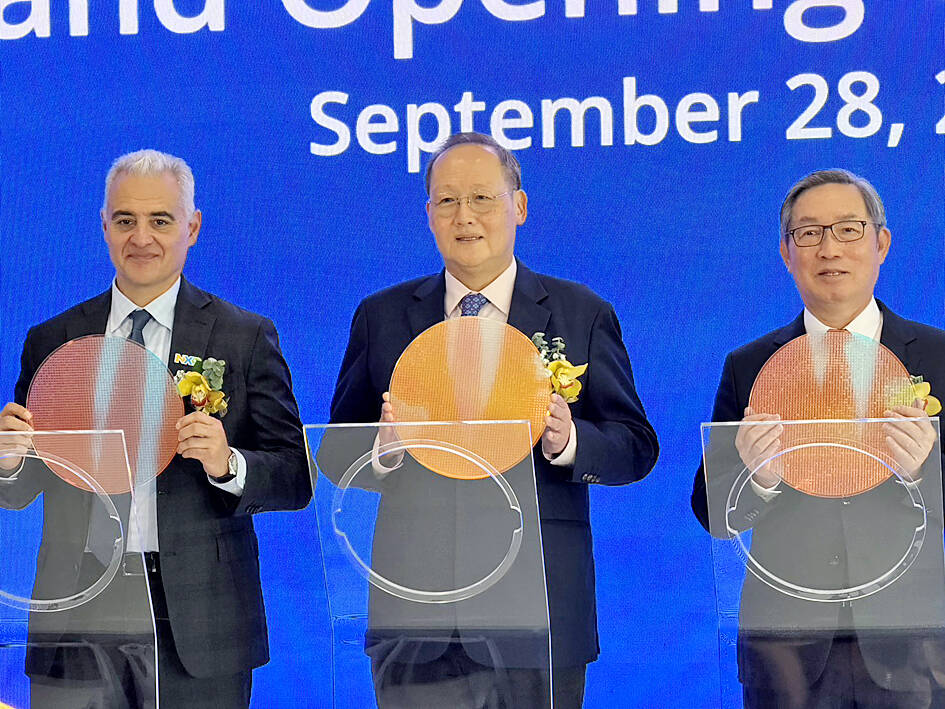
VIS and NXP's VSMC venture has sold all initial capacity at its $6.7bn-$7.8bn Singapore fab before production begins in Q1 2027. Buyers of mature-node chips who missed that tranche are left bidding for output from later phases of the ramp.
The Investor · Invest desk
Drafted by a language model from the sources cited here and checked against its claim ledger before publication. How we use AISend a correction
What happened
- VIS Chairman Leuh Fang said customer demand has stretched the first fab's capacity beyond its limits, prompting VIS to begin evaluating a second Singapore plant.
- No timeline, investment figure or capacity target for that second plant appears in the details shared so far.
- The 300mm Tampines fab is planned to reach 44,000 wafers a month by 2029.
- VIS holds 60% of VSMC and NXP Semiconductors holds the other 40%.
- VSMC makes chips on 40nm to 130nm processes, mature nodes far older than those used for flagship AI accelerators.
Compiled by The InvestorSomething wrong?How this is made
Why it matters
- cost A second plant matching the first would take VSMC's Singapore plan to $13.4 billion to $15.6 billion of investment for 88,000 wafers a month, a bill VIS has not yet agreed to pay.
- decision VIS has to decide on a second fab before the first has proved its ramp, so any commitment would be priced on advance bookings alone.
- contradiction Crypto Briefing credits AI demand for the bookings, but the chairman's reported explanation is customer demand, so the AI share of the order book rests on the coverage's reading.
Spread over the 2029 target, the estimated cost comes to roughly $152,000 to $177,000 for each wafer of monthly capacity [1]. The plant is expected to create about 1,600 jobs [9], which puts the cost at about $4.2 million to $4.9 million per job [2]. At full output the plant would make 528,000 wafers a year [3]. Customers have booked the initial capacity [5], the opening phase of a ramp that begins three to six months after the September 28 inauguration [4].
How much those bookings say about the market depends on who holds them. NXP has a minority stake in the venture [2], and Crypto Briefing writes that the structure gives NXP a guaranteed seat at the capacity table [14]. When a minority owner is also a customer, it can fill a fab's opening tranche before outside buyers have placed many orders.
NXP's chief executive is specific about where the demand sits. Rafael Sotomayor said the facility will significantly contribute to enabling "physical AI" across sectors including automotive and industrial applications [11]. On his account, the AI pulling on these mature-node lines [10] runs in cars and factory equipment. The coverage does not size the initial capacity, split it between NXP and outside customers, or break it out by product. These bookings therefore do not establish a shortage in any one product category, power and analog included.
The bookings can resolve in different directions. If VIS puts a budget and a capacity target on the second plant [1], it will have judged the bookings firm enough to pay for another fab costing several billion dollars. Should the opening tranche prove to be mostly NXP's own volume, the tightness sits inside the venture, and the open market for these nodes is looser than "fully booked" suggests. A missed Q1 2027 start [4] would leave the customers who booked short of wafers they had already counted on.
I think buyers on these nodes should treat the first Tampines phase as spoken for and negotiate their 2028 and 2029 volumes now. The counter-case is that one venture's opening tranche, possibly taken in part by its own shareholder, is thin evidence about a whole tier of the market. Crypto Briefing's own warning goes no further than saying buyers may face a more competitive environment for supply [15]. VIS's spending is the better test. For now it is paying for one fab and studying a second [13]. If that study stalls while Tampines ramps on schedule, the demand behind the bookings was smaller than the sell-out made it look.
What to watch
- A formal VIS decision on the second Singapore plant, with an investment figure and capacity target attached.
- Whether the Tampines fab starts production in Q1 2027 as scheduled.
- Any breakdown of the initial bookings between NXP and outside customers.