Product1 distinct publisher3 min readPublished
The Chaparral moved medical supplies, food and industrial gear for a week under air traffic control oversight, and the operational numbers a logistics buyer would need to plan a route around it have not been released.
The Product Desk · Product desk

Compiled by The Product DeskSomething wrong?How this is made
Whether any of this becomes a route depends on what happens at the far end, where somebody has to get the pod off the aircraft. Elroy Air's answer is interchangeable cargo pods plus a vertical takeoff profile that the company says removes the need for runways, fixed delivery infrastructure, or personnel at the destination [8]. The third item is the expensive one. An aircraft with no pilot that still needs two people and a lift waiting in a field has relocated the labour rather than removed it.
The demonstrated version of removing that person is dated July and it happened in California. At Byron, the Chaparral released a 68-pound payload while hovering over a target, then dropped a 70-pound payload from forward flight at 65 feet, both on preloaded coordinates with no intervention during the release sequence [11][12]. Against a design payload of more than 500 pounds [7], those are 13.6% and 14% of rated load, and the two together come to 138 pounds, about 28% [14][15]. Unattended delivery is proven at roughly a quarter of what the airframe is built to carry, and the Army asked for those modes under a development contract it already had [13].
Houma supplies the regulatory half. The Chaparral flew with no pilot onboard under Air Traffic Control oversight inside the National Airspace System for a week, carrying packages, medical supplies, food, water and industrial equipment, with LIFTOFF Louisiana and Bristow Group [3][4][5]. What has not been reported is the part the program exists to collect: no flight count, no hours, no weight carried, no distance flown [16]. The eIPP's stated method is to use operational data to shape aviation policy [6], which makes the dataset the deliverable, and Elroy Air says the flights will inform its work on deploying autonomous heavy-cargo aircraft at scale [17]. FAA Administrator Bryan Bedford framed the week as expanding cargo delivery options to communities nationwide [9]. The evidence so far supports a narrower reading, covering one town with one aircraft type and two named partners.
For anyone drawing Gulf Coast routes, what settles this before a spec sheet does is whether a crew with equipment is already at the destination, and whether the load fits inside 500 pounds and 450 miles [7]. A staffed destination makes the pod a convenience that a truck or a crewed helicopter can match. A load outside the envelope has to move by helicopter or truck, regardless of price. The quadrant where this aircraft does something nothing else does is the unstaffed site inside the envelope, and that is also the quadrant where the demonstrated weights are 68 and 70 pounds [11]. One filter sits on top of both: Houma ran under ATC oversight [3], so the route has to be one controllers can work with.
The number worth asking Elroy Air for is the heaviest pod it has landed at a site where nobody was waiting, and how far it flew to get there.
Ranked by verification strength, evidence, and original report placement.
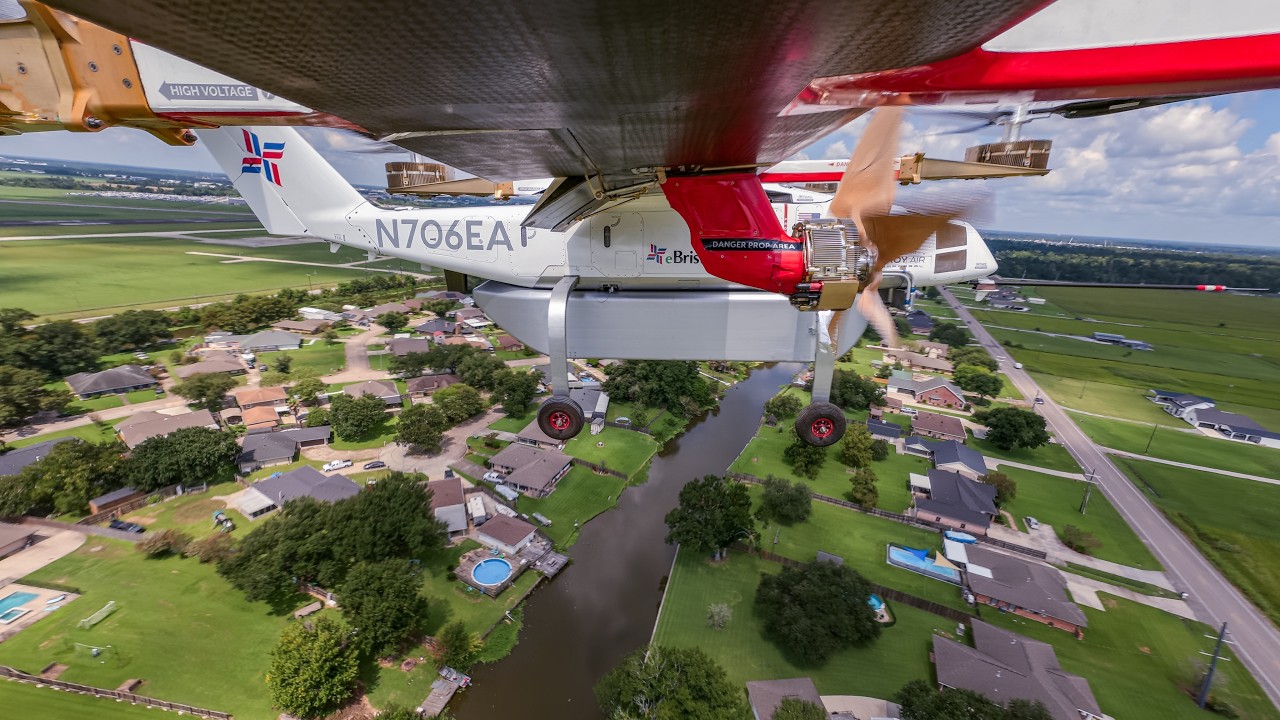
Elroy Air completed the first autonomous, uncrewed flights authorized under the government's eVTOL Integration Pilot Program (eIPP).
The flights used Elroy Air's Chaparral hybrid-electric vertical takeoff and landing aircraft and were conducted over a week in Houma, Louisiana.
The Chaparral flew without a pilot onboard while operating under Air Traffic Control oversight, demonstrating cargo missions within the National Airspace System.
The Louisiana tests included transporting packages, medical supplies, food, water and industrial equipment.
Elroy Air conducted the flights with LIFTOFF Louisiana and Bristow Group, evaluating the Chaparral in an operational environment relevant to potential commercial deployment across the Gulf Coast.
The eIPP is a US Department of Transportation and FAA project that aims to safely integrate Advanced Air Mobility aircraft into US airspace, using operational data to shape aviation policy and support wider commercialization.
Distinct publishers with included, body-backed reporting in this cluster.
1 article · September 3, 2026
Follow any of these and your For You feed starts watching them — no settings page required.
product
Air traffic control worked an uncrewed cargo plane into Houma's helicopter pattern for a week1 distinct publisher
product
Army buys prototypes, not a blank sheet: Hanwha's wheeled K9 wins up to $262.9M for M777 successor1 distinct publisher
product
Vigor unveils USAV Craney Island, and the Army's landing craft plan finally has a hull1 distinct publisher
product
Textron's CJ4 bet: the upgrade that matters is in the panel, not the performance sheet1 distinct publisher
Evidence-backed comparisons of source perspectives and observed adoption signals. Read the methodology
Which Builder, Operator, and Investor concerns the observed source mix emphasized—not a truth score.
Evidence, demonstrated adoption, hype gap, incentives, and confidence are assessed independently, each on its own current evidence. How these are measured.
One account, mostly the company's
The whole story rests on a single Interesting Engineering write-up assembled from Elroy Air's announcement plus one quoted line from FAA Administrator Bryan Bedford. The headline numbers — 500 pounds, 450 miles — are design targets rather than anything measured at Houma, and no partner statement, federal document or second outlet exists here to test them against.
Institutions engaged, no service
Three serious parties have committed something real: the FAA authorized the flights, Bristow Group and LIFTOFF Louisiana flew them alongside Elroy Air, and the Army is paying for the unattended delivery work under a contract already in place. None of that is a cargo operation — there is no route, no paying shipper, no cadence, and the Gulf Coast remains a possibility rather than a plan.
Spec sheet ahead of flight log
Set the two halves of this story side by side. The framing offers a 500-pound, 450-mile cargo aircraft; the quantified flying is a 68-pound hover release and a 70-pound drop, together about 28 percent of that design capacity, and they happened in California, not Louisiana. The Houma milestone itself — first uncrewed flights cleared under the federal program, with a regulator willing to say so on the record — is real and is the part carrying the least embellishment.
Everyone on the record gains
A pre-revenue cargo aircraft company, an FAA administrator marketing his agency's integration program, and a trade outlet that lifted its headline from the specification sheet rather than the test log — the interests here all point the same way. Nobody quoted has a reason to volunteer how many sorties flew that week in Houma, or how much cargo actually went aboard.
Milestone firm, meaning unsettled
That the flights happened in Houma, uncrewed, under air traffic control, can be taken as established — a named FAA administrator is on the record and the program is identified. Anything read past that about commercial readiness cannot be, because one company-sourced account with zero operating figures leaves the substance of the week unmeasured.