Invest1 publisher2 min readPublished
Pentagon confirms it is working to retrieve F-35 components lost in transit
The F-35 Joint Program Office says it is trying to recover unserviceable parts from a shipment that went wrong. The account placing those parts in Hong Kong comes from Politico's three anonymous sources.
The Investor · Invest desk
What happened
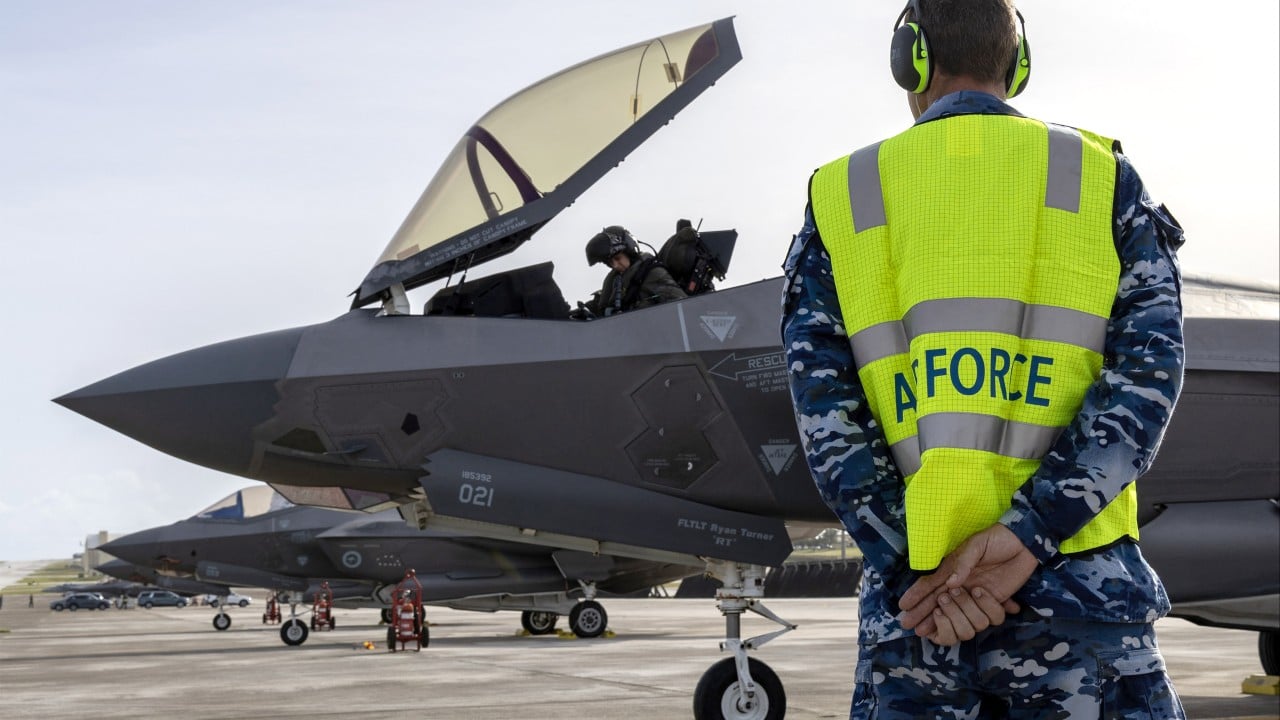
- Politico, citing three anonymous sources, reported that F-35 parts sent from Australia to the United States for repairs were diverted to Hong Kong while transiting the Pacific this summer.
- Congress has launched a probe into the shipment of sensitive F-35 parts said to have been diverted to Hong Kong and then gone missing, according to that report.
- Canopies were among the missing components, and the report raised the prospect that the parts could be reverse engineered.
- A Hong Kong government spokesman said over the weekend that the government would not comment on individual cases, a day after the Politico report appeared.
Compiled by The InvestorSomething wrong?How this is made
Why it matters
- contradiction The Pentagon has confirmed a shipment failure and a retrieval effort, while the destination and the inquiry rest on anonymous sourcing, so a reader cannot yet tell theft from mis-routing.
- cost The safeguards the Joint Program Office promised are a recurring charge on every repair return leaving an allied operator, and the office has put no price on them.
- exposure By naming industry partners in the retrieval and investigation, the office puts the commercial handlers of the repair-return leg inside the inquiry.
- decision Operators that ship broken components across the Pacific to US depots now have to decide whether commercial transit is acceptable for items as revealing as a canopy.
The Joint Program Office said it was "aware of a shipment issue of unserviceable F-35 Lightning II components" [4]. It said it was working with US authorities and industry partners "to retrieve these components, investigate the incident, and place safeguards to avoid a future occurrence" [5]. A part can be unserviceable and still be measured. The reverse-engineering worry in the reporting rests on that [3].
Hong Kong and the congressional inquiry come from Politico's three anonymous sources, as relayed by SCMP; the Pentagon's own confirmation extends to the shipment failure and the retrieval effort [1][2][7]. Anyone pricing the consequence has to know which it was: a diversion implies an interested party, while a shipment issue can be a forwarder putting a pallet on the wrong transpacific flight.
The office named three actions [8]. Retrieval ends when the components are found or written off. The investigation ends with a finding. Safeguards do not end; they attach to every future unserviceable component moving from an allied operator to a US repair facility. The office did not say what those safeguards will be or what they will cost.
This can resolve three ways, at very different costs. If the components come back intact and the paper trail shows a routing error, the fix is a clause in a freight contract. If they do not come back, the program has to assume the design content has been copied, and the engineering response is the expensive part. The third case is the one I would weight most heavily. The components are recovered, the custody records for the wider repair-return stream turn out to be unverifiable, and every allied operator's retrograde shipment gets re-examined at once.
The confirmed facts are already enough to make the return leg a procurement question for operators sending broken parts across the Pacific for repair, Australia included [1]. The counter-case is straightforward, and it is not weak. Nothing on the record establishes that anyone in Hong Kong took anything. If the Joint Program Office announces the components recovered with custody documented end to end, this was a freight error and the safeguard is a routing rule. Hong Kong's government, for its part, said it would not comment on individual cases [6].
What to watch
- Whether the Joint Program Office says the components were recovered, and whether it documents custody for the whole shipment.
- Whether the congressional inquiry names the freight forwarder or carrier that routed the shipment across the Pacific.
- Whether Australia or another operator changes routing rules for unserviceable parts sent to US repair facilities.