Science1 publisher3 min readPublished
Simulated weightlessness swells the nucleus of live human cells in an NYU rotator
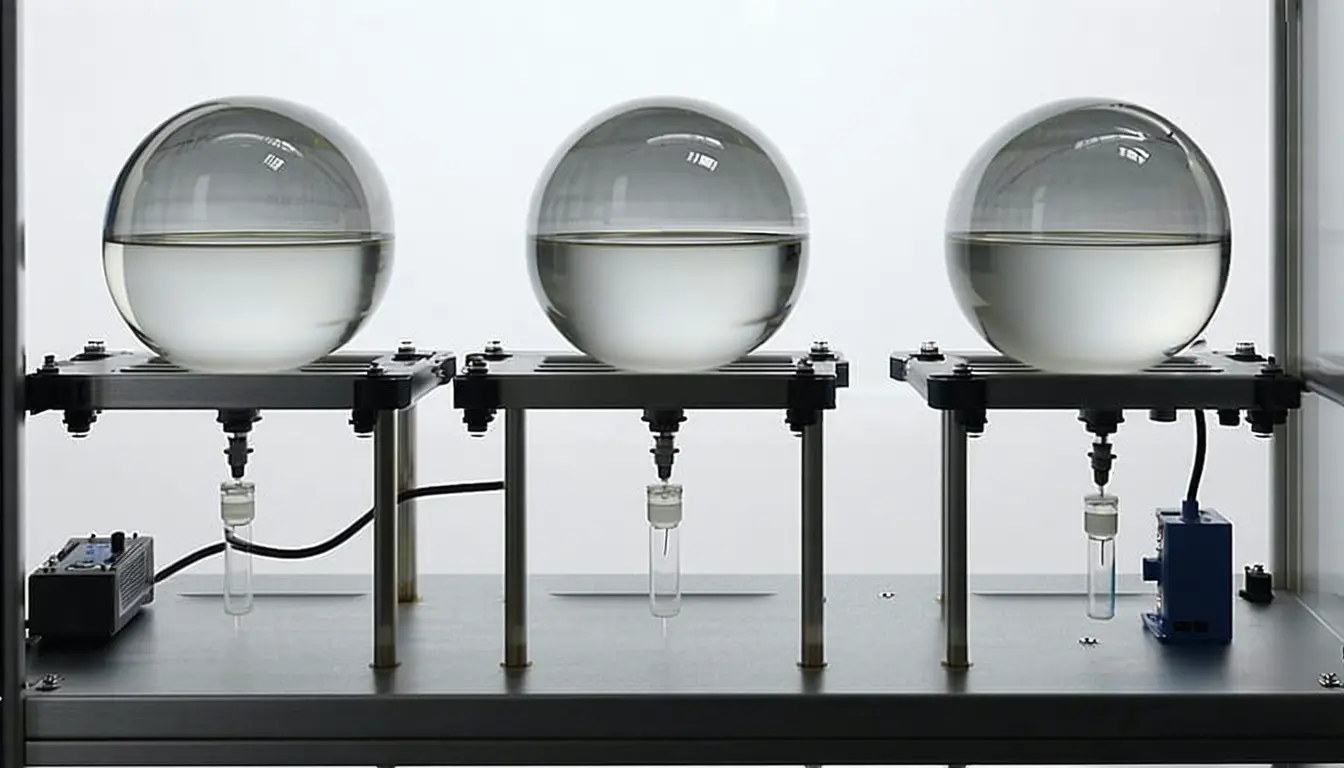
Alexandra Zidovska's group at NYU built a rotating stage that cancels most of the fluid flow such rigs create, then compared cells under simulated weightlessness, under strong flow, and untouched for 24 hours.
The Scientist · Science desk
What happened
- NYU researchers built a custom random positioning machine that images the genome in live human cells while the dish rotates, and published the work in Science Advances.
- New 3D rotational algorithms held down the fluid flows that such rotation creates inside the dish, flows that do not exist in real zero gravity beyond Earth.
- The design compared three groups: cells under simulated microgravity with minimized flows, cells under strong flows, and cells with no exposure at all.
Compiled by The ScientistSomething wrong?How this is made
Why it matters
- constraint Simulated microgravity results that never separated rotation-induced flow from weightlessness are hard to attribute, and this design sets the comparison a future claim has to include.
- capability Imaging the genome in living cells during the exposure makes nuclear mechanics measurable while it changes, instead of inferred from fixed cells afterwards.
- decision Anyone using nuclear volume as a readout on Earth now has a reason to treat the steady 1 g load as an experimental variable.
A random positioning machine does not cancel gravity. It turns the sample, rotating the dish along two independent axes on a path the researchers describe as simulated microgravity, weightlessness produced on Earth, using the same principle as the larger devices astronauts train in [8]. The rotation has a side effect: liquid in the dish moves across the cells, and in true zero gravity those flows are absent [9].
So the NYU group wrote rotational algorithms that hold the flows down, plus a second set designed to drive flows and measure what they do to the cell and the genome [9][10]. They also prepared dishes free of air bubbles, which interfere with the measurements [7]. Together the changes cut both the flows and the cell aggregates that, by the team's account, obscured simulated microgravity effects in earlier work [11].
After 24 hours of exposure, cells in the strong-flow arm were elongated while cells under simulated microgravity kept their shape [15]. Nuclear volume moved the other way: it increased under simulated weightlessness, which the researchers take as evidence that gravity keeps the nucleus smaller [16]. The flow arm is what makes that reading available. One condition against an untouched control would have left shear as the obvious rival explanation for anything that changed.
Zidovska, who led the study and is an associate professor in NYU's physics department, said gravity "is a constant mechanical stress on everything" [2][21]. On the design: "To uncover it, you have to remove gravity as a force, so we simulated zero gravity in our experiments," she said [3].
The packing problem the study pokes at is severe. Two meters of DNA sits inside a nucleus barely 10 micrometers across, about the width of a silk fiber [17], a length ratio of roughly 200,000 to one [20]. Departures from that organization are linked to cancer and developmental disease, and the physical principles that maintain it are not well understood [18][19].
The exposure was a single 24-hour window in cultured cells, and the analysis tracked cell shape and volume, nuclear shape and volume, the nuclear envelope, the genome, and the nucleolus [13]. DNA damage under simulated microgravity was among the things examined [14]; the account of the results does not state what that analysis found.
The paper is in Science Advances [1], and the spaceflight claim attached to it is a hope: "We think our findings can be useful in better understanding how space travel affects us," Zidovska said [4]. Every cell in this design stayed on Earth. I would carry the nuclear volume result forward on the strength of the flow comparison, and treat the orbital extrapolation as open until someone runs the same imaging above the atmosphere. For Earth-bound work the implication is narrower and more immediate: if steady 1 g load sets nuclear volume, then every culture dish carries a mechanical input that stays fixed. "We do not know if or how the presence of gravity affects this organization and if the absence of gravity would cause genomic aberrations," Zidovska said [5].
What to watch
- Whether the full paper reports DNA damage or genomic aberrations under simulated microgravity, and at what magnitude.
- Whether an orbital experiment reproduces the nuclear volume increase seen on the rotating stage.
- Whether other labs adopt the flow-minimizing rotational algorithms and re-examine earlier random positioning machine results.