UCL model ties wide-gamut screen color mismatches to aging lenses and cone variants
UCL scientists modeled how narrow primaries on wide-gamut screens magnify viewer-to-viewer color differences that century-old calibration curves miss. The authors want it used to pick primaries that suit the most eyes. So far its evidence comes from simulated viewers.
The Scientist · Science desk
What happened
- It combines variation in the eye's optics with variation in retinal cone photoreceptors to predict how different people perceive light from commercial displays.
- Over the past decade, display makers moved from broadband phosphors to narrowband quantum dots and lasers to reach wider color gamuts.
- The work comes from UCL's Institute of Ophthalmology, with Andy Rider as lead author, and is published in the Optica Publishing Group journal Optics Express.
Why it matters
- constraint Replacing the 1931 curves in calibration instruments with a newer average observer would not by itself remove the mismatch, judging by the model's own 2006-calibrated example.
- decision Display makers can weigh vivid color against viewer agreement one emitter at a time, with the blue primary deciding outcomes for older audiences and red and green for viewers with cone variants.
- exposure A colorist's sign-off on an instrument-matched monitor is no assurance of what an older viewer, or one with deuteranomaly, sees on a matched screen at home.
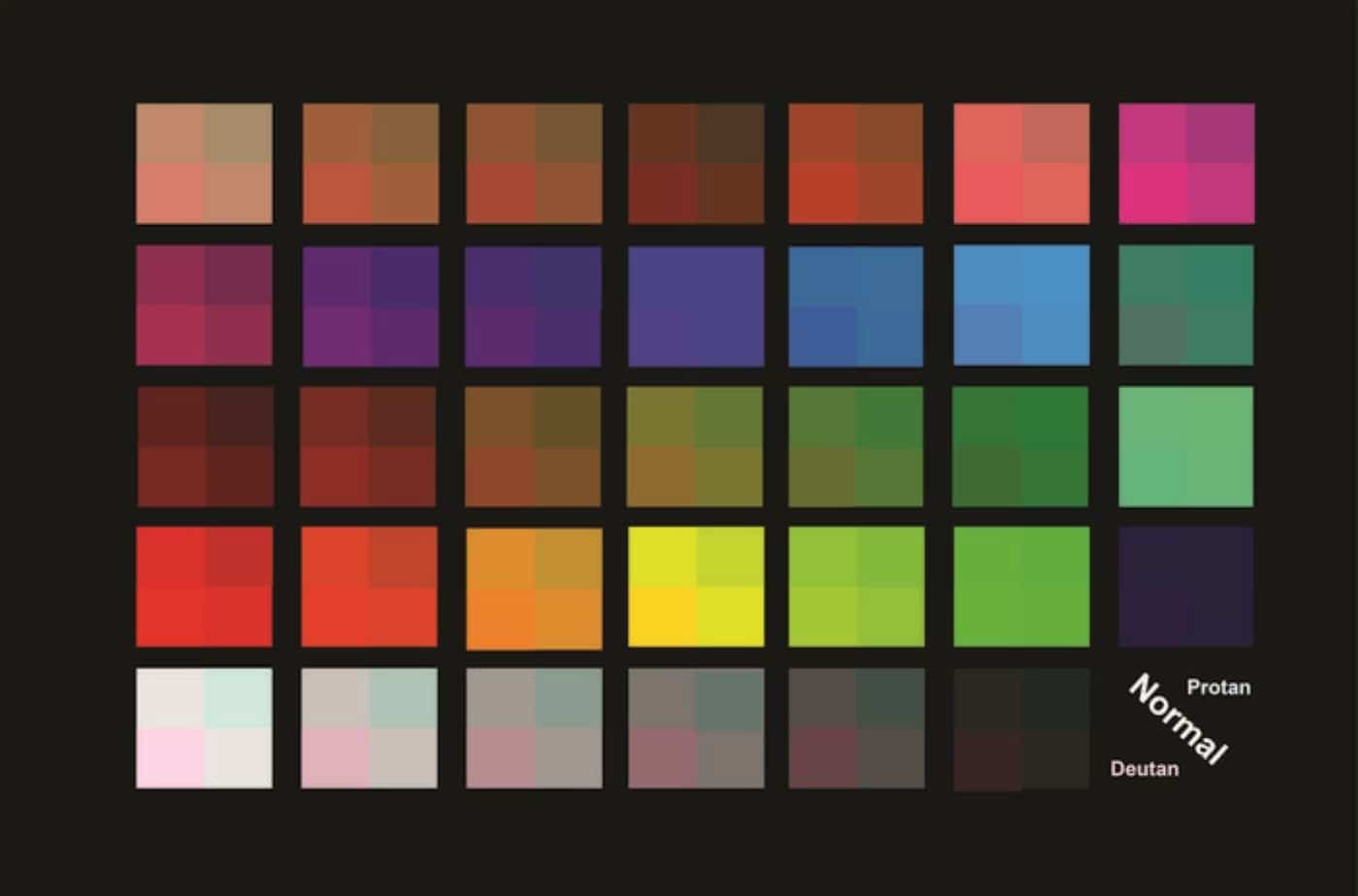
The study is a simulation, so start with its design. Rider's team at UCL built two sources of human variation into one model. The first is the optics of the eye, including the yellowing of the lens with age. The second is the retina's cone photoreceptors [8][2]. They then asked what different simulated viewers would see when the same display light reached their eyes. In the published figure, a Rec. 2020 display is calibrated for the CIE 2006 2-degree standard observer. The model then renders one color patch as seen by a viewer with shifted red sensitivity and by one with shifted green sensitivity [3]. Both see something other than the original [3].
The choice of standard matters. The release blames instruments that compute color from observer curves set about a century ago, such as CIE 1931 [9]. Its own figure tests a newer standard. The display there was calibrated to the 2006 observer, and the shifted viewers still see different colors [12].
For engineers, the most useful result is the split by primary. Blue bandwidth governs the age-related discrepancies. The red and green spectra govern mismatches among people with common cone-opsin variants such as deuteranomaly [2]. Over the past decade the industry moved from broadband phosphors to quantum dots and lasers to widen gamuts [4]. According to the release, the sharp spectral peaks of those sources are what amplify differences between viewers compared with older broadband displays [1]. So a designer chasing agreement among older viewers and one chasing agreement among viewers with cone variants would be adjusting different emitters [2].
"The people who produce films and TV shows want their work to look the same whatever device it is being viewed on, which is complicated by differences in people's color vision and outdated calibration methods," said lead author Andy Rider of the UCL Institute of Ophthalmology [10]. "Our model takes into account individual variability in color vision and can be used to determine how best to adjust the three primary colors of a specific display to provide the best viewing experience for as many people as possible," he said [11].
That last clause sets the goal: one set of primaries chosen to serve a whole population of eyes [11].
The release illustrates the problem with a director who grades a subtle teal sky on a mastering monitor that a home viewer sees as over-saturated cyan [6]. Its account of the study does not report the predicted differences in measured units, how many simulated observers were run, or tests in which real people matched colors on real narrowband screens. For now I'd treat the primary-by-primary finding as a strong design hypothesis.
What to watch
- Psychophysical tests in which real observers match colors on narrowband displays, which would show whether the model's predicted mismatches appear and how large they are.
- Whether calibration-instrument makers or the CIE offer observer-variability options beyond a single standard observer.
- Whether panel or projector makers cite viewer agreement when setting primary bandwidths, especially for blue.
Clarity's read
What the record supports and how the coverage leans. The claims behind it follow.
Reality
- Evidence35
- Adoption
- Insufficient
- Hype gap+30
- Incentives55
- Confidence40
Claim ledger
Ranked by verification strength, evidence, and original report placement.
- [1]
Modern displays such as OLED TVs, cinema laser projectors and smartphones use narrowband primary emissions to produce vivid colors, and these sharp spectral peaks amplify perceptual differences between human observers compared with older broadband displays.
- [2]
According to the model, the spectral bandwidth of the blue primary governs age-related perceptual discrepancies driven by natural lens yellowing, while red and green primary spectra govern mismatches across individuals with common cone-opsin variations such as deuteranomaly.
- [3]
A figure shows the model's simulations of a Rec. 2020 capable display calibrated for the CIE 2006 2-degree standard observer, with the original color alongside the color as seen by an observer with shifted sensitivity to red light and by one with shifted sensitivity to green light.
- [4]
Over the past decade display technologies shifted from traditional broadband phosphors toward narrowband light sources such as quantum dots and lasers to achieve broader color gamuts.
- [5]
Colors that look calibrated and identical on an instrument often look noticeably different from one viewer to the next, and can look mismatched across screens placed side by side.
- [6]
The release gives the example of a director grading a film on a mastering monitor who sees a subtle teal sky, while an audience member on a calibrated high-end home television perceives an over-saturated cyan.
- [7]
Researchers at University College London's Institute of Ophthalmology, with lead author Andy Rider, developed a computational model of individual differences in human color vision, published in the Optica Publishing Group journal Optics Express.
- [8]
The model integrates biological variations in human ocular anatomy and retinal cone photoreceptors to predict how diverse populations perceive light emitted from commercial displays.
- [9]
Colorimeters and photometers calculate chromaticity from standard observer functions established roughly a century ago, such as the CIE 1931 standard; the release says these fail to mirror true physiological color vision.
- [10]
The people who produce films and TV shows want their work to look the same whatever device it is being viewed on, which is complicated by differences in people's color vision and outdated calibration methods
- [11]
Our model takes into account individual variability in color vision and can be used to determine how best to adjust the three primary colors of a specific display to provide the best viewing experience for as many people as possible.
- [12]
The simulated mismatch in the model's figure arises under calibration to the CIE 2006 standard observer, a newer standard than the century-old CIE 1931 curves the release faults.
Sources
1 independent publisher whose own reporting we read for this story.
- neurosciencenews.comComputational Model Decodes Color Vision Variability
1 article · October 1, 2026
Topics and entities
Follow any of these and your For You feed starts watching them — no settings page required.