Invest1 publisher3 min readPublished
Third-party trip data: Uber paid Nigerian drivers up to 23% more than riders were charged on some short trips
Obi, a California price and trip data aggregator, says Uber paid Nigerian drivers as much as 23% above what passengers were charged on rides under 12 miles, on a sample of more than 20,000 trips by over 300 drivers.
The Investor · Invest desk
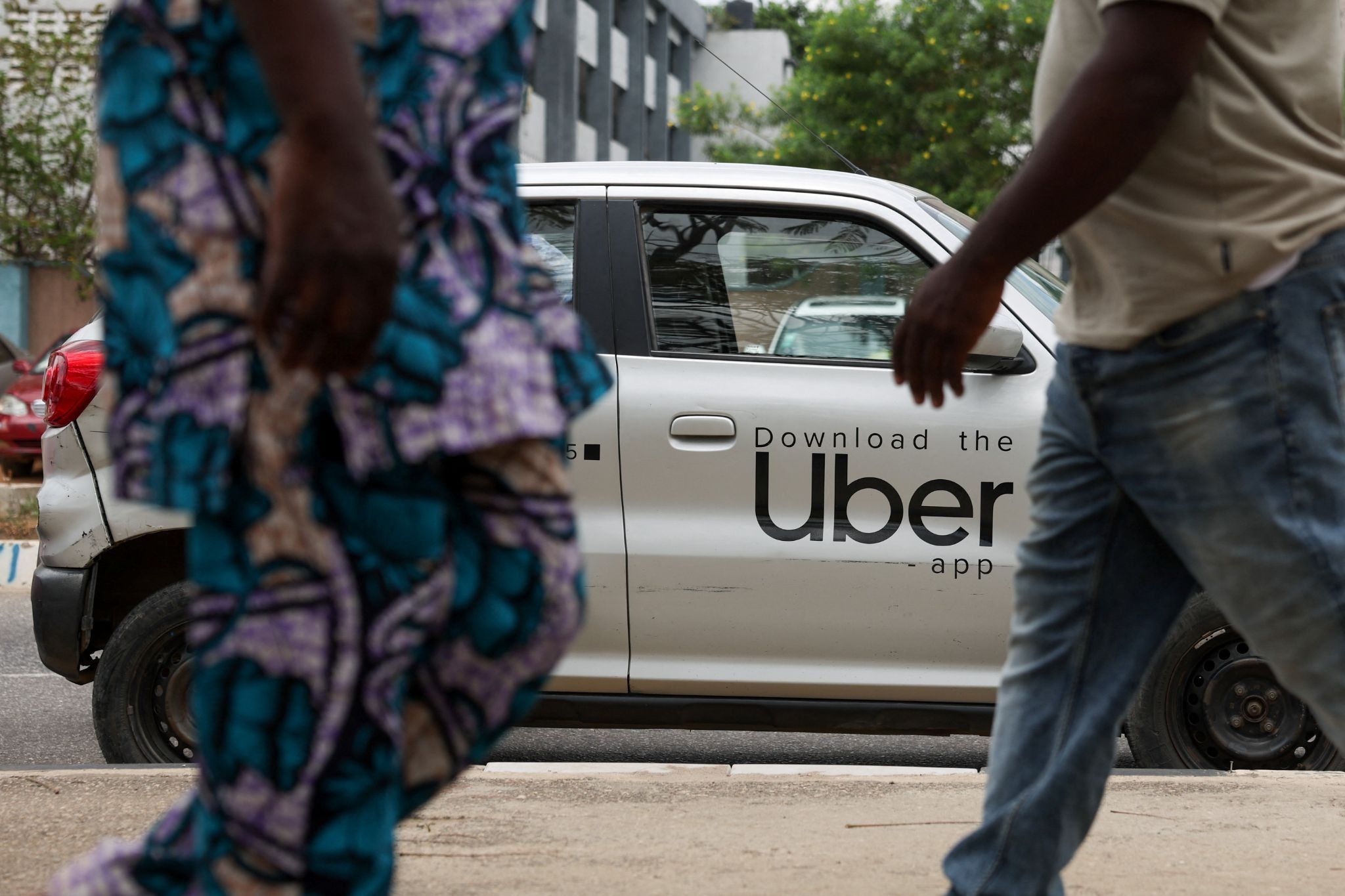
What happened
- Obi, which tracks price and trip data across more than half a dozen ride-hailing platforms, found Uber paid Nigerian drivers up to 23% more than passengers were charged on trips under 12 miles.
- Bolt, which pushed three-wheeled taxis outside Lagos, had taken 60% of the Nigerian market by the time Uber left, on Obi's count.
- Fuel prices in Nigeria have risen more than five-fold since the government ended its fuel subsidy scheme, and the naira has depreciated more than 70% over the same period.
Compiled by The InvestorSomething wrong?How this is made
Why it matters
- contradiction Obi's report gives the subsidy a leading role in the exit, some Nigeria analysts blame the macro environment, and the same-day 10% global staff cut offers a third owner for the decision; each points to a different fix.
- constraint A negative per-ride margin only bleeds at volume, so 19 rides a month per driver kept the loss Uber had to stem small and the trip base too small to grow out of the pattern.
- decision Bolt and InDrive now set what a short Nigerian ride pays a driver, and they price acceptance with Uber's above-fare payment out of the market.
- precedent An outside aggregator priced a platform's per-trip economics from 20,000 observed rides, a method any third party can turn on operators that keep their country-by-country numbers to themselves.
Convert Obi's finding into a take rate and it comes out near minus 23%: on the short trips the aggregator measured, every 100 a passenger paid went back out as 123 to the driver [5][1]. Above 12 miles, Uber adjusted the pattern [6]. The report puts no figure on what Nigeria cost Uber. The per-driver side is smaller than that percentage suggests, because a typical Nigerian Uber driver averaged 130 rides over the first seven months of 2026, about 19 a month, fewer than one a day [7][2].
The subsidy was the price of getting a car to show up. "Pay had to be subsidized to make drivers willing to take rides. There was just no way for Uber to dig itself out of this pattern," Ashwini Anburajan, Obi's chief executive, told Semafor [11]. She also said demand in Nigeria was low and the political and economic climate was not helping [10]. Obi's report found that after 12 years Uber still did not have enough active passengers in Nigeria, and that high inflation and currency depreciation had made the ones it had increasingly price sensitive [13].
If 130 rides is just over a tenth of what Uber's South African drivers did in the same seven months, the comparison is roughly 1,300 rides, about 186 a month [7][3]. Nigerian drivers nonetheless kept a larger share of each fare paid than their South African counterparts, Obi said [8].
InDrive, on the same roads and the same fares, did not use the short-ride subsidy, according to Obi [6]. Bolt held 60% of the Nigerian market by the time Uber left, on Obi's count [16], and Sensor Tower put active Nigerian users at 3.3 million last December, more than six times Uber's [17]. That puts Uber under about 550,000 [4]. Semafor reports that some analysts credit local features for closing the gap: InDrive's bargaining tool, Bolt's flexibility on cancellations, car models and payment options [19].
Nigeria analysts have cited a "challenging macroeconomic environment" as the root cause [15], with fuel up more than five-fold since the government subsidy ended and the naira down more than 70% over the period [14]. And the exit landed the same day Uber announced a global restructuring that cut 10% of staff [2], while the company kept four African markets including South Africa and Kenya [3]. Obi is a third-party price and trip aggregator [4], not Uber's ledger, and if the 23% gap is driver incentive spend booked as acquisition cost, Uber could have switched it off without leaving. The sample also spans two platforms: more than 20,000 rides from more than 300 drivers on Uber and InDrive works out near 67 rides each, below the 130 the report attributes to a typical Uber driver [9][5].
What the evidence supports is narrower than the leading-role claim: a platform paying above the fare to fill short rides in a market where the rival taking 60% did not [5][6][16]. Whether that decided the exit, or made Nigeria the cheapest line to cut inside a 10% global reduction, the record does not settle [2]. Anburajan said a uniform model has its place: "Keeping your business model and experience for users and drivers relatively uniform across markets can work if your target riders are international travelers who will place value on an experience that's the same from one country to the next," she said [20].
What to watch
- Obi publishing the same take-rate reconstruction for Bolt and InDrive would show whether Nigerian short-trip fares support a positive platform margin.
- Sensor Tower's Nigerian user counts after September: whether Bolt absorbs Uber's riders or the market contracts with them.
- Any Uber disclosure that separates the Nigeria and Uganda closures from the wider restructuring charge.