Loading today’s stories
Product1 publisher3 min readPublished
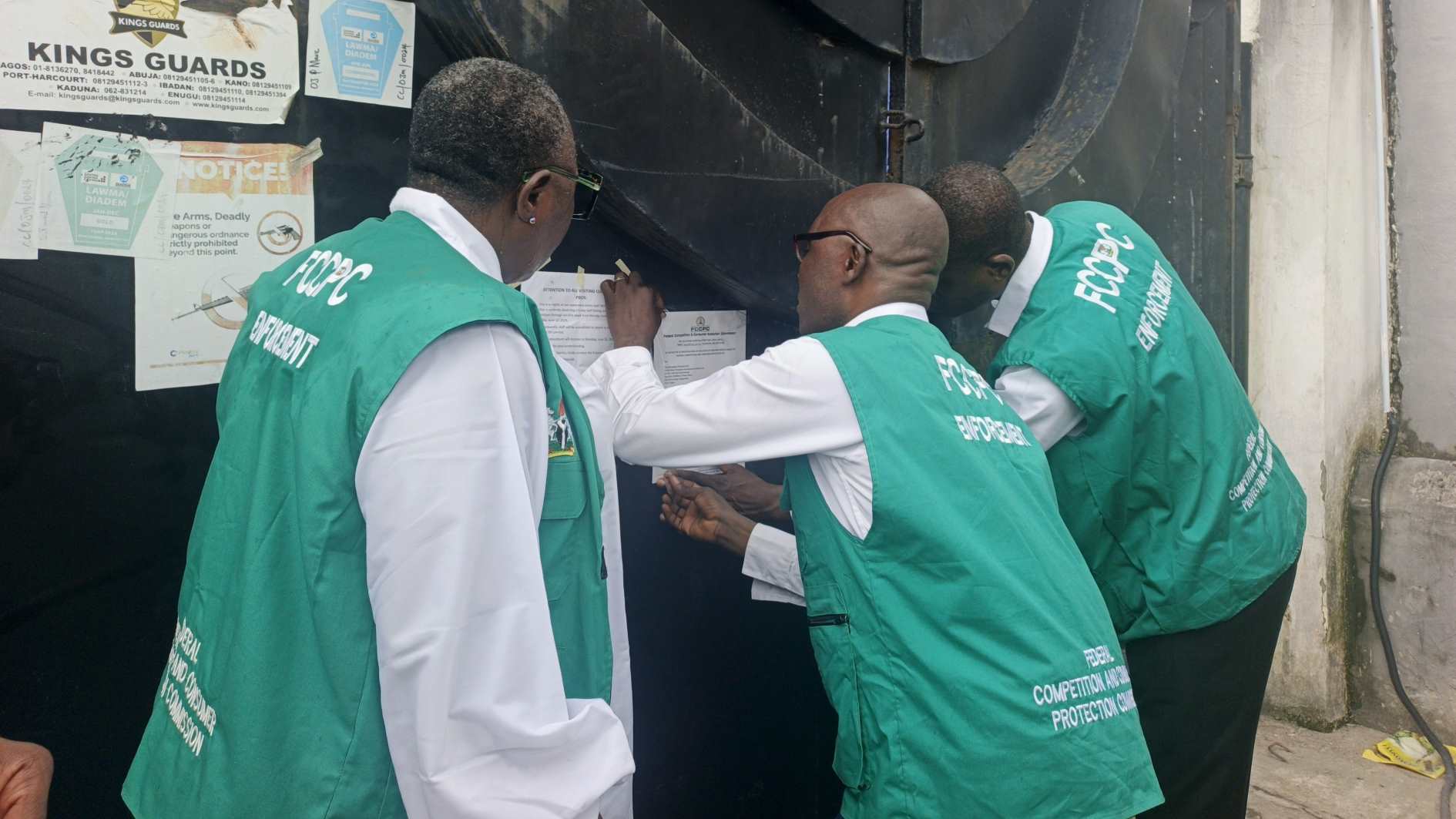
Nigeria's regulator is investigating the services Uber left unfulfilled when it switched off
Uber ended Nigeria and Uganda with no notice to riders or drivers, and the FCCPC is now asking what it still owed customers when the app stopped. EU platform rules would have set a 30-day notice period; Nigeria's law does not.
The Product Desk · Product desk
What happened
- Riders and drivers found out when the service stopped, and Bloomberg reported confusion on both sides of the app.
- Uber has given no reason for leaving Africa's most populous country and did not respond to TNW's request for comment sent on Sunday.
- Bolt, the Estonian rival that Bloomberg says had already taken Nigerian share, inherits a market of more than 200 million people with its largest competitor gone.
Compiled by The Product DeskSomething wrong?How this is made
Why it matters
- exposure Uber's remaining Nigerian liability now hangs on whatever was open in the app at the moment of switch-off, a set that a regulator will define while the company no longer operates there.
- contradiction The same company owes a European driver 30 days and written reasons before termination, while a Lagos driver got a dark app, and only the geography explains the difference.
- precedent If the FCCPC treats notice as part of the service sold, every platform planning a Nigerian exit has to budget a wind-down period rather than a switch-off date.
- capability Bolt gains a 200-million-person market without winning it, so its Nigerian growth for the next few quarters will not tell anyone whether its product is better.
The operative phrase belongs to the regulator. Tunji Bello, chief executive of Nigeria's Federal Competition and Consumer Protection Commission, said in a text message that officials are "looking into the manner of their exit, particularly in respect of unfulfilled services to the customers" [2]. That framing puts the shutdown procedure inside consumer law and leaves the commercial decision alone.
The reporting does not specify what sits inside "unfulfilled services." That is where this gets decided [15]. Neither an itemised list nor an amount has been made public.
The Nigeria and Uganda switch-off arrived inside a global reorganisation that cut 3,300 jobs, about 10 percent of the workforce [3], which puts headcount worldwide somewhere near 33,000 [14]. Uber has given no reason for leaving Africa's most populous country and did not respond to a request for comment sent on Sunday, according to TNW [5]. In the same week it put $100M into Atoms, the company run by its own founder, Travis Kalanick [6]. The people holding the app when it went dark experienced an unfinished transaction, not simply a market exit, and that is what a consumer regulator is built to examine.
The procedural standard Uber did not apply in Lagos is already written down in Europe. The platform-to-business regulation requires at least 30 days' notice before an online intermediation service is terminated entirely for a business user, plus a statement of reasons on a durable medium setting out the specific facts behind the decision [10]. Its exceptions cover legal obligations, imperative national law and business users who repeatedly breach the terms; a commercial decision to leave a market is not among them, and drivers are business users [11]. None of that reaches Nigeria, where the FCCPC is asking the question under its own consumer law instead [12]. Uber has left African markets before [13], so the runbook is not new to it.
Bolt, based in Estonia, is among the rivals that Bloomberg says had already eaten into Uber's once-dominant Nigerian share, and it now inherits a market of more than 200 million people with its largest competitor gone [9]. Uber launched in Lagos in 2014 and was dominant for years [7]. Whatever Bolt's Nigerian numbers do over the next two quarters, they measure the absence of a competitor rather than any preference for the product, in a country where a decade of double-digit inflation has already eroded what riders can pay [8].
The transferable part is a grid for anyone holding a sunset date. One axis: do users hold an unsettled claim on you at the moment of switch-off, such as a stored balance, credits, a booked job, or records they cannot export afterwards. The other axis: is the counterparty a consumer, or a business user whose income you scheduled. Going dark without notice is survivable only in the corner where nothing is held and nobody's earnings depend on tomorrow's shifts. Every other corner needs a named settlement route and a named team that answers once the service is off. That obligation list has to be written before the date is picked. If nobody in the room can say who honours those items after the app stops working, what you have is a shutdown date, not a plan, and the FCCPC's inquiry is examining exactly that gap [1].
What to watch
- Whether the FCCPC itemises the unfulfilled services or attaches a figure, which would set a price on a silent market exit in Nigeria.
- Whether Uganda's regulators open a parallel inquiry into the same Wednesday shutdown.
- Whether Uber states a reason for leaving and publishes a settlement route for anything it held on riders' or drivers' behalf.
Loading claim ledger
Loading source directory links
Loading share composer
Loading topic controls
Loading related stories