Product1 publisher3 min readPublished
Tillis says the CLARITY Act fails unless the White House bargains on ethics language
Crypto teams have spent a year planning around a federal token rulebook that Polymarket now prices near 14%. The blocker is a provision about the president's family business, and no trade association can redraft its way past that.
The Product Desk · Product desk
What happened
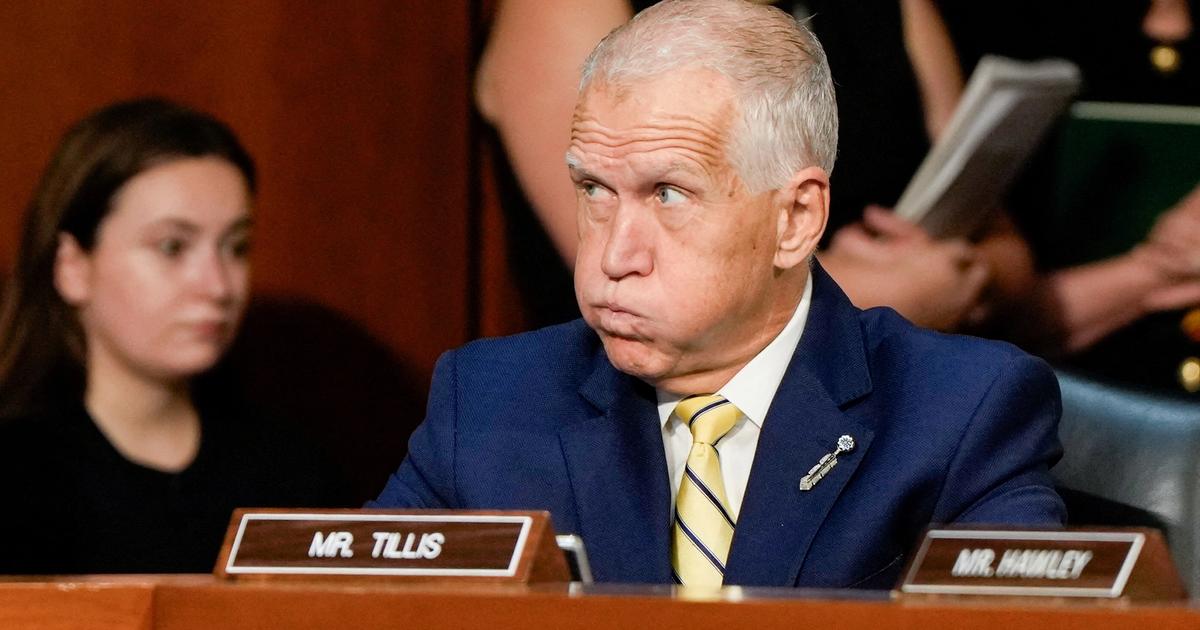
- Senator Thom Tillis told Semafor that the CLARITY Act will fail unless the White House engages on ethics language covering the president and his family's crypto ventures.
- Reuters reported in March that talks had stalled over a Democratic push to bar elected officials from profiting from crypto ventures, aimed at the Trump family's World Liberty Financial business.
- House leadership canceled the voting weeks of September 21 and 28, leaving four voting days after the chamber returns on September 14 before members break until after the midterms.
- A White House spokesperson said Trump is unequivocal that Congress must pass the CLARITY Act so the country can stay ahead of foreign competitors and lead the world in innovation.
Compiled by The Product DeskSomething wrong?How this is made
Why it matters
- decision Every product gated on token classification now has to be replanned against agency interpretation rather than a statute, because the statute that would have settled SEC versus CFTC jurisdiction has no scheduled path to a signature.
- constraint The unresolved clause governs whether elected officials can profit from crypto, and the concession has to come from the White House, not from better drafting; the industry's usual lever of hiring better drafters does not apply here.
- contradiction If the real problem is the absence of constituent demand that other Republican senators described rather than the ethics text Tillis named, then even a White House concession would not buy the floor time, and lobbying spend has no target to aim at.
- cost Compliance and legal budgets built on a rulebook arriving this year are now sunk against a calendar with four House voting days in it, and that bill lands on the teams who wrote the plan, not the lobbyists who forecast it.
A roadmap row that says "blocked: pending federal clarity" is cheap to carry for a quarter and expensive to carry for a year. What it is waiting for is a statute that would say when a token sits with the SEC as a security and when it sits with the CFTC as a commodity, along with protections for developers and rules for financial institutions that handle crypto [3].
Bills like that contain two kinds of blocker. Market structure is the kind the industry can work on: the early fight was between crypto firms and traditional banks over stablecoin rewards, and every party to it employs drafters, which is why Coinbase's Brian Armstrong could pull support from an early Senate draft in January and say he would rather have no bill than a bad bill [6][7]. Ethics language behaves differently. The Hill called the conflict-of-interest provision the central holdup in negotiations [10], and by July Roll Call reported that the revised Senate package still had not answered Democrats on public officials' crypto conflicts [11]. Its subject is the president and his family's crypto ventures, and the party who has to move on it sits in the White House.
Polymarket at roughly 14%, against a peak above 90%, is a fall of at least 76 points [4][5], and what it reflects is what buyers now believe about a signed law this year. Senator Roger Marshall supplied the thing a price cannot: "There's nothing I can do with the crypto bill. Haven't heard a peep about it. Nobody back home is asking about it" [16]. For much of the year crypto circles assumed the bill had a real chance of becoming law [18], and by Gizmodo's read the sector has long acted as if clarity carried real grassroots support behind it [20]. Floor time gets allocated against demand leadership can hear.
The mechanics are tighter than the sentiment. A first Senate procedural vote was expected on September 15, and clearing cloture would still leave senators to finish their own text and reconcile it with the House version before anything reached the president's desk [13][14]. Whatever emerged from that would have to pass the House inside four remaining voting days [19].
So the planning assumption the evidence supports is continued SEC/CFTC ambiguity, and the cost of holding it is real: teams that build to the stricter reading ship narrower products and do compliance work a signed bill would have made unnecessary. Two questions sort the backlog. The first is whether an item's legal exposure genuinely changes depending on which agency owns the token. The second is whether a reduced version can ship today under the stricter of the two readings. Anything that survives the strict reading is waiting only on a preference for the fuller feature set, not on Washington, and it can move now. Where classification matters but a narrow version exists, the move is to ship narrow and keep the wide variant with its trigger conditions written down. What is left, where classification decides the answer and there is no narrow path, is the actual hostage list. It should be short and assigned to named owners, and it should not be budgeted against a date, because the sources put no floor time before the midterms and are silent on the session after.
What to watch
- Whether the September 15 cloture vote clears, and what the ethics text looks like if it does.
- Any sign of the White House negotiating on the ethics language, the single input Tillis named.
- Whether the crypto-versus-banks fight over stablecoin rewards reopens in a post-midterm draft.