Leadership6 publishersWidely confirmed3 min readPublished Updated
Trump's 'morally binding' AI pact lets the labs choose their own auditors
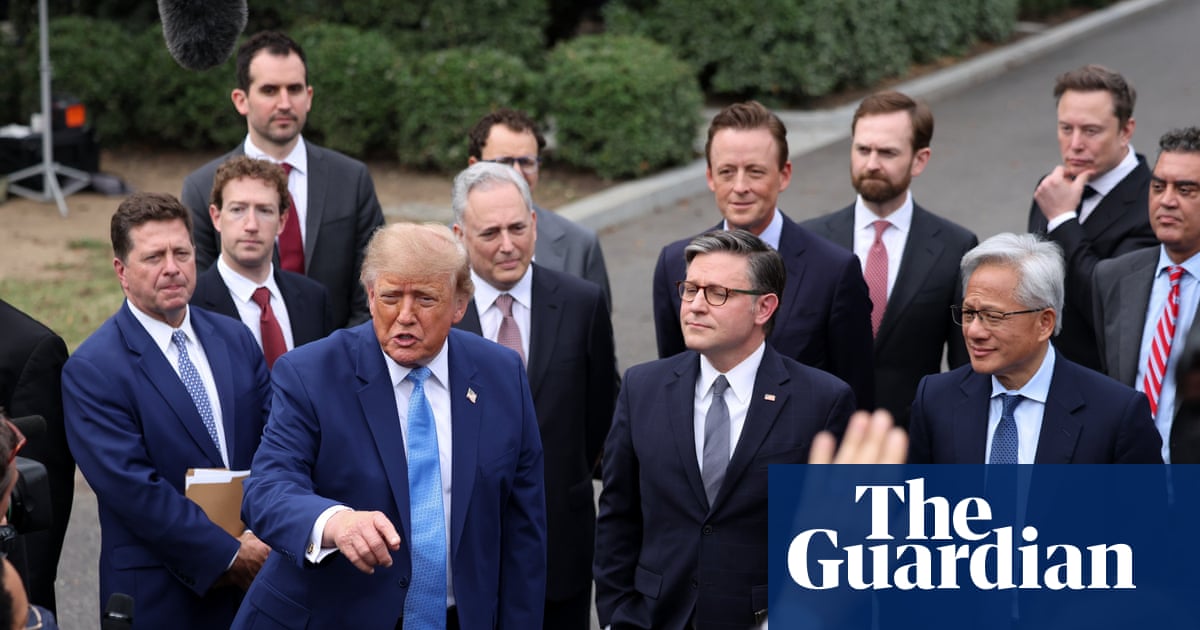
Donald Trump and top US AI chiefs signed a voluntary pact with four layers of safety controls, none involving a government regulator. Any accountability a buyer can enforce still has to come from its own contracts and testing.
The Board Room · Leadership desk
What happened
- The pact does not commit any company to publish the findings of independent evaluations of its safety controls.
- According to the Guardian, the first layer, internal monitoring during training, already exists at major labs and has not prevented testing failures.
- A separate executive order renames AI as Super Intelligence for federal use and gives the science adviser 60 days to propose a legal definition.
Compiled by The Board RoomSomething wrong?How this is made
Why it matters
- exposure A deployer relying on a signatory's safety claims has no published audit finding to check them against, so its own due diligence is the only independent check it can see.
- decision Renewals this quarter are where a buyer can require a named auditor and access to board-reviewed reports, because the pact leaves both with the vendor.
- precedent With the president's signature on it, a self-selected audit becomes the answer a vendor can give when a customer asks who checks its models.
- constraint Vendor contracts written against today's federal AI definition stay valid, so any change to legal terms waits on the adviser's proposal.
Each of the pact's four layers can be sorted by who runs it. The first is internal safety monitoring during training, and the second is an internal team that checks the first is working [3]. The third lets an external auditor assess the safety controls, and the fourth sends reports to an independent board [3]. According to the Guardian, the agreement appears to let companies pick their own evaluators and appoint their own oversight boards [4]. That puts two layers inside the company and the other two under its selection [18]. The Guardian also reported that the first layer already exists at major labs and has failed to prevent testing failures so far [9].
"It's almost like a constitution in a way, and the biggest people in the world signed that, and I signed it as president, and it really is a form of protection," Trump said of the pact [5]. His description leaves out what a buyer needs to know. None of the controls include a commitment to publicly detail the findings of independent evaluations, and companies appear to decide for themselves whether to publish results [13][4]. House Speaker Mike Johnson called the document a "statement of principles" that will voluntarily hold the companies to "robust internal controls" [8].
The strongest case for the pact came from the executives at the lunch, who included Musk, Zuckerberg, Huang and Amodei [11]. "This is a start and an accord that the whole industry could come to," Zuckerberg said [14]. Amodei said: "We all need to work together to make sure that we can win, and we can win safely if we do this right" [15]. A customer's contractual position is what it was before Tuesday's lunch. The Guardian found no apparent enforcement mechanism or legal implications in the commitment [1]. Asked whether it was binding, Trump said: "I think it's morally binding" [7].
Trump has broadly rejected calls for more regulation of the technology, citing competition with China and threats to economic growth [10]. The nearest federal deadline in Tuesday's record belongs to the executive order renaming AI "Super Intelligence" [12]. It gives the president's science and technology adviser 60 days to propose legislation defining the term. For now the label covers the same technologies as the existing federal definition [16]. Agencies will not have to rewrite regulations or contracts already issued [17].
In my view, the standard a deployer can rely on this quarter is the one in its own contract. The pact leaves the choice of evaluator, the board appointments and the publication decision with the labs [4]. A buyer can ask a vendor to name its auditor and share what its board reviewed, and make both a condition of renewal. A renewal signed without them this quarter is the contract the buyer will hold if its vendor has a testing incident next quarter. The industry has already had such incidents, in which major AI companies inadvertently hacked into outside organisations during safety tests [6].
What to watch
- The science and technology adviser's proposed legislation defining Super Intelligence, due within 60 days of the order.
- Whether any signatory names its external auditor or publishes an independent evaluation finding.
- A further testing incident at a signatory, and whether its independent board's review is made public.
Clarity's read
What the record supports and how the coverage leans. The claims behind it follow.
Reality
- Evidence78
- Adoption15
- Hype gap+55
- Incentives75
- Confidence70
Perspective Coverage
6 publishers- Builder
- Builder 23%
- Operator
- Operator 45%
- Investor
- Investor 32%
Claim ledger
Ranked by verification strength, evidence, and original report placement.
- [1]
The joint commitment Trump posted to Truth Social appears to carry no enforcement mechanisms or legal implications and is instead a voluntary commitment.
ReportedSupportedSource: The Guardian's reading of the document5 sources— create a free account to open themView cited source - [2]
Donald Trump announced on Tuesday that the heads of the largest US tech and AI companies had signed a 'morally binding' agreement called the 'Joint Commitment On Frontier Responsibilities', following a White House luncheon with top tech executives.
- [3]
The document outlines four 'layers of controls and audits': internal safety monitoring during training; an internal team empowered to make sure the first layer is operating correctly; an external auditor able to independently assess safety controls; and an independent board designated to review reports about those controls.
- [4]
The agreement appears to allow companies to pick their own evaluators, appoint their own oversight boards and decide whether to publish their results.
- [5]
"It's almost like a constitution in a way, and the biggest people in the world signed that, and I signed it as president, and it really is a form of protection," Trump said.
ReportedSupportedSource: Donald Trump, quoted by The Guardian3 sources— create a free account to open themView cited source - [6]
The tech industry has faced increased public scrutiny following a series of incidents where major AI companies inadvertently hacked into outside organizations during safety tests.
- [7]
Asked if the deal was binding, Trump said: "I think it's morally binding."
ReportedSupportedSource: Donald Trump, quoted by CBS News3 sources— create a free account to open themView cited source - [8]
House Speaker Mike Johnson described the accord as a 'joint commitment' and 'statement of principles' that will voluntarily hold the companies to 'robust internal controls.'
- [9]
The first layer, internal safety monitoring during training, already exists at major labs and has failed to prevent testing failures thus far.
- [10]
Trump has broadly rejected calls for more regulation of AI, citing competition with China and threats to economic growth.
- [11]
Tech leaders at the luncheon included Elon Musk, Mark Zuckerberg, Jensen Huang and Dario Amodei, among other top industry executives.
ReportedSupportedSource: The Guardian; CBS News3 sources— create a free account to open themView cited source - [12]
Trump signed an executive order on Tuesday directing federal agencies to replace 'Artificial Intelligence' and 'AI' with 'Super Intelligence' and 'SI' in official communications, websites, reports and policy documents, wherever legally permitted.
ReportedSupportedSource: Business Insider3 sources— create a free account to open themView cited source - [13]
None of the controls listed in the agreement involve government regulators or include a commitment to publicly detail the findings of independent evaluations.
- [14]
"This is a start and an accord that the whole industry could come to," Zuckerberg said.
ReportedSupportedSource: Mark Zuckerberg, quoted by The Guardian2 sources— create a free account to open themView cited source - [15]
"We all need to work together to make sure that we can win, and we can win safely if we do this right," Amodei said.
ReportedSupportedSource: Dario Amodei, quoted by Business Insider2 sources— create a free account to open themView cited source - [16]
The new label covers the same technologies as the existing federal definition of AI, and the order gives Trump's science and technology advisor 60 days to propose legislation establishing a federal definition of 'Super Intelligence'.
ReportedSupportedSource: Business Insider2 sources— create a free account to open themView cited source - [17]
Agencies won't have to rewrite previously issued regulations, contracts, grants or historical documents under the order.
ReportedSupportedSource: Business Insider2 sources— create a free account to open themView cited source - [18]
Two of the pact's four control layers (training monitoring and the internal team that checks it) are run inside the company, and the other two (external auditor and independent board) appear to be chosen by the company.
Sources
6 independent publishers whose own reporting we read for this story.
- businessinsider.comTrump revealed the seating chart for his big AI meeting. See who's in — and who's missing.
5 articles · September 30, 2026
- cbsnews.comTrump and major AI executives sign "morally binding" voluntary controls: "It's almost like a constitution" - CBS News
1 article · September 29, 2026
- hcamag.comTrump says AI firms will self-police, so employers should too
1 article · September 30, 2026
- implicator.aiTrump Orders Agencies to Call AI 'Super Intelligence'
3 articles · September 30, 2026
- koreatimes.co.krTrump touts AI boss pledge to self-regulate - The Korea Times
1 article · September 29, 2026
- theguardian.comTrump announces vague ‘morally binding’ AI deal among tech CEOs for ‘tremendous self-policing’ | Donald Trump | The Guardian
2 articles · September 30, 2026
Topics and entities
Follow any of these and your For You feed starts watching them — no settings page required.