Science1 publisher2 min readPublished
MIT's dissolving battery powered two swallowed devices in animal tests
The Nature Chemical Engineering study reports 1.84 volts, roughly three days of normal operation in simulated gastric fluid and complete breakdown within weeks, with a human trial of the medication-tracking capsule about two years out.
The Scientist · Science desk
What happened
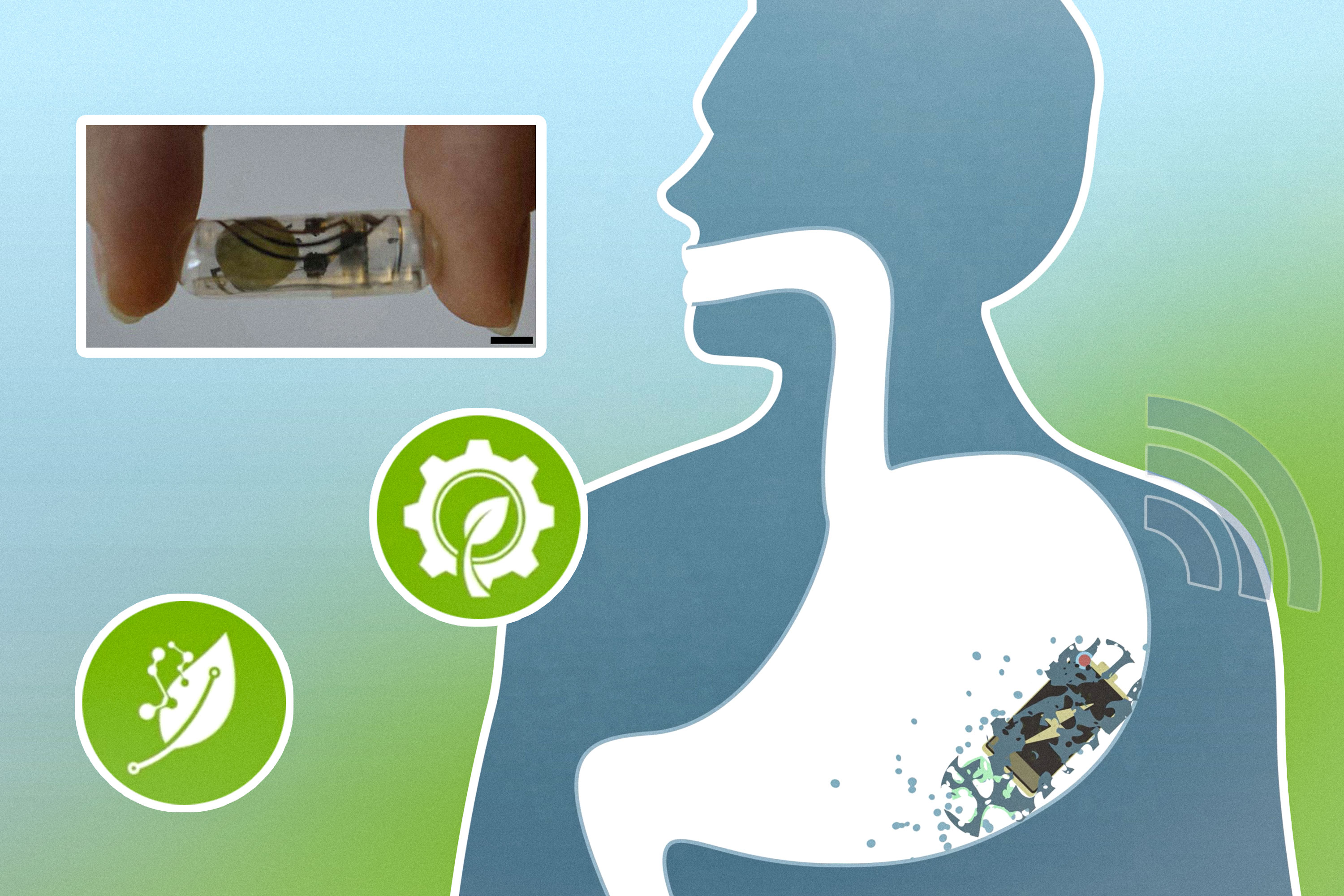
- MIT researchers report in Nature Chemical Engineering a bioresorbable battery that produces 1.84 volts and powered two devices in animal experiments, one a wireless transmitter in the gut, one a stomach stimulator.
- The cell pairs a magnesium anode with a molybdenum trioxide cathode and an ionic liquid gel electrolyte, materials picked because the body tolerates them in small amounts and can absorb them.
- In an acidic solution resembling stomach fluid the batteries worked normally for roughly three days before output weakened, and broke down completely within a few weeks.
- Twenty minutes of electrical stimulation of the stomach lining raised levels of the hunger hormone ghrelin by about 50 percent in the animal tests.
- The researchers expect to begin a clinical trial in about two years for SAFARI, the medication-tracking system the disc-shaped version of the battery powered.
Compiled by The ScientistSomething wrong?How this is made
Why it matters
- constraint A capsule powered this way gets a working window of a few days per swallow, so gut monitoring that has to run for weeks stays with externally powered or energy-harvesting designs.
- capability On-board power let the swallowed RFID tag transmit continuously from the digestive tract and reach further.
- exposure Single-use ingestible electronics end up in wastewater after they exit, so the electrode chemistry decides whether every swallowed capsule adds a small conventional cell to the sewer.
The MIT group characterised the degradation curve in a beaker of acid made to resemble stomach fluid: normal operation, a gradual fade in output, then nothing left to recover [4]. Until now, every ingestible design had to solve power some other way, by drawing energy from outside the body, harvesting it in the gastrointestinal tract, or carrying a small conventional battery whose contents become a safety question if the protective coating is damaged [11].
The therapeutic demonstration used a small slice of the runtime available. Twenty minutes of current against a window of 4,320 minutes is about half a percent of what the cell supported [14], and the ghrelin rise was measured at that short dose, in animals [6]. Whether the hormone stays elevated under continuous stimulation, and whether appetite or nausea moves with it, are separate questions. According to the Discover account of the work, help for people with nausea or diminished appetite is what might eventually follow [7].
The safety argument here is about failure. A cell built from materials the body tolerates in small amounts answers one specific failure case, a capsule that lodges somewhere and breaches its coating [3][11]. No regulator or approval pathway is named. Dissolution changes what a retained device can expose someone to. The breakdown schedule comes from simulated gastric fluid [4]; the animal experiments demonstrated power delivery to two working devices [1].
The team has spent a decade on swallowable electronics, building capsules that track vital signs, administer drugs and identify opioid overdoses [10]. SAFARI, the medication-tracking capsule, is the one heading for a clinical trial [9].
What to watch
- Registration of the SAFARI trial, and whether its endpoint is transmission reliability or measured medication adherence.
- Whether ghrelin stays elevated across 72 hours of continuous stimulation, in which species and at what sample size.
- Dissolution measured in tissue rather than in simulated gastric fluid, including where the magnesium and molybdenum end up.