Science1 distinct publisher3 min readPublished
Matilda Holmes and colleagues aged livestock from 701 bone groups across 460 English sites and found the oldest cattle clustered between 900 and 1100, when grain output was rising and horses were about 5 percent of draft animals.
The Scientist · Science desk

Compiled by The ScientistSomething wrong?How this is made
Tooth eruption and wear give an age at death, and age at death is the closest thing a bone assemblage has to a job description [3]. Meat animals cost feed every month they live, so meat herds go young; past about four years, the carcass is not the point [5]. That is what makes the age structure between roughly 900 and 1100 worth arguing about: 60 percent of the cattle in the age dataset sat in older brackets [4].
Which purpose those older cattle served is the one thing wear cannot say. Holmes and colleagues state plainly that tooth wear alone cannot distinguish an animal kept for milk from one kept for breeding from one kept for work [7]. The traction reading rests on two other supports: older males becoming more common, which a herd kept for milk or breeding does not need in quantity, and earlier studies that found lower-leg changes associated with pulling heavy loads [8]. From there the authors argue oxen grew more important for ploughing as grain production expanded, with their use peaking in the 11th and 12th centuries [9]. The rise in older cattle was, in the authors' words, "unexpected and implies a real change in the working practices of farmers in that period" [6]. Grain output and cattle age rising together is a correlation the assemblages can show; the plough as the cause comes from the leg bones, not from the teeth.
The dating deserves an aside. Bone groups can often be placed only within a broad span, so each group's influence was spread across every year it might belong to, rather than filed under "Saxon" or "high medieval" [10]. That rules out a familiar artifact: the change that appears to happen exactly at a period boundary because the boundary is where the analyst drew it. It does not manufacture precision. A span a century wide is still a century wide, smeared rather than pinned.
Then the horses. About 5 percent of draft animals at the Domesday survey in 1086, an estimated 20 to 50 percent by 1400 [11], which is a fourfold to tenfold rise [16] across 314 years [15]. The complement is the more useful figure for anyone picturing an actual field. At the top of the range, oxen were still half of England's draft animals in 1400; at the bottom, four fifths [17]. That endpoint carries a factor of 2.5 between its low and high estimates [18], and it is the band, not the tooth wear, that governs when traction changed hands.
The thing this doesn't tell you is how many animals sit behind the 60 percent. We are given 701 assemblages from 460 sites [2] and no count of individuals in the age dataset [19], and those are different denominators; a few rich deposits can carry a national-looking percentage.
The same age logic drives the wool result: farmers needed few males for breeding, so adult sheep males in the record read as fleeces kept on the hoof [13].
My read, with its condition attached: the age structure is good enough to say cattle were worked well past the meat-cull age through the 12th century, and that horses displaced them slowly rather than in a handover. The condition is the lower-leg pathology from earlier work, because without it the teeth describe old cattle and stop there [7][8].
Ranked by verification strength, evidence, and original report placement.
Older cattle, including males, were becoming more common, whereas earlier work had found lower-leg changes associated with pulling heavy loads.
The researchers argue that oxen became increasingly important for plowing as grain production expanded, with their use peaking during the 11th and 12th centuries.
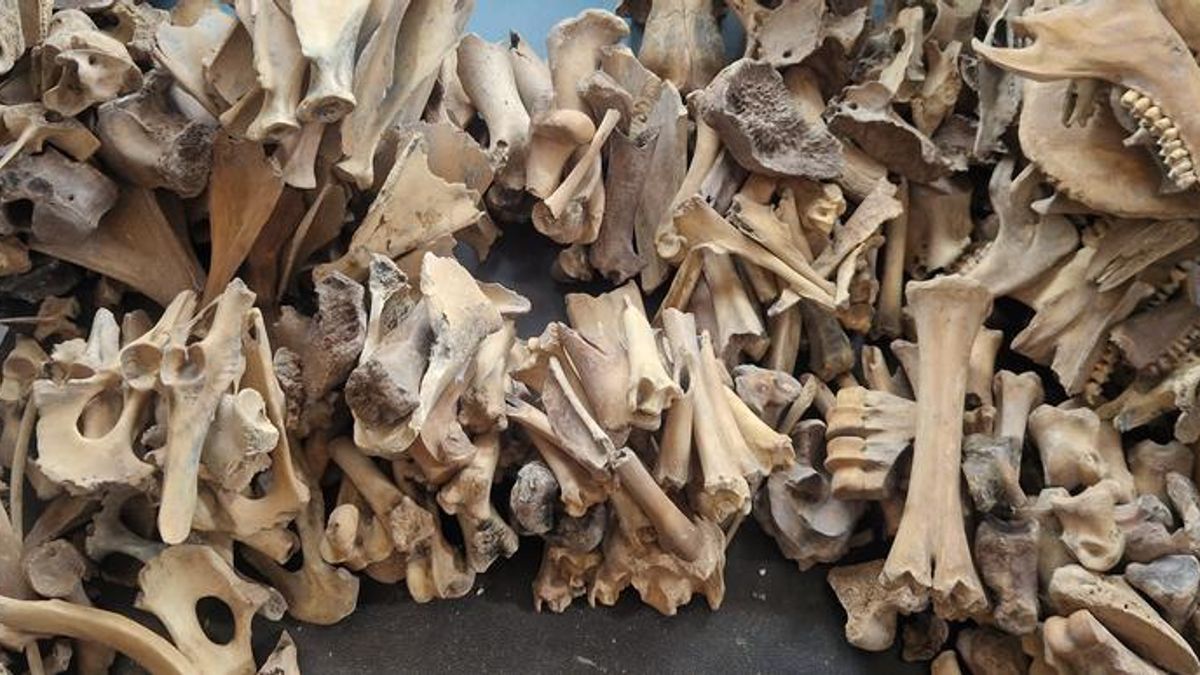
A study published in PLOS One, "Meat, milk, wool and grain: The animal economy of medieval England (CE 400 to 1400)", by Matilda Holmes and colleagues, follows the changing uses of cattle and sheep in England from CE 400 to 1400.
The study drew on 701 groups of animal remains from 460 archaeological sites across England.
To estimate the animals' ages, the researchers looked at tooth eruption and wear.
Between roughly CE 900 and 1100, 60 percent of cattle in the age dataset belonged to older age groups.
Distinct publishers with included, body-backed reporting in this cluster.
1 article · September 2, 2026
Follow any of these and your For You feed starts watching them — no settings page required.
science
High blood xylitol tracks with heart attacks and strokes across two cohorts of 17,000 adults1 distinct publisher
science
Gut DNA from 200 Joro spiders finds a fly-heavy diet native orb weavers largely ignore1 distinct publisher
science
A San Andreas slip claim arrives without a number, and before peer review1 distinct publisher
science
Air conditioning cools the room by heating the street, and a UNSW physicist wants paint first1 distinct publisher
Evidence-backed comparisons of source perspectives and observed adoption signals. Read the methodology
Which Builder, Operator, and Investor concerns the observed source mix emphasized—not a truth score.
Evidence, demonstrated adoption, hype gap, incentives, and confidence are assessed independently, each on its own current evidence. How these are measured.
Big sample, one narrator
The underlying material is substantial — 701 assemblages from 460 sites, a stated aging method, and a chronology treatment that avoids period-bin artefacts — and Discover Magazine reports the method rather than just the result. But every number reaching a reader passes through this one account of one paper, the headline 60 percent has no animal count attached to it, and the traction reading is an inference the reporting itself concedes tooth wear cannot settle.
Nothing yet to count
This is a week-old paper reported once. Our coverage contains no citation, replication, museum or curriculum uptake, or even a rival specialist's reaction, and inventing an uptake signal from a single write-up would be worse than admitting there is none.
Headline outruns the body
"Until Horses Took Over" and the section head "Why Horses Meant Younger Cattle" assert a mechanism, while the evidence beneath is two curves moving in compatible directions plus a draft-horse estimate so loose its top bound is two and a half times its bottom. The prose underneath is markedly more careful than the packaging above it, which is why this reads as mild overstatement rather than inflation.
Press release supplies the best line
The quote a reader will remember comes from a release written to place the paper, not from questioning, and the study's appeal rests on three claims to have found things earlier than everyone else — wool two centuries earlier, beef and dairy ahead of schedule. That is a normal academic interest rather than a hidden one, and Discover Magazine both labels the release and cites the paper openly, which limits how far the pressure travels.
Trust the curve, not the causation
The descriptive core — old cattle bunched between 900 and 1100, sheep rising from the 620s, calves multiplying in the 1300s — is reported with enough method to hold. What we cannot yet stand behind at the same level is the causal chain from horse adoption to younger cattle, or the wool-trade redating, because no second voice and no per-animal figures exist in this reporting to test either.