Product1 publisher3 min readPublished
Sapphire pitches modular data centers running on the pressure drop at a gas pipeline valve
Sapphire Technologies and Anax Power say a modular data center parked at a pipeline regulating station can take both electricity and cold fluid from the pressure drop, and the size of both depends on numbers the operator does not set.
The Product Desk · Product desk
What happened
- The US Energy Information Agency counts 210 gas transmission pipelines covering 305,000 miles, clustered mostly in the southeast near Permian Basin supply.
- Sapphire Technologies, which has built and sold turbo expanders for five years, is proposing to work with Anax Power to put modular data centers on the gas network, using pipeline pressure for both power and cooling.
- At present the pressure drop between a transmission pipeline and a power generator is taken by a simple valve, and the energy goes into the atmosphere.
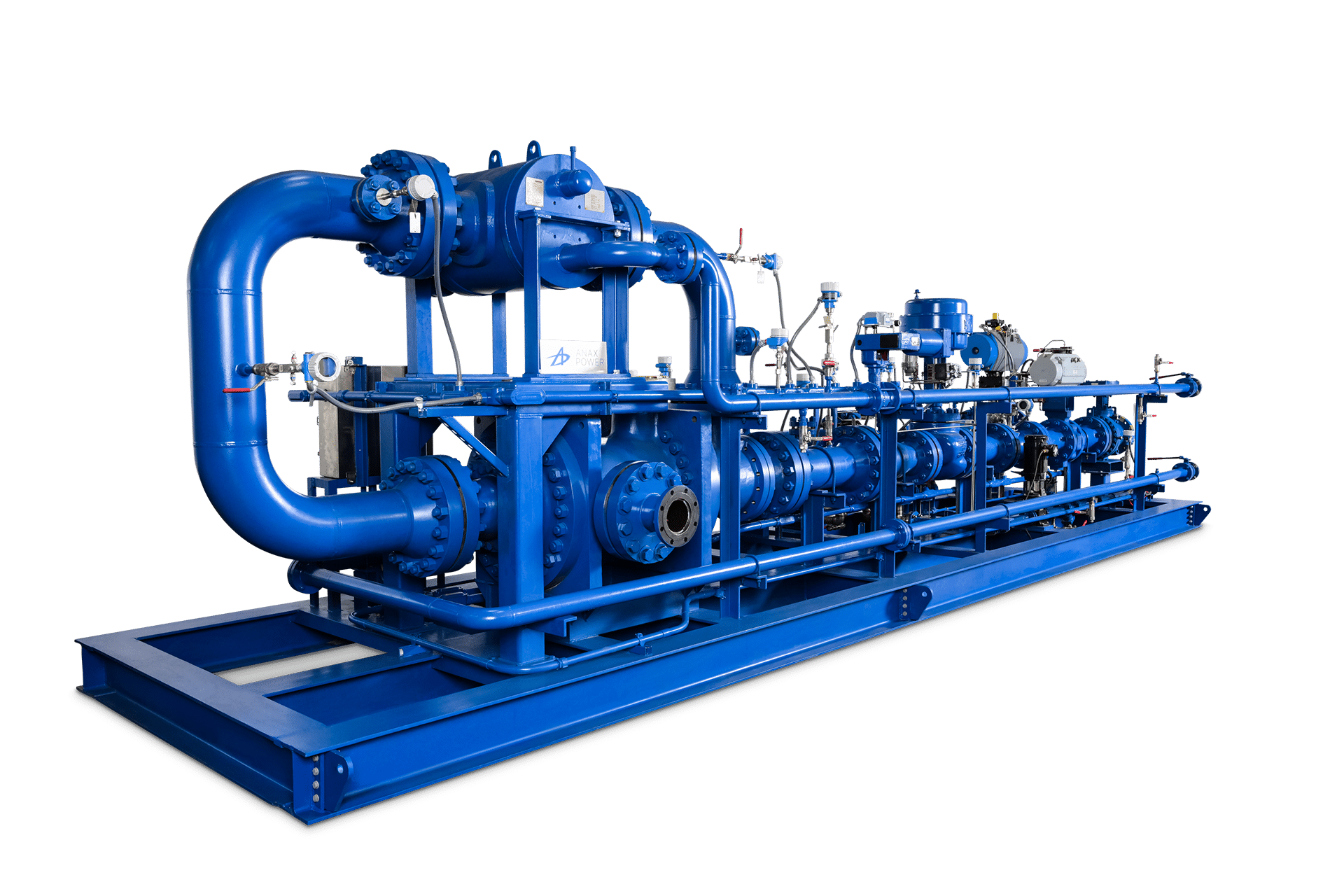
- The unit is two meters long by a meter wide and runs on active magnetic bearings so its shafts levitate, which Earl says means longer life and less maintenance than comparable products.
- The EIA said an additional 6.3 billion cubic feet per day of pipeline capacity was added in 2025.
Compiled by The Product DeskSomething wrong?How this is made
Why it matters
- constraint The cooling half only reaches a building sitting close to the pipe, so the addressable set stops at campuses that were already taking a transmission interconnect for gas generation.
- exposure Anything sized against expander cooling is exposed to the bypass: the fallback valve keeps the generators fed and leaves the heat exchanger without a cold supply.
- decision Sapphire did not publish a per-unit output figure. A buyer has to decide whether recovered electricity is a line in the load plan or a credit against the power bill, and only the second answer survives due diligence today.
This starts at the valve. Sapphire's vice president Jeff Earl said larger gas customers "are connected to transmission pipelines that operate somewhere between 60-80 bars" [5]. The equipment behind the meter wants less than that. "Typical power-generating equipment is operating at 25-40 bars, so it's this differential pressure that we're using to spin the generator," Earl said [6]. He described the machine as one that "recovers the high-pressure energy within the upstream gas by using it to spin an expansion turbine wheel, which in our model we directly couple to an electricity generator" [9].
Pair those two ranges at their extremes and the differential left for the turbine runs from 20 bar to 55 bar [14]. Upstream pressure is the pipeline operator's, downstream pressure is fixed by whatever generating equipment the campus bought, and the expander gets the remainder.
The cold side falls out of the same event. "This conversion happens within a fraction of a second, and you can see a drop of temperature in the tens of degrees, depending on the pressure ratio," Earl said [10]. He said the power would go to a power distribution center and the cooling to a heat exchanger, which could either be integrated directly with a liquid cooling CDU or go to air cooling [12].
The pitch offers power and cooling out of a connection the campus was already paying to build. The site takes on another piece of rotating machinery in the cooling chain, sold by a company whose own vice president said the turbo expander technology is not particularly novel and that data centers are a new frontier for the firm [17].
The retrofit is deliberately reversible. Earl said the expander goes in parallel with the existing valve, "that way if anything happens to our equipment, the operator has the option to switch back to the traditional method" [8]. Switching back keeps gas moving to the generators at the pressure they need. It also ends the cold fluid, because that fluid exists only while gas is expanding through the turbine [15].
What decides this for a specific site is whether you would have signed for the transmission interconnect anyway, and whether the expander is carrying supplemental or primary duty on power and on cooling. It works where the site was already committed to the interconnect and the expander is supplemental on both. The recovered electricity credits the power bill and the recovered cold feeds a loop with a chiller behind it. The tradeoff is that you size the interconnect and the mechanical plant as though the expander were not there, so the payback comes entirely out of fuel and power you have to meter yourself.
What to watch
- A per-unit output figure from Sapphire in kW or MW, enough to size recovery against interconnect load.
- A named campus where an Anax Power modular data center runs behind one of these expanders, with metered cooling capacity.
- What pipeline operators charge, or require, for hanging third-party rotating equipment at a regulating station.